
Find your fireplace across the North Slave Region.
Wood, pellet, propane, and electric fireplace resources across the North Slave Region—from Yellowknife and Dettah out to Behchoko, Whatì, Gamètì, and Wekweètì. Tell us about your home and we'll help you find the dealer best positioned to handle your project, wherever in the region you live.
Every Project Starts From One of These Five Situations
Zone 8 winters, -29.5°C overnight lows, and a region built on wood and pellet heat.
The North Slave Region spans the boreal forest and tundra transition around Great Slave Lake, from Yellowknife and the neighbouring communities of Dettah and Ndilo out to Behchoko, Whatì, Gamètì, and Wekweètì. Zone 8 winters here mean overnight lows averaging -29.5°C, a cold stretch comparable to what Whitehorse or Fort McMurray see most winters, and a heating season that often runs from September through May. Black spruce, jack pine, white birch, and trembling aspen are the wood species most households burn, cut and hauled from the surrounding forest under permits issued through NWT Environment and Climate Change regional offices. Any wood-burning appliance installed here falls under the CSA B365 installation code, and most insurers require a WETT inspection before they'll cover a wood stove or insert, whether the unit sits in a Yellowknife bungalow or a cabin out past Behchoko.
Gas fireplaces are the outlier in this region: there's no mains natural gas network reaching North Slave communities, so a 'gas' fireplace here almost always means a propane appliance fed by a bottle or bulk tank, not a line run from a utility. Pellet heat, by contrast, is genuinely mainstream—the territory burns roughly 20,000 tonnes of wood pellets a year, much of it in Yellowknife and the South Slave, and Enterprise Pellets keeps bagged pellets in steady supply so feeding a hopper through a long winter isn't a logistics project. Electric fireplaces fill the gap in apartments and condos where storing cordwood or pellet bags isn't practical. Because dealers and service crews are based almost entirely out of Yellowknife, anyone in Dettah, Ndilo, or the smaller communities further out should expect freight and travel time to factor into both price and scheduling—a good dealer will tell you that upfront rather than surprise you with it.
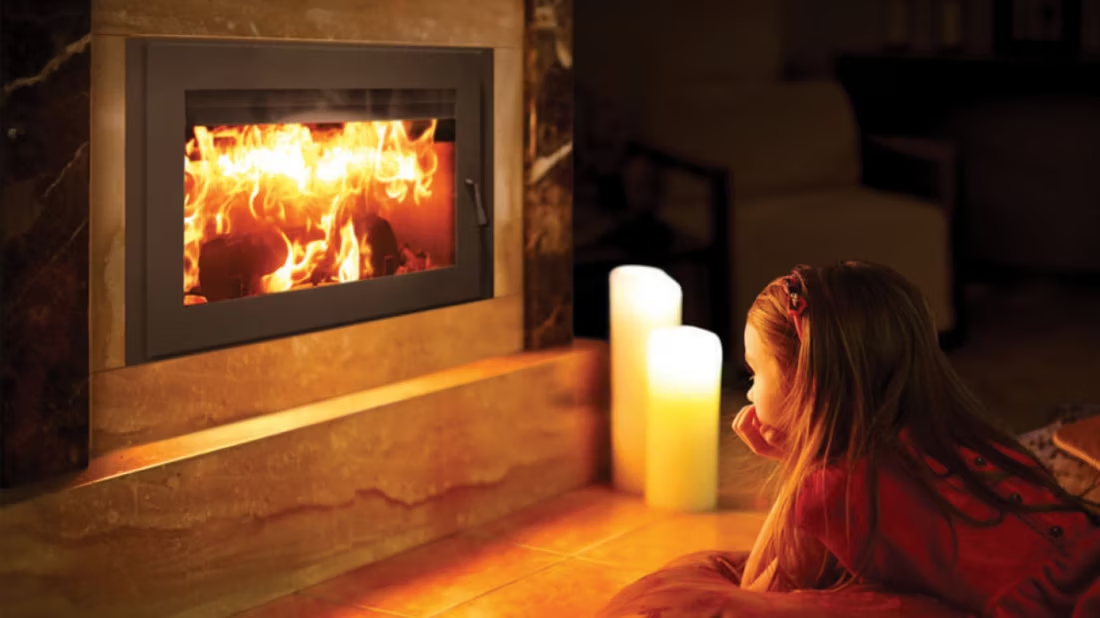
Four fuels. One honest answer for North Slave Region.
Wood
See what's available near North Slave Region.
Find your wood stove →Gas
See what's available near North Slave Region.
Find your gas fireplace →Pellet
See what's available near North Slave Region.
Find your pellet stove →Electric
See what's available near North Slave Region.
Find your electric fireplace →Three steps. No salesperson until you're ready.
Tell us about your project
Your postal code, your situation, and the fuel you're leaning toward—or let the answers point you to one.
See what's actually available
The brands dealers within 100 miles genuinely carry—real options, never a catalog mirage.
Get your dealer & Project Guide
A trusted local dealer, plus the free Project Guide & Parts List that names every component of the job.
Frequently Asked Questions
Which fireplace fuel makes the most sense in the North Slave Region?
Wood and pellet are the two fuels that genuinely carry winter heating load here. A high-efficiency wood stove burning black spruce, jack pine, white birch, or trembling aspen can hold a fire through a -29.5°C night, and firewood permits through NWT Environment and Climate Change keep fuel costs manageable if you're set up to cut and haul your own. Pellet stoves are just as common—the territory burns about 20,000 tonnes of pellets annually, much of it right here in Yellowknife and the South Slave, and Enterprise Pellets keeps bagged pellets in local supply. Gas is genuinely rare: there's no mains natural gas in the region, so a gas fireplace means a propane appliance, usually chosen as secondary heat rather than the main source. Electric fireplaces work well as supplemental heat or ambiance in condos and apartments where wood storage isn't an option, but like anywhere this cold, they're not sized to replace a wood or pellet appliance as primary heat.
Do I need a permit or inspection for a wood stove here?
Yes. Any wood-burning appliance has to meet the CSA B365 installation code, and the municipal or territorial building inspector covering your community—whether that's the City of Yellowknife or the inspector responsible for Behchoko, Whatì, Gamètì, or Wekweètì—needs to sign off on the install. On top of the building permit, most home insurers in the Northwest Territories require a WETT inspection before they'll cover a wood stove, insert, or fireplace, and they'll often ask for a fresh WETT report when you sell the home or switch insurers. Dealers who regularly work in this region build both steps into their quote so you're not chasing paperwork after the unit is already in place.
Can I get a natural gas fireplace in the North Slave Region?
Not from a utility line—there's no mains natural gas network reaching Yellowknife or any of the surrounding communities. What people call a 'gas fireplace' here is almost always a propane appliance, run off a bottle or a bulk tank refilled by a propane supplier. It's a workable option, and plenty of homes run a propane fireplace or stove as backup heat, but it's genuinely a minority choice in this region; most households lean on wood or pellet as primary fuel and keep propane or electric in reserve.
What should I budget for a wood or pellet stove installation here?
Costs in the North Slave Region run higher than what you'd see in southern Canada, mainly because of freight on the unit, the chimney or vent kit, and any parts not already stocked in Yellowknife. There's no single number that holds across the whole region—a straightforward insert swap inside Yellowknife costs noticeably less than a full wood stove and chimney install shipped out to Whatì or Gamètì. Rather than guess, we put together a free Project Guide & Parts List specific to your address, your appliance, and your community, so the dealer quoting you is working from the real parts list and the real freight distance, not a southern price sheet.
How do I find a dealer if I don't live in Yellowknife?
Most hearth dealers and WETT-certified technicians in this region are based in Yellowknife, and they regularly travel out to Dettah, Ndilo, Behchoko, and further into Whatì, Gamètì, and Wekweètì, though some of those trips depend on the winter road or scheduled flights. Rather than assume a dealer is around the corner, call ahead and confirm delivery and installation timing before committing to a date, especially if your project depends on ice-road access or a chartered delivery. We'll help you reach the dealer best positioned to serve your community and build that travel time into the plan from the start.
How often does a wood stove need sweeping in a climate this cold?
More often than you'd think, given how long the heating season runs here, often September through May. Slow, smouldering overnight burns through a -29.5°C stretch build creosote faster than shorter, hotter fires, so most WETT-certified sweeps recommend an inspection before the season starts and a second check partway through a long cold snap if you're burning heavily. Keeping on top of that schedule is also what keeps your WETT certificate current for insurance, which matters more here than almost anywhere else in Canada given how much of the region's heat load is wood and pellet.
Nearest Dealers
Hearth shops are few and far apart up north, so these are the closest ones to North Slave Region, with how far each one is. Call ahead to ask about delivery and installation in your community. Every listing shows whether it is a WhyFire partner, a dealer we have verified as authorized for the brands we recommend, or a local business carrying hearth products. No manufacturer pays for placement. How we verify dealers →
Find the right dealer for your North Slave Region project.
Tell us about your home, your fuel, and your community, and we'll put together a free Project Guide & Parts List—the right unit, the vent kit it needs, and the dealer best positioned to help with your project—plus a reminder to confirm delivery and installation timing before conditions on the road or ice change.
Find Your Fireplace →