
Find the right heat for a Stutsman County winter.
Gas and electric fireplaces are the backbone of home heating here, where a long, harsh heating season and 0°F average winter lows demand equipment that won't quit. Wood and pellet units exist but are uncommon. Find local dealers and technicians serving Jamestown and every community in the county.
Every Project Starts From One of These Five Situations
Prairie cold in Stutsman County, North Dakota.
Stutsman County sits in the James River Valley in south-central North Dakota, in climate zone 7—one of the coldest zones in the continental U.S. With a long, demanding heating season and winter lows averaging 0°F, the heating season here runs roughly from October through April, on par with Fargo or International Falls, Minnesota. Wind-driven cold across open prairie, not deep snowpack, is the defining challenge. The river bottomlands around Jamestown do grow oak, cottonwood, and ash, but the county's open, largely treeless plains make wood heating impractical for most households—firewood sourcing and storage just don't fit the landscape the way they do in forested regions. Natural gas and propane carry the heating load in most homes, with electric fireplaces filling a supplemental, ambiance-driven role in bedrooms and finished basements.
What you'll find on this hub: gas and electric hearth retailers, service technicians, and fuel suppliers serving Stutsman County, from Jamestown out to the smaller communities along U.S. Highway 281 and the county's rural townships. Wood and pellet stoves are uncommon here—pellet brands like Lignetics and Indeck Energy Services supply the broader Upper Midwest, but dedicated retail dealers for either fuel are scarce this far into the prairie. Pick your fuel below for the specifics that apply to your project: local dealers, typical installation costs, and the right unit for a Zone 7 winter.
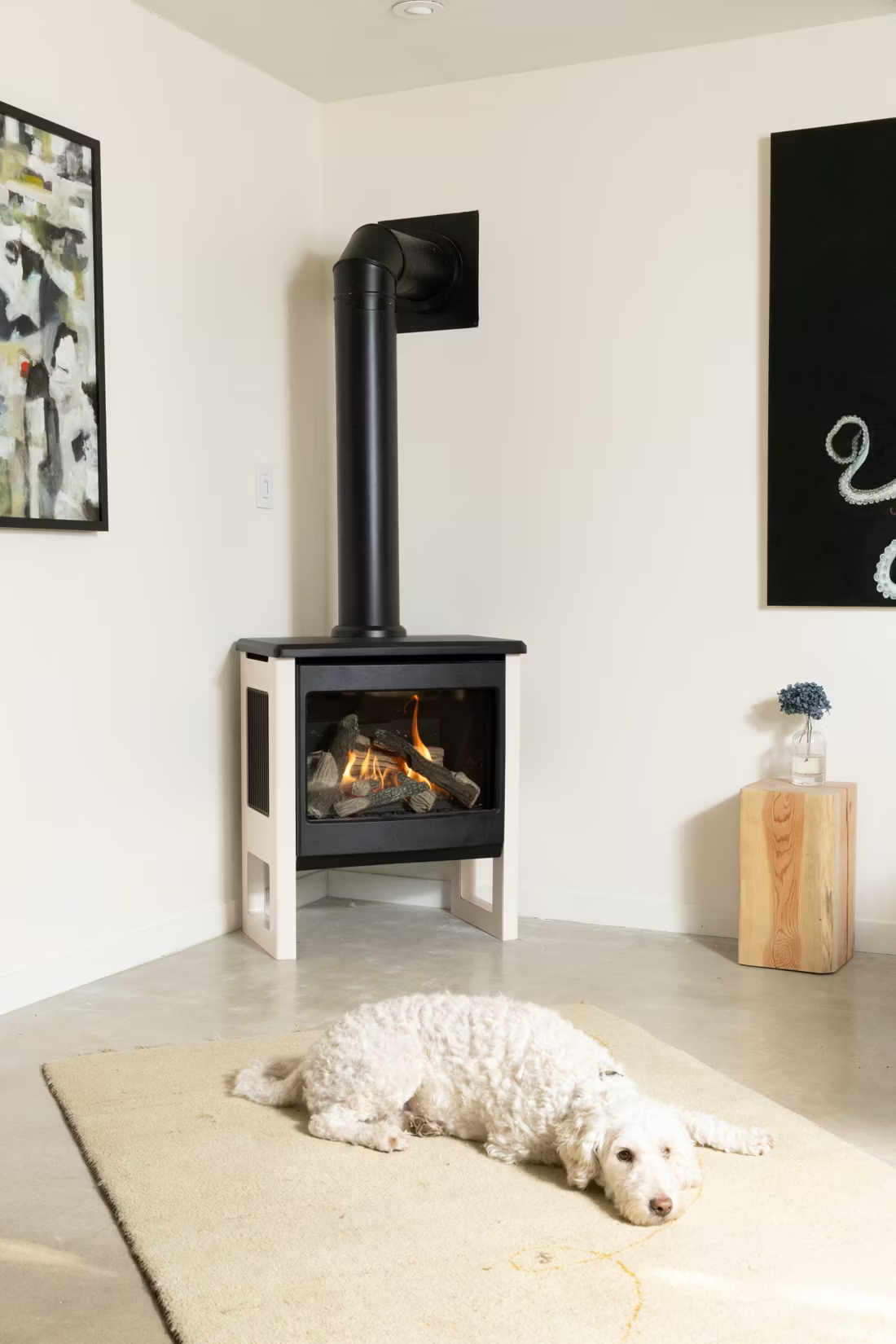
Four fuels. One honest answer for Stutsman County.
Three steps. No salesperson until you're ready.
Tell us about your project
Your zip code, your situation, and the fuel you're leaning toward—or let the answers point you to one.
See what's actually available
The brands dealers within 100 miles genuinely carry—real options, never a catalog mirage.
Get your dealer & Project Guide
A trusted local dealer, plus the free Project Guide & Parts List that names every component of the job.
Frequently Asked Questions
Which fuel works best in Stutsman County?
For most Stutsman County homes, it's gas—either natural gas service in Jamestown or propane out in the townships. Gas fireplaces and inserts give instant heat with no fuel to haul, which matters when overnight lows sit near 0°F and the heating season stretches long and hard. Electric fireplaces are a solid secondary option—good for a finished basement or bedroom, but not built to carry the load through a full James River Valley winter on their own. Wood stoves exist in the county, but they're the exception, not the rule—the open prairie surrounding Jamestown doesn't lend itself to firewood harvesting the way forested regions do, so most owners who have one are burning purchased cordwood rather than self-cut fuel. Pellet stoves are rarer still; regional suppliers like Lignetics serve the broader Upper Midwest, but local retail dealers carrying pellet units are hard to find in the county itself.
Do I need a permit to install a fireplace in Stutsman County?
In most cases, yes. New gas fireplaces, inserts, and stoves typically require a building permit plus a separate gas line permit handled by a licensed gas-fitter—this applies whether you're on natural gas service in Jamestown or running off a propane tank in a rural township. Electric fireplaces are usually permit-free for plug-in units, but built-in or hardwired installations that require a new electrical circuit do need an electrical permit. Within Jamestown, permits run through the city's building inspection office; outside city limits, they go through the county planning and building department. If you do install a wood stove, it will also need a permit and must meet current EPA emissions standards. Most local hearth retailers handle this paperwork as part of the installation, so you generally aren't filing it yourself.
Are there air quality restrictions on wood burning in Stutsman County?
No—Stutsman County doesn't have the winter inversion or non-attainment issues that trigger burn restrictions in basin-and-mountain regions further west. The open prairie topography here doesn't trap smoke the way a valley floor does. That said, wood burning is uncommon in the county to begin with, mostly because firewood isn't a practical local resource outside the James River bottomlands, not because of any air quality rule. If you do run a wood stove, current EPA-certified units are still the standard for new installations, but you won't run into curtailment days or advisory periods like homeowners in smoke-prone western basins sometimes face.
Can one local hearth retailer handle all four fuel types?
Not typically, and that's mostly a function of demand. Retailers serving Stutsman County generally focus on gas and electric—the two fuels that actually fit how homes here are built and heated. A dealer might carry a wood-burning display model or take special orders on a pellet unit, but full working showrooms for wood and pellet stoves are rare this far into the prairie; homeowners chasing those fuels sometimes end up sourcing from dealers in Fargo or Bismarck instead. If your project is gas or electric, you'll have solid local options in and around Jamestown. If you're set on wood or pellet, it's worth asking upfront whether a local retailer can actually get parts and service—not just sell you a unit.
How does service work in rural areas of Stutsman County?
Most technicians serving the county are based in Jamestown and travel out to the surrounding townships along Highway 281 and the county roads branching off it. Because gas and electric are the dominant fuels here, service calls mostly involve gas line inspection, pilot and ignition system checks, and electrical work for built-in electric units—not chimney sweeping, which is the more common rural service call in wood-heavy counties. Expect a modest travel charge for addresses well outside Jamestown, and know that pre-winter scheduling (September–October) books up faster than mid-season emergency calls once the cold really sets in.
What's the typical cost range for fireplace installation across all fuel types in Stutsman County?
Gas fireplace, insert, or stove installation typically runs $4,500–$10,000 depending on gas line work and venting—lower if you're converting a room that already has gas service, higher for new construction. Electric fireplace units run $200–$3,000 for the unit itself, plus $400–$1,200 in labor for anything beyond a simple plug-in install, such as a built-in unit needing a dedicated circuit. Wood stove and pellet stove installations are harder to price locally since so few dealers stock them—costs tend to run similar to national averages ($4,500–$9,000 for wood, $4,500–$7,500 for pellet), but expect to shop farther afield or special-order parts, which can add time and cost to the project.
Can a fireplace actually lower my heating bill?
Yes—by creating a comfort zone. A furnace heats every square foot of the house just to warm the one room you're in; a gas fireplace on low burns roughly a sixth of the gas a typical furnace does. Set the furnace around 55–60 degrees as a baseline, then heat the rooms your family actually uses. Families who heat this way commonly save $20–$60 a month.
Can I install a fireplace myself?
If you're putting a fire in your house on purpose, it's best to work with an expert. Unless you're genuinely experienced in framing, gas line, vent pipe, and the national code on clearances to combustibles, have a professional do it—and ideally the same company that sells you the fireplace, so warranty, service, and liability all live under one roof.
What is an in-home preview and do I need one?
It's a visit where a hearth professional measures your space, confirms the model you picked actually works in your home, and walks the specs—framing, gas line, venting, finish work—before anything is ordered. Some details you just can't know until you see the house. Never make a down payment without one; it's the single most-skipped step that burns buyers.
Wood, gas, pellet, or electric—how do I choose?
Match the fuel to your life, not the other way around. Wood: lowest fuel cost and total power-outage independence, but you're hauling and stacking. Gas: press a button, set a thermostat, no maintenance to speak of. Pellet: wood economics with automatic feeding, in exchange for weekly cleaning and a need for electricity. Electric: plugs in anywhere with honest supplemental heat. Nobody regrets the fuel that fits how they actually live.
Stove and Fireplace Dealers in Stutsman County
Listings include WhyFire partner dealers, dealers we have verified as authorized for the brands we recommend, and established local businesses that carry hearth products. Every listing shows which one it is. The ones marked Preferred run on WhyFire's software, so they can show you real pricing and book your appointment right here. No manufacturer pays for placement. How we verify dealers →
Structural Materials
Hebron Brick Supply
Get matched with a Stutsman County hearth dealer.
Tell us your fuel and your address, and we'll match you with a trusted local dealer and send a free Project Guide & Parts List—the exact parts, including the vent kit, and the dealer we recommend for your Stutsman County home.
Find Your Fireplace →