
Heat That Holds Through a Rolette County Winter.
Wood, gas, pellet, and electric fireplace resources for every town in Rolette County—from Rolla and Belcourt to Dunseith and St. John—built for a heating season that runs nearly eight months a year.
Every Project Starts From One of These Five Situations
Prairie cold and Turtle Mountain winters in Rolette County, North Dakota.
Rolette County sits along the Canadian border in north-central North Dakota, split between open prairie and the wooded hills of the Turtle Mountains—home to the Turtle Mountain Band of Chippewa Nation and the community of Belcourt. At Climate Zone 7 with roughly 10,015 heating degree days and an average winter low near -5°F, this county runs colder than Fargo and rivals International Falls, Minnesota for sustained deep-freeze stretches. The heating season typically starts in September and doesn't let go until May. Wood heat has real staying power here—oak, cottonwood, and ash cut from farm shelterbelts and the Turtle Mountains still fuel a lot of rural households, often alongside a propane tank for backup.
What you'll find on this hub: hearth retailers, service technicians, and fuel suppliers serving Rolette County's towns—Rolla, Belcourt, Dunseith, St. John, and Rolette itself, plus the farms and reservation communities in between. Because this is a small, sparsely populated county, some services are based in Minot, Devils Lake, or Rugby and travel in for installs and service calls; we note that where it applies. Pick your fuel below for local dealers, installed costs, and the resources that fit a home built to survive a -5°F average low.
Four fuels. One honest answer for Rolette County.
Three steps. No salesperson until you're ready.
Tell us about your project
Your zip code, your situation, and the fuel you're leaning toward—or let the answers point you to one.
See what's actually available
The brands dealers within 100 miles genuinely carry—real options, never a catalog mirage.
Get your dealer & Project Guide
A trusted local dealer, plus the free Project Guide & Parts List that names every component of the job.
Frequently Asked Questions
Which fuel works best in Rolette County?
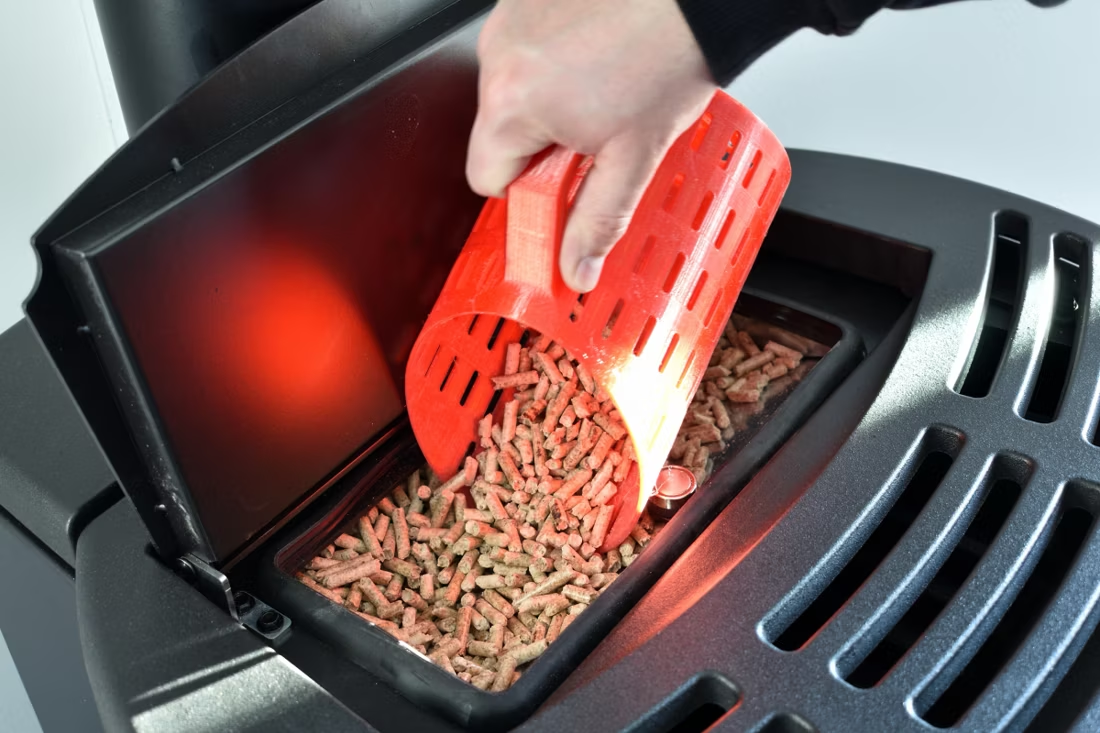
With Zone 7 winters and over 10,000 heating degree days, the honest answer is that most homes here lean on more than one fuel. Wood—oak, cottonwood, and ash cut locally—remains a serious primary heat source; a catalytic wood stove can hold an overnight burn through a -5°F stretch and keeps the house warm if the power goes out, which matters this far north. Gas is typically propane rather than piped natural gas out here, and it's the low-labor choice for homes that want set-it-and-forget-it heat in a back room or a second living space. Pellet stoves are a solid middle ground—less daily labor than wood, with Lignetics bags stocked regionally—though homeowners should keep a wood or propane backup for the deepest cold snaps when pellet feed systems work hardest. Electric fireplaces are supplemental only; on their own they won't keep pace with a Rolette County January, but they're a reasonable add for a bedroom or den.
Do I need a permit to install a fireplace in Rolette County?
In most cases, yes—new wood stoves, wood inserts, gas appliances, and pellet stoves typically require a building permit through Rolette County's building department, and any propane line work should go through a licensed installer. Wood-burning appliances sold and installed today must meet current EPA certification standards nationwide, regardless of county. Electric fireplaces are usually exempt from permitting unless the installation is a hardwired built-in requiring new electrical work. Because Rolette County is small and rural, many local retailers and installers handle the paperwork directly as part of the job—worth confirming with whichever dealer you choose.
Are there air quality restrictions on wood burning in Rolette County?
No—Rolette County has no formal air quality non-attainment designation or wood-burning curtailment program, unlike some western basin communities that deal with winter inversions. That said, given how many months a year a wood stove runs here, choosing an EPA-certified, high-efficiency unit still pays off in less creosote, fewer chimney fires, and less smoke drifting into a neighbor's yard on a still winter night—good practice even without a regulatory mandate.
Can one local hearth retailer handle all four fuel types?
It depends on the dealer, and in a county this size, options are limited compared to larger North Dakota markets. Some retailers based in Minot or Devils Lake that service Rolette County carry wood, gas, and pellet lines with electric as a smaller add-on category; others specialize more narrowly, particularly around propane appliances given how common propane is out here versus piped gas. If you want to compare fuel types side by side, it's worth calling ahead to confirm which working displays a given retailer has on the floor before making the drive.
How does service work in rural areas of Rolette County?
Most chimney sweeps and gas or pellet technicians covering Rolette County are based out of Minot or Devils Lake and drive in for scheduled service and emergency calls alike. Expect a modest trip charge for rural addresses around Rolla, Belcourt, Dunseith, or St. John, and expect pre-season scheduling (August through October) to be far easier than a January emergency call when every other wood-burning household in the region is also trying to get on the calendar. If you're heating with wood as a primary source, an annual fall sweep isn't optional—a chimney fire at -5°F is not the emergency you want.
What's the typical cost range for fireplace installation across all fuel types in Rolette County?
Costs run close to regional Upper Midwest norms, adjusted for rural delivery and travel. Wood stove or insert installation: roughly $4,000–$8,500 for a typical retrofit, more if new chimney chase construction is involved. Propane fireplace, insert, or stove: roughly $4,000–$10,000 depending on whether an existing gas line or tank hookup is in place. Pellet stove or insert: roughly $4,000–$7,000 installed. Electric fireplace: $200–$3,000 for the unit itself, plus $400–$1,200 in labor for anything beyond a simple plug-in install. Rural delivery and travel fees for installers coming from Minot or Devils Lake can add to these ranges—ask up front when you get a quote.
How much should I budget for a fireplace?
For an average home—covering the fireplace, the vent pipe, and basic installation—a budget between $3,900 and $5,500 gives you a lot of options across wood, gas, and pellet. By the time you add finish work, gas line, and electrical, the average complete installation lands between $5,000 and $12,000 all-in. In a remodel or new build, a good rule is to put about 2.5% of the total project cost toward the fireplace.
Can I install a fireplace myself?
If you're putting a fire in your house on purpose, it's best to work with an expert. Unless you're genuinely experienced in framing, gas line, vent pipe, and the national code on clearances to combustibles, have a professional do it—and ideally the same company that sells you the fireplace, so warranty, service, and liability all live under one roof.
Wood, gas, pellet, or electric—how do I choose?
Match the fuel to your life, not the other way around. Wood: lowest fuel cost and total power-outage independence, but you're hauling and stacking. Gas: press a button, set a thermostat, no maintenance to speak of. Pellet: wood economics with automatic feeding, in exchange for weekly cleaning and a need for electricity. Electric: plugs in anywhere with honest supplemental heat. Nobody regrets the fuel that fits how they actually live.
Should the dealer who sells my fireplace also install it?
Ideally, yes. A fireplace project involves vent pipe, gas line, electrical, and often tile or stone. Hire three or four separate trades and you own the liability and the game of telephone between them. One company selling and installing means one accountable party, start to finish—ask about factory training, on-time completion records, and what happens if an inspection fails.
Stove and Fireplace Dealers in Rolette County
Listings include WhyFire partner dealers, dealers we have verified as authorized for the brands we recommend, and established local businesses that carry hearth products. Every listing shows which one it is. The ones marked Preferred run on WhyFire's software, so they can show you real pricing and book your appointment right here. No manufacturer pays for placement. How we verify dealers →
Sawmill Lumber & Hardware
North Central Services, Inc
Find your fireplace in Rolette County.
Tell us your fuel and your town, and I'll match you with a trusted local dealer serving Rolette County—plus a free Project Guide & Parts List with the exact parts, vent kit, and recommended installer for your project.
Find Your Fireplace →