
Every fuel type, built for a Bowman County winter.
Wood, gas, pellet, and electric fireplace resources for the whole county—from Bowman and Rhame out to Scranton and the ranch country along the Little Missouri. Pick a fuel and get matched with a local dealer who actually installs it out here.
Every Project Starts From One of These Five Situations
8,638 heating degree days on the open North Dakota plains.
Bowman County sits in the southwest corner of North Dakota, exposed to prairie wind with almost nothing between it and the arctic air masses that drop down from Canada each winter. Average lows near 6°F and 8,638 heating degree days put this county in heating-load territory closer to Fargo or International Falls than to most of the Lower 48—a heating season that starts early and doesn't let go until well into spring. Oak, cottonwood, and ash are the wood species most households here burn, much of it sourced from shelterbelts and river-bottom land along the Little Missouri and its tributaries, which keeps wood a practical fuel for ranch properties that already manage their own timber.
With a population under 2,300 spread across a lot of open ground, Bowman County doesn't have the air-quality restrictions that show up in more populated basins—there's no non-attainment designation or curtailment schedule to navigate here, so stove choice comes down to heat output, fuel access, and how remote your property is from a service crew. That distance matters: a wood stove that holds a full load overnight through a 6°F stretch is a different proposition than one sized for milder climates, and propane or fuel-oil backup is common on properties without natural gas. This hub rolls up hearth retailers, service techs, and fuel suppliers across the whole county, from the town of Bowman down through Rhame and out to Scranton. Pick your fuel below for local dealers, install costs, and unit recommendations specific to your town.
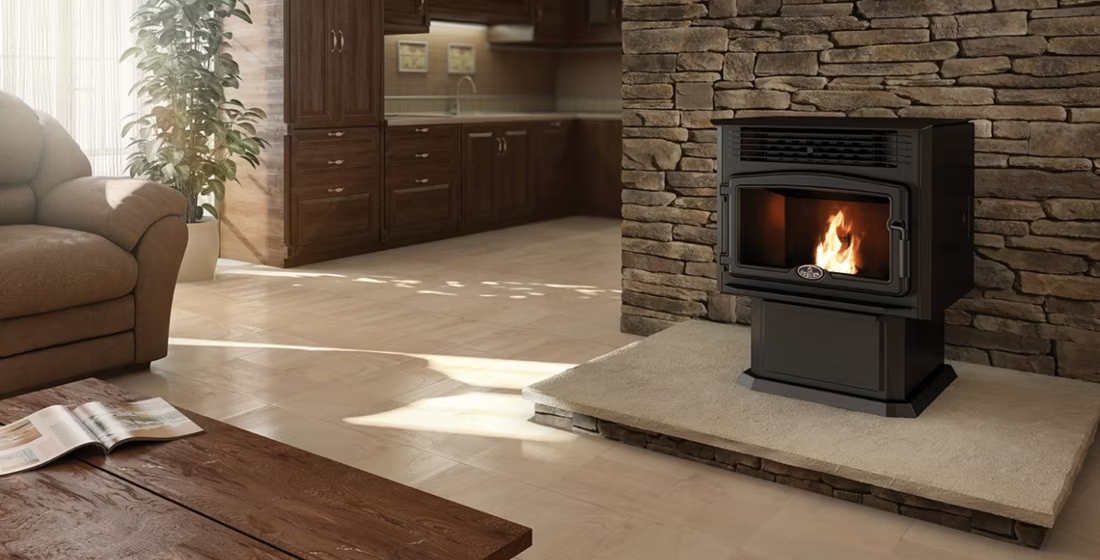
Four fuels. One honest answer for Bowman County.
Three steps. No salesperson until you're ready.
Tell us about your project
Your zip code, your situation, and the fuel you're leaning toward—or let the answers point you to one.
See what's actually available
The brands dealers within 100 miles genuinely carry—real options, never a catalog mirage.
Get your dealer & Project Guide
A trusted local dealer, plus the free Project Guide & Parts List that names every component of the job.
Frequently Asked Questions
Which fireplace fuel makes the most sense in Bowman County?
All four fuels see real use here, but the choice usually comes down to how remote your property is and what you're already set up to manage. Wood is the workhorse fuel on ranch and rural properties—a catalytic wood stove burning oak or ash will hold a load 16 to 20 hours through a 6°F overnight, and a lot of households here already have access to shelterbelt or river-bottom timber along the Little Missouri. Gas is the low-maintenance option in town where natural gas service reaches; outside town limits, most homes run propane instead, either bottled or bulk-delivered. Pellet stoves work well for households that want wood-stove heat output without the daily wood-hauling, and Lignetics and Indeck Energy Services both distribute into this part of the state. Electric fireplaces are supplemental here—with a heating load this severe, they're not a realistic primary source, but they're a good fit for a bedroom, basement, or a home already carrying its main heat load with wood or propane.
Do I need a permit to install a wood stove or fireplace in Bowman County?
In most cases, yes. New wood stoves and inserts need to meet current EPA emissions standards, and building permits for both new construction and remodels typically go through the county or the relevant city office depending on whether your property sits inside Bowman, Rhame, or Scranton city limits, or out in unincorporated county land. Gas installs require a separate gas-line permit and a licensed installer for the hookup. Pellet stove permitting follows a similar path to wood but without any air-quality restrictions to account for. Electric fireplace installs usually don't need a permit unless you're adding a dedicated circuit for a hardwired built-in unit. Most retailers we match homeowners with handle permitting as part of the installation, so it's rarely something you're chasing down on your own.
How much wood or fuel storage should I plan for out here?
Given 8,638 heating degree days, a household relying on wood as a primary heat source often burns through four to six full cords over a season, which means seasoned storage space matters more here than in milder counties—wood cut in spring needs a full summer under cover to dry out before it's ready to burn efficiently. For propane, tank sizing should account for a heating season that can run from October through April with sustained cold snaps well below zero; undersized tanks mean more frequent deliveries right when roads are hardest to service. Pellet households should plan storage for a full season's supply, since deliveries can be delayed by winter weather on rural roads. Whatever fuel you choose, your local dealer can help size storage to your actual square footage and how much of your heat load the unit is carrying.
Can I find a retailer that carries more than one fuel type?
Given how spread out Bowman County is, most of the hearth retailers serving this area carry two or three fuel types rather than specializing narrowly, which is practical for households that end up running wood as primary heat with a gas or electric unit somewhere else in the house. A multi-fuel dealer is worth talking to if you're still weighing wood against pellet or gas—they can walk you through trade-offs specific to your property's distance from service, your existing wood access, and whether propane delivery reaches your address reliably in winter. We match you with the retailer whose fuel lineup and service radius actually cover your project rather than sending you to whoever's closest to the interstate.
How does installation and service work on remote ranch properties?
Service techs covering Bowman County often travel from a wider southwest North Dakota territory, so expect a trip fee on the farthest calls and expect scheduling to tighten considerably once the first hard freeze hits and everyone wants their chimney swept or gas unit inspected at the same time. Booking annual service in late summer, well ahead of the cold, is the single best way to avoid a multi-week wait. For genuinely remote properties, it's worth asking your installer about spare igniter parts and battery backup for gas systems, since a prairie blizzard can delay a return visit by several days, and a wood stove with a reliable overnight burn time is a real asset if a power outage takes out your furnace.
What does a fireplace installation typically cost in Bowman County?
Costs vary by fuel and by how much venting, gas-line, or chimney work the job needs. Wood stove or insert installs generally run $4,500–$9,500, with full chimney construction for new-build homes pushing higher—sizing the unit correctly for an 8,638-HDD heating load is worth the extra planning time with your dealer. Gas fireplaces, inserts, and stoves typically run $4,500–$11,000, more if you're running new gas line or converting from wood to a direct-vent gas unit. Pellet stove or insert installs generally land around $4,500–$8,000. Electric fireplaces are the low end—$200–$3,000 for the unit, plus $400–$1,200 in labor for anything beyond a simple plug-in placement. Travel distance for installers based outside the immediate area can add to any of these figures, so ask your local dealer to itemize that up front.
Wood, gas, pellet, or electric—how do I choose?
Match the fuel to your life, not the other way around. Wood: lowest fuel cost and total power-outage independence, but you're hauling and stacking. Gas: press a button, set a thermostat, no maintenance to speak of. Pellet: wood economics with automatic feeding, in exchange for weekly cleaning and a need for electricity. Electric: plugs in anywhere with honest supplemental heat. Nobody regrets the fuel that fits how they actually live.
What are the biggest mistakes people make buying a fireplace?
Five come up constantly: budgeting for the unit but not the full job (vent, gas line, electrical, finish work); drowning in options instead of starting from style and fuel; buying without an in-home preview; handing installation to a handyman instead of a pro; and giving up out of sheer indecision. Every one is avoidable with a clear plan—step one, step two, step three.
Can a fireplace actually lower my heating bill?
Yes—by creating a comfort zone. A furnace heats every square foot of the house just to warm the one room you're in; a gas fireplace on low burns roughly a sixth of the gas a typical furnace does. Set the furnace around 55–60 degrees as a baseline, then heat the rooms your family actually uses. Families who heat this way commonly save $20–$60 a month.
What is an in-home preview and do I need one?
It's a visit where a hearth professional measures your space, confirms the model you picked actually works in your home, and walks the specs—framing, gas line, venting, finish work—before anything is ordered. Some details you just can't know until you see the house. Never make a down payment without one; it's the single most-skipped step that burns buyers.
Stove and Fireplace Dealers in Bowman County
Listings include WhyFire partner dealers, dealers we have verified as authorized for the brands we recommend, and established local businesses that carry hearth products. Every listing shows which one it is. The ones marked Preferred run on WhyFire's software, so they can show you real pricing and book your appointment right here. No manufacturer pays for placement. How we verify dealers →
Keller Hearth'n Home Products
Get matched with a local Bowman County dealer.
Pick your fuel below and we'll put together a free Project Guide & Parts List—the right unit, the vent kit it needs, and the local dealer we recommend for your project.
Find Your Fireplace →