
Fireplace heat built for Badlands winters.
Wood, gas, pellet, and electric fireplace resources for every ranch and town in Billings County—from Medora to Fryburg and Sentinel Butte. Find the right unit and connect with a trusted local hearth dealer.
Every Project Starts From One of These Five Situations
Ranch-country heating across the North Dakota Badlands.
Billings County is one of North Dakota's least-populated counties, with about 151 residents scattered across ranches and the county seat of Medora, deep in the badlands along the Little Missouri River. Climate zone 6A winters here run as harsh as anything in Bismarck, with sustained sub-zero cold snaps and heating seasons that stretch from October into April. Cottonwood grows thick along the river bottoms, and ash and oak fill the shelterbelts ranchers planted decades ago to break the wind—all three species show up in local wood stoves and outdoor furnaces. For a county this sparsely settled, wood heat isn't a lifestyle choice so much as a practical one: it works when the power lines go down in a blizzard, and self-cut fuel keeps heating costs manageable on ranch budgets.
This hub rounds up hearth retailers, service technicians, and fuel suppliers who cover Billings County—most based in Dickinson, the nearest full-service town, but willing to travel the long distances between ranches and the handful of communities here, including Fryburg, Sentinel Butte, and Cartwright. Pick your fuel below for local dealers, installation costs, and the specifics that matter for a badlands home, whether you're heating a ranch house outside Medora or a cabin near the park boundary.
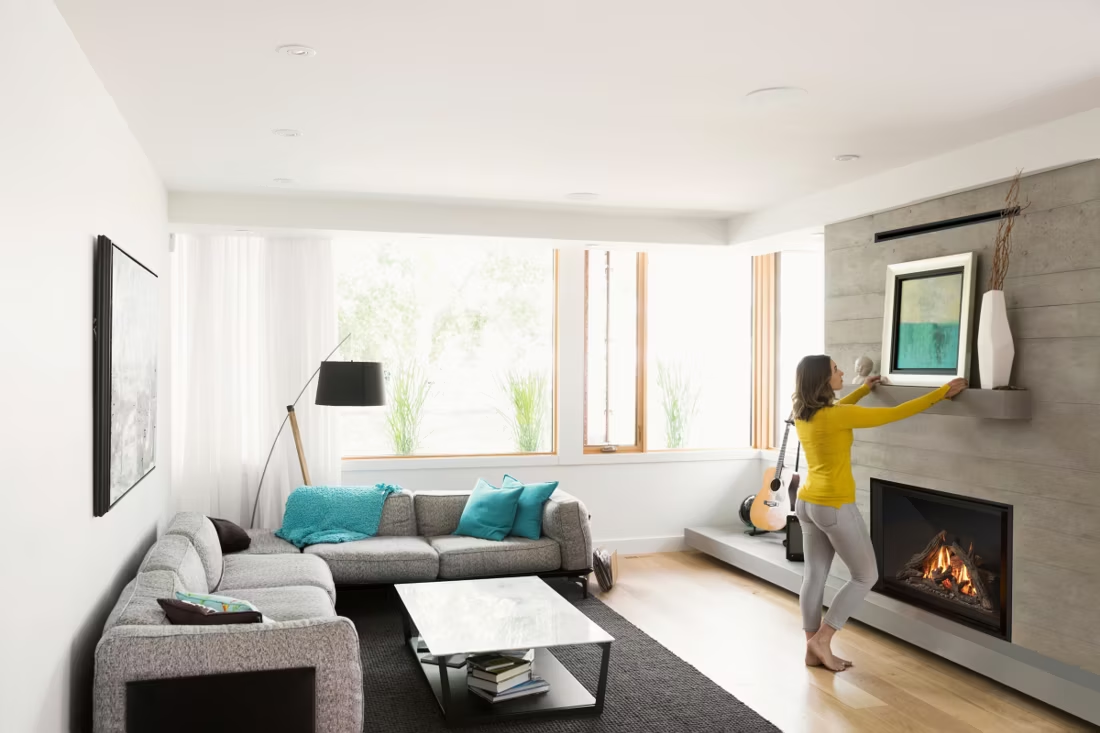
Four fuels. One honest answer for Billings County.
Three steps. No salesperson until you're ready.
Tell us about your project
Your zip code, your situation, and the fuel you're leaning toward—or let the answers point you to one.
See what's actually available
The brands dealers within 100 miles genuinely carry—real options, never a catalog mirage.
Get your dealer & Project Guide
A trusted local dealer, plus the free Project Guide & Parts List that names every component of the job.
Frequently Asked Questions
Which fireplace fuel makes the most sense in Billings County?
It depends on how remote your property is and what you're using it for. Wood is the practical backbone here—cottonwood from the river bottoms and ash or oak from shelterbelt plantings are the most common species burned, and a wood stove keeps a ranch house warm through a blizzard power outage when nothing else will. Propane is the standard convenience fuel since natural gas mains don't reach most of the county—a propane fireplace or insert gives instant heat without a woodpile. Pellet stoves are a solid middle option; Lignetics distributes into this part of North Dakota, so fuel supply isn't the obstacle it might seem for such a sparsely populated area. Electric fireplaces work well as supplemental heat in a den or bedroom but shouldn't be your only heat source given how far winter lows here can drop. Most ranch homes end up with wood or propane as primary heat and pellet or electric filling in secondary rooms.
Do I need a building permit to install a fireplace in Billings County?
Yes, in most cases. Billings County's building department handles permitting for new wood stoves, wood inserts, gas or propane fireplaces and inserts, and pellet stoves, and any new wood-burning appliance should meet current EPA emissions standards. Propane installations also require the tank and line work to be done by a licensed installer, separate from the appliance permit itself. Electric fireplaces are usually exempt unless you're doing a built-in with new wiring. Because the county covers a lot of ground with few staff, plan for permit turnaround to take longer than it would in a bigger jurisdiction—most local retailers who serve this area are used to that timeline and handle the paperwork as part of the install.
Are there air quality restrictions on wood burning in Billings County?
No—Billings County has no non-attainment designation and no winter burn curtailment program, unlike wood-heavy counties out west in inversion-prone valleys. With a population this small and no industrial concentration, wood smoke simply isn't a community air quality issue here. That said, an EPA-certified stove still burns cleaner and more efficiently than an old uncertified unit, which matters when you're trying to stretch a woodpile of self-cut cottonwood or ash through a long badlands winter.
Can one local dealer handle wood, gas, pellet, and electric all in one visit?
Most likely, but you'll be driving to find them. Given that Billings County has around 151 residents, there isn't a hearth showroom inside the county itself—homeowners typically head to Dickinson, the nearest town with multi-fuel dealers who stock wood stoves, propane fireplaces, pellet units, and electric inserts side by side. That's worth the drive if you're still deciding between fuels, since you can see working displays and compare before committing to what's realistically installable at your ranch.
How does fireplace service work when the nearest dealer is a long drive away?
Plan ahead. Technicians serving Billings County are generally based in Dickinson or other nearby towns and build routes to reach ranch properties spread across the badlands, so a same-week service call in the middle of a January cold snap is unlikely. Booking your annual chimney sweep or gas inspection in late summer or early fall, before the rush, is the best way to avoid a gap in heat. Expect a trip charge for the distance on top of the service cost, and if wood is your primary heat, keeping a second fuel source—propane or electric—as backup is common practice out here in case a part or technician visit takes a few extra days.
What does fireplace installation typically cost across fuel types in Billings County?
Costs run close to statewide North Dakota averages, with an added trip charge for the distance dealers travel. Wood stove or insert installation: roughly $4,000–$8,500 depending on chimney work. Propane fireplace, insert, or stove: $4,000–$10,000, with cost driven mostly by tank placement and line runs on a rural property. Pellet stove or insert: $4,000–$7,000 for a typical install. Electric fireplace: $200–$2,500 for the unit, plus $300–$1,000 in labor for anything beyond a plug-and-play unit. Ask any dealer quoting your project whether the travel fee is included up front—it often isn't, and it can be a meaningful line item this far from Dickinson or Bismarck.
How much should I budget for a fireplace?
For an average home—covering the fireplace, the vent pipe, and basic installation—a budget between $3,900 and $5,500 gives you a lot of options across wood, gas, and pellet. By the time you add finish work, gas line, and electrical, the average complete installation lands between $5,000 and $12,000 all-in. In a remodel or new build, a good rule is to put about 2.5% of the total project cost toward the fireplace.
Can a fireplace actually lower my heating bill?
Yes—by creating a comfort zone. A furnace heats every square foot of the house just to warm the one room you're in; a gas fireplace on low burns roughly a sixth of the gas a typical furnace does. Set the furnace around 55–60 degrees as a baseline, then heat the rooms your family actually uses. Families who heat this way commonly save $20–$60 a month.
I know I want a fireplace—where do I actually start?
Do two things today: snap a photo of the wall or fireplace you want to transform, and take a tape measure to the space—width, height, depth. Those two artifacts answer most of a hearth professional's first questions. Then settle fuel (wood, gas, pellet, or electric) and set a realistic budget: $3,900–$5,500 covers fireplace, vent, and basic install for most homes.
Should the dealer who sells my fireplace also install it?
Ideally, yes. A fireplace project involves vent pipe, gas line, electrical, and often tile or stone. Hire three or four separate trades and you own the liability and the game of telephone between them. One company selling and installing means one accountable party, start to finish—ask about factory training, on-time completion records, and what happens if an inspection fails.
Stove and Fireplace Dealers in Billings County
Listings include WhyFire partner dealers, dealers we have verified as authorized for the brands we recommend, and established local businesses that carry hearth products. Every listing shows which one it is. The ones marked Preferred run on WhyFire's software, so they can show you real pricing and book your appointment right here. No manufacturer pays for placement. How we verify dealers →
Keller Hearth'n Home Products
Find the right fireplace for your Billings County home.
Tell us about your ranch or town property and we'll match you with a trusted local dealer and send you a free Project Guide & Parts List—the parts, the vent kit, and the dealer recommendation for your fuel and your home.
Find Your Fireplace →