
Find the right fireplace for your Washington County home.
Wood, gas, pellet, and electric fireplace resources for Plymouth, Roper, Creswell, and the rest of Washington County. Find the right unit for our mild coastal-plain winters and connect with a trusted local hearth dealer.
Every Project Starts From One of These Five Situations
Mild winters on the Albemarle-Pamlico coastal plain.
Washington County sits low and flat along the Albemarle-Pamlico Sound, with a climate 3A profile and a light winter heating load—nowhere near the cold-climate demands of a place like Duluth or Burlington. Winter lows average in the mid-30s, and hard freezes are the exception rather than the rule. That said, the county's mix of farmland, riverfront homes, and older housing stock in Plymouth and Roper still leans on supplemental heat during the shoulder-season chill, and a good hearth appliance covers the handful of genuinely cold nights each winter without needing to run a whole-house furnace.
What you'll find on this hub: hearth retailers, service technicians, and fuel suppliers covering the whole county—from Plymouth and Roper to Creswell and the unincorporated farm communities along the Roanoke and Scuppernong rivers. Local oak, hickory, maple, and pine are plentiful for wood burners, and pellet stoves are a practical low-maintenance option for the county's smaller, tighter homes. Pick your fuel below to see local dealers, typical costs, and the resources specific to your project.
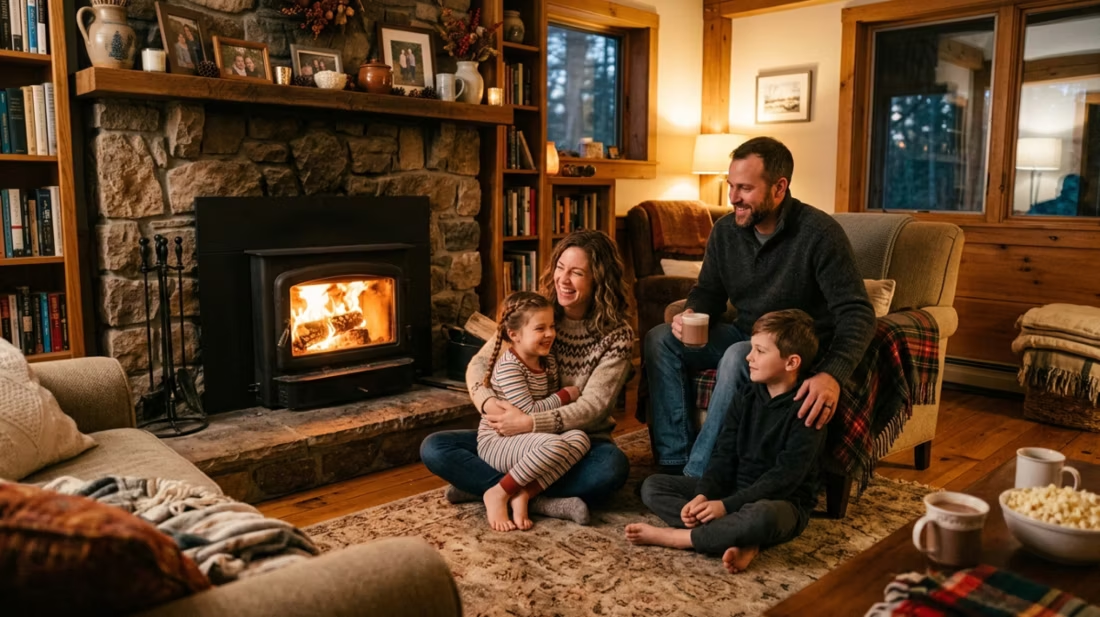
Four fuels. One honest answer for Washington County.
Three steps. No salesperson until you're ready.
Tell us about your project
Your zip code, your situation, and the fuel you're leaning toward—or let the answers point you to one.
See what's actually available
The brands dealers within 100 miles genuinely carry—real options, never a catalog mirage.
Get your dealer & Project Guide
A trusted local dealer, plus the free Project Guide & Parts List that names every component of the job.
Frequently Asked Questions
Which fuel works best in Washington County?
With a light winter heating load and winter lows averaging in the mid-30s, Washington County doesn't demand the heavy-duty cold-climate setups you'd see in Bismarck or Fargo—but a good hearth appliance still matters for cold snaps and power outages after coastal storms. Wood is popular given the local oak, hickory, and maple, and it doubles as backup heat when hurricanes or nor'easters knock out power. Gas is the convenience choice where propane service is available—reliable heat with no wood handling. Pellet stoves work well in the county's smaller homes and are widely available through regional suppliers like Lignetics and Greenway Renewable Energy. Electric is a solid supplemental option for a den or bedroom, especially given how few days actually need serious heat output here. Most homeowners in the county pick one primary fuel and treat it as occasional-use rather than a full heating system.
Do I need a permit to install a fireplace in Washington County?
Generally yes. New wood stoves, wood inserts, gas fireplaces, gas inserts, gas stoves, and pellet stoves typically require a building permit through the Washington County building inspections office, whether the home is in Plymouth, Roper, or unincorporated county land. Gas installations also need a separate gas permit and licensed gas work for the line connection. Electric fireplaces usually skip the permit process unless the install involves a new dedicated circuit or built-in hardwiring. Most hearth retailers serving the county handle the permit paperwork as part of the installation, so it's rarely something homeowners have to manage themselves.
Are there air quality restrictions on wood burning in Washington County?
No—Washington County has no air quality non-attainment designations and no winter burn restrictions. The county's rural, low-density layout along the coastal plain means wood smoke simply doesn't concentrate the way it can in a mountain valley or urban basin. That said, installing an EPA-certified stove is still worth doing for efficiency's sake—a modern catalytic or non-catalytic unit gets more heat out of the same cord of oak or hickory than an older uncertified stove, which matters when firewood is something you're cutting or buying by the load rather than burning constantly.
Can one local hearth retailer handle all four fuel types?
In a county this size, most homeowners end up working with a retailer based in Plymouth or a neighboring town like Washington (Beaufort County) that carries a broad mix—wood, gas, and pellet are typically covered by the same dealer, with electric fireplaces often carried as a smaller product line alongside the others. Given the low population base, there isn't a large roster of specialty single-fuel showrooms here the way there might be in a bigger market—most local dealers are set up to discuss two or three fuel types in the same visit so you can compare before deciding.
How does service work in rural parts of Washington County?
Most technicians serving the county are based out of Plymouth or nearby Beaufort or Martin county towns and travel out to Roper, Creswell, and the farm communities along the Scuppernong and Roanoke rivers. Given the modest population, scheduling ahead matters more than in a dense market—book chimney sweeps and pellet stove cleanings in early fall, before the first cold front and before technicians get booked up around the coast. A small trip fee for outlying farm properties is common. Because storm-related power outages happen here more than winter cold does, it's also worth keeping a wood or pellet stove in working order year-round as a backup heat source, not just a winter appliance.
What's the typical cost range for fireplace installation across all fuel types in Washington County?
Costs run somewhat lower here than in denser coastal markets, though travel fees for rural properties can offset some of that. Wood stove or insert installation: roughly $4,000–$8,000 for a typical retrofit into an existing chimney. Gas fireplace, insert, or stove: $4,000–$9,500 depending on whether propane line work is needed. Pellet stove or insert: $4,000–$7,000 for most installs. Electric fireplace: $200–$2,800 for the unit itself, plus $300–$1,000 in labor for anything beyond a simple plug-in unit. See the county + fuel pages above for retailer-specific pricing.
Can a fireplace actually lower my heating bill?
Yes—by creating a comfort zone. A furnace heats every square foot of the house just to warm the one room you're in; a gas fireplace on low burns roughly a sixth of the gas a typical furnace does. Set the furnace around 55–60 degrees as a baseline, then heat the rooms your family actually uses. Families who heat this way commonly save $20–$60 a month.
Does a fireplace add value to my home?
On average, a fireplace adds back to the home about the same amount you spent installing it. Add the monthly savings from heating the rooms you actually use instead of the whole house—often hundreds of dollars a year—and the value case is strong before you even count what a fire does for how your family uses the room.
How much should I budget for a fireplace?
For an average home—covering the fireplace, the vent pipe, and basic installation—a budget between $3,900 and $5,500 gives you a lot of options across wood, gas, and pellet. By the time you add finish work, gas line, and electrical, the average complete installation lands between $5,000 and $12,000 all-in. In a remodel or new build, a good rule is to put about 2.5% of the total project cost toward the fireplace.
Wood, gas, pellet, or electric—how do I choose?
Match the fuel to your life, not the other way around. Wood: lowest fuel cost and total power-outage independence, but you're hauling and stacking. Gas: press a button, set a thermostat, no maintenance to speak of. Pellet: wood economics with automatic feeding, in exchange for weekly cleaning and a need for electricity. Electric: plugs in anywhere with honest supplemental heat. Nobody regrets the fuel that fits how they actually live.
Stove and Fireplace Dealers in Washington County
Listings include WhyFire partner dealers, dealers we have verified as authorized for the brands we recommend, and established local businesses that carry hearth products. Every listing shows which one it is. The ones marked Preferred run on WhyFire's software, so they can show you real pricing and book your appointment right here. No manufacturer pays for placement. How we verify dealers →
Jernigan Oil & Gas- Williamston
Tarheel Fireplace & Grill Shop
Jernigan Oil & Gas- Ahoskie
Fireplace Creation
Daughtridge Gas & Oil Company
Find your fireplace in Washington County.
Pick your fuel below to see local dealers, typical installation costs, and get matched with a trusted retailer who can put together your free Project Guide & Parts List.
Find Your Fireplace →