
Find your fireplace in Tyrrell County.
A mild coastal climate and a population of 560 shape what actually gets installed here. We match Tyrrell County homeowners with a trusted local dealer and a free plan for the project, whatever fuel fits your home.
Every Project Starts From One of These Five Situations
560 residents, a wetland landscape, and winters mild enough that gas and electric carry the load.
Tyrrell County is North Carolina's least populous county, and its geography explains why: most of the land is wetland, split between the Alligator River National Wildlife Refuge, Pocosin Lakes National Wildlife Refuge, and the shoreline of Lake Phelps at Pettigrew State Park, with the county seat of Columbia sitting along the Scuppernong River near the Albemarle Sound. The climate falls in ASHRAE zone 3A—warm-humid, with mild winters that rarely demand the kind of sustained heat load you'd see farther north or at higher elevation. Oak, hickory, maple, and pine are the dominant tree species across the pocosins and hardwood swamps, but they're managed here mostly for black bear and waterfowl habitat, not cut for household firewood.
That mild-winter reality is why wood and pellet heating see minimal use in Tyrrell County—not because the trees aren't here, but because the heating need that normally justifies a wood or pellet stove just isn't part of most winters. Gas and electric fireplaces are the practical, standard choices instead, typically running on delivered propane rather than piped natural gas, since gas mains don't reach this rural a county. Because the population is so small, there's no hearth retailer physically based in Tyrrell County—installers and service techs generally travel in from Plymouth, Elizabeth City, or Edenton, and Tideland EMC is the electric cooperative serving most homes here. This hub rolls up what's available across the whole county, from Columbia out to Gum Neck and the smaller communities along US-64. Pick your fuel below for local dealers, install costs, and recommendations specific to your home.
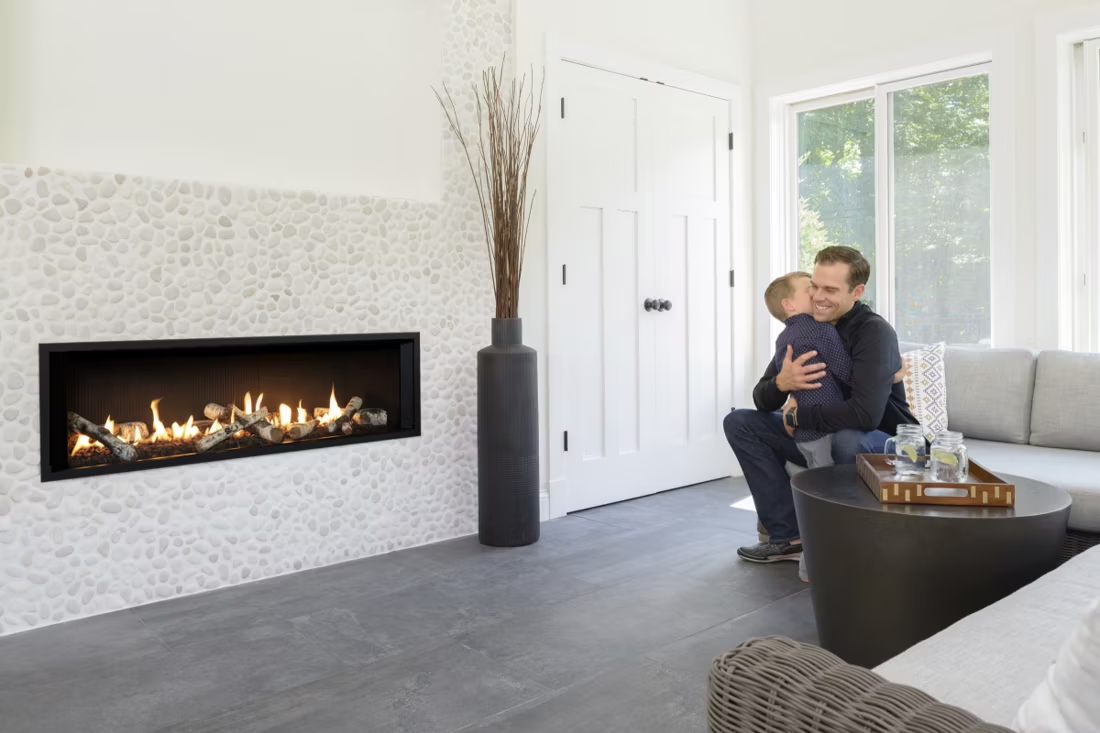
Four fuels. One honest answer for Tyrrell County.
Three steps. No salesperson until you're ready.
Tell us about your project
Your zip code, your situation, and the fuel you're leaning toward—or let the answers point you to one.
See what's actually available
The brands dealers within 100 miles genuinely carry—real options, never a catalog mirage.
Get your dealer & Project Guide
A trusted local dealer, plus the free Project Guide & Parts List that names every component of the job.
Frequently Asked Questions
Which fireplace fuel actually makes sense in Tyrrell County?
For most homes here, it's gas or electric. Tyrrell County sits in a mild, humid ASHRAE 3A climate, and winters along the Albemarle Sound rarely produce the sustained cold that makes wood or pellet heat worth the investment as a primary source. Propane-fed gas fireplaces are the more common standard choice for real supplemental heat, while electric fireplaces cover ambiance and light warmth in bedrooms or additions without any venting at all. Oak, hickory, and pine may be everywhere in the surrounding pocosins, but very few households here are set up to burn them for heat.
Why aren't wood or pellet stoves more common here, when the county is covered in oak and hickory?
It comes down to heating need, not wood availability. The oak, hickory, maple, and pine that fill the Alligator River and Pocosin Lakes refuges are managed for wildlife habitat, not firewood, and Tyrrell County's mild ASHRAE 3A winters simply don't generate the heating load that makes a wood or pellet stove practical the way it would in a much colder climate. A small number of homeowners still install a wood-burning fireplace for occasional cool-evening use or ambiance, and pellet brands like Lignetics or Hamer Pellet Fuel are technically available through regional distribution, but pellet stoves see almost no real demand in a county this warm and this small.
Do I need a permit to install a gas or electric fireplace in Tyrrell County?
Generally yes for gas, and it depends for electric. Gas fireplace installs need a gas-line permit through the county building inspections department along with a licensed propane installer to run and pressure-test the line, since there's no piped natural gas reaching this part of the county. Electric fireplaces usually skip the permit process for plug-in units, but a built-in electric fireplace that needs a new dedicated circuit typically requires an electrical permit and inspection. Most dealers who travel in from Plymouth or Elizabeth City handle this paperwork as part of the install.
How does gas fuel work if there's no natural gas line to my house?
Almost every gas fireplace in Tyrrell County runs on propane rather than piped natural gas, since the county's rural, low-density geography—most of it wetland refuge—has never justified running gas mains out this far. That means a propane tank on-site (buried or above-ground) and a delivery contract with a local LP supplier, sized to whatever BTU load your fireplace or insert pulls. Your installer will size both the tank and the line run as part of the project, and it's worth asking about delivery frequency during your specific fireplace's heaviest-use months.
What does a fireplace installation typically cost in Tyrrell County?
Gas fireplace inserts and units generally run $3,500–$9,000 installed, with the upper end driven by how much propane line work is involved for a home that isn't already set up for it. Electric fireplaces are far less expensive—$200–$3,000 for the unit itself, plus $400–$1,200 in labor if you're going beyond a simple plug-in placement into a built-in with its own circuit. A wood-burning fireplace for occasional or decorative use, where a homeowner wants one despite the mild climate, typically costs more once chimney work is factored in, since so few local crews build them regularly.
How does service and scheduling work when there's no dealer in the county?
Because Tyrrell County has only about 560 residents, service techs and installers travel in from Plymouth, Elizabeth City, or Edenton rather than being based locally. Expect a trip fee built into most service calls, and expect scheduling to get tighter heading into the cooler months when everyone in the region is trying to book gas inspections at once. Electric issues are usually simpler to resolve, since Tideland EMC serves most of the county and most electric fireplace problems trace back to the circuit rather than the unit itself.
Can a fireplace actually lower my heating bill?
Yes—by creating a comfort zone. A furnace heats every square foot of the house just to warm the one room you're in; a gas fireplace on low burns roughly a sixth of the gas a typical furnace does. Set the furnace around 55–60 degrees as a baseline, then heat the rooms your family actually uses. Families who heat this way commonly save $20–$60 a month.
What is an in-home preview and do I need one?
It's a visit where a hearth professional measures your space, confirms the model you picked actually works in your home, and walks the specs—framing, gas line, venting, finish work—before anything is ordered. Some details you just can't know until you see the house. Never make a down payment without one; it's the single most-skipped step that burns buyers.
How much should I budget for a fireplace?
For an average home—covering the fireplace, the vent pipe, and basic installation—a budget between $3,900 and $5,500 gives you a lot of options across wood, gas, and pellet. By the time you add finish work, gas line, and electrical, the average complete installation lands between $5,000 and $12,000 all-in. In a remodel or new build, a good rule is to put about 2.5% of the total project cost toward the fireplace.
I know I want a fireplace—where do I actually start?
Do two things today: snap a photo of the wall or fireplace you want to transform, and take a tape measure to the space—width, height, depth. Those two artifacts answer most of a hearth professional's first questions. Then settle fuel (wood, gas, pellet, or electric) and set a realistic budget: $3,900–$5,500 covers fireplace, vent, and basic install for most homes.
Stove and Fireplace Dealers in Tyrrell County
Listings include WhyFire partner dealers, dealers we have verified as authorized for the brands we recommend, and established local businesses that carry hearth products. Every listing shows which one it is. The ones marked Preferred run on WhyFire's software, so they can show you real pricing and book your appointment right here. No manufacturer pays for placement. How we verify dealers →
Tarheel Fireplace & Grill Shop
Jt Jones Propane & Fireplace
Shorefire Gas Fireplaces
Owen Gas
Albemarle Chimney Sweep & Duct Cleaning
Get matched with a Tyrrell County-area dealer.
Pick your fuel below and we'll put together a free Project Guide & Parts List—the right unit, the vent or circuit it needs, and the local dealer we recommend for your Tyrrell County project.template_error_field_below_should_not_exist:false,
Find Your Fireplace →