
Add Instant Heat to Your Raleigh Home.
Clean, on-demand warmth for Raleigh's mild but real winters—find the right gas fireplace or insert and get matched with a trusted local dealer.
Every Project Starts From One of These Five Situations
Convenience wins in the Piedmont's mild winters.
Raleigh sits at just 327 feet in North Carolina's Piedmont, in climate zone 4A, with an average winter low around 32°F and a relatively short, mild heating season each year. That's a fraction of what a place like Minneapolis or Buffalo racks up each winter, so home heating here is rarely a survival issue—it's about comfort, ambiance, and taking the chill off during the occasional hard freeze or ice storm that rolls through the Triangle.
That mild-but-real winter pattern is exactly why gas fireplaces have become the default choice across Raleigh's neighborhoods, from the older bungalows around Five Points and Boylan Heights to the new-construction subdivisions filling in along the 27612, 27613, and 27614 corridors. PSNC Energy serves natural gas throughout most of the city and inner suburbs, and a direct-vent gas fireplace or insert gives you real, immediate heat at the flip of a switch—without stacking wood, cleaning ash, or waiting for a bed of coals to build.
Three steps. No salesperson until you're ready.
Tell us about your project
Your zip code, your situation, and the fuel you're leaning toward—or let the answers point you to one.
See what's actually available
The brands dealers within 100 miles genuinely carry—real options, never a catalog mirage.
Get your dealer & Project Guide
A trusted local dealer, plus the free Project Guide & Parts List that names every component of the job.
Frequently Asked Questions
How much does a gas fireplace installation cost in Raleigh?
A typical gas fireplace or insert installation in Raleigh runs roughly $4,000 to $10,000, depending on the unit, the venting path, and whether new gas line work is needed. A direct-vent insert dropped into an existing masonry fireplace that already has gas service nearby sits toward the lower end. New construction or a remodel that requires framing, venting through an exterior wall, and a fresh gas line run from the meter will land toward the higher end. Local dealers will give you a firm number after walking your home, since older Raleigh houses and new-build subdivisions often have very different starting points.
Can I convert my existing wood fireplace to gas?
Yes, and it's one of the most common upgrades in Raleigh's older housing stock. Many homes built before the 1990s—especially around Cameron Park, Hayes Barton, and Mordecai—have a masonry wood-burning fireplace that rarely gets used because it's drafty, smoky, and inconvenient in a climate that only sees occasional hard freezes. A gas insert with a stainless liner run up the existing chimney solves that, delivering real heat and a clean glass front without touching the exterior masonry. Expect the conversion itself to run in the same $4,000-$10,000 range depending on chimney height and whether new gas line work is required.
Do I need natural gas to install a gas fireplace, or can I use propane?
Either works, but it depends on where you live. PSNC Energy provides natural gas throughout most of the city of Raleigh and the inner-loop zip codes, so if your home already has gas for a furnace, water heater, or range, adding a fireplace is usually straightforward. Farther out in unincorporated Wake County or newer developments still building out infrastructure, propane from a local supplier and tank is the standard fallback. Most gas fireplace models can be set up for either fuel—your installer swaps in the correct orifice and regulator for the gas type you have.
Will my gas fireplace work during a power outage?
Most modern gas fireplaces will, which matters in a region where ice storms and summer thunderstorms both knock out power. Units with IPI (intermittent pilot ignition) run on a small battery backup that kicks in the instant the grid drops, so the fireplace lights and runs normally regardless of whether Duke Energy Progress or Duke Energy Carolinas serves your part of the Triangle. Valor fireplaces take it a step further—their pilot assembly generates its own electricity through the thermocouple, so there's no battery to remember at all. Worth asking about directly if outage resilience matters to you.
What's the difference between a gas fireplace, gas insert, and gas stove?
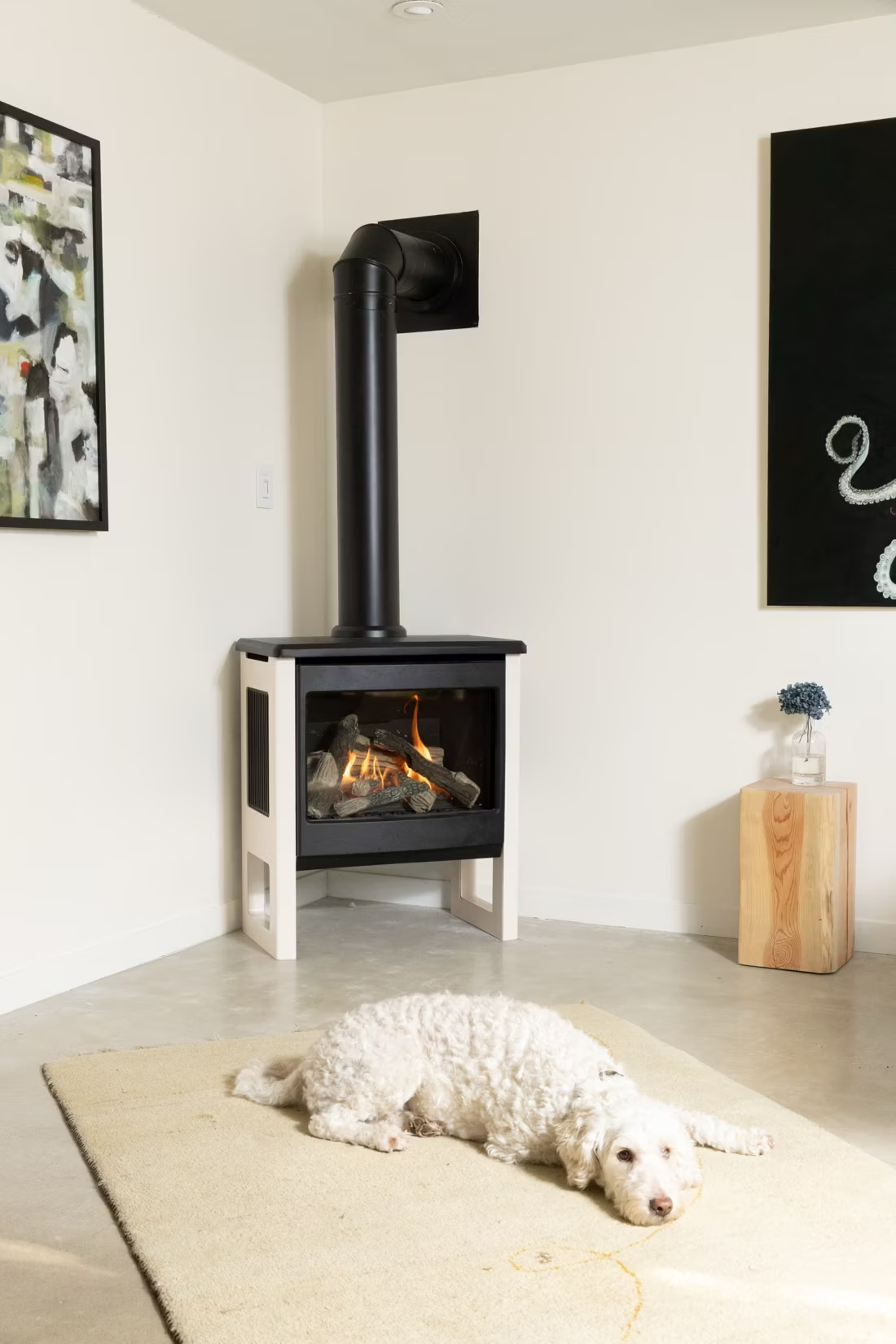
A gas fireplace is a fully built-in unit framed into a wall—the standard choice for new construction, which is common across Raleigh's fast-growing suburbs. A gas insert is sized to slide into an existing masonry firebox, converting an old wood-burning fireplace into a sealed, efficient gas unit using the existing chimney as the vent chase. A gas stove is a freestanding cast-iron or steel unit that sits on the floor and vents through a wall or ceiling, often chosen for a sunroom or addition without an existing chimney. For Raleigh's older homes with a fireplace already in place, an insert is usually the simplest and most cost-effective route.
Do I need a permit to install a gas fireplace in Raleigh?
Yes—the City of Raleigh and Wake County both require a building permit and a separate gas permit for new gas fireplace installations, and the gas line connection has to be run or inspected by a licensed gas contractor. Most established hearth dealers handle this paperwork as part of the installation, coordinating the gas line, venting, and inspection so you're not managing multiple trades yourself. If you're working with a general handyman instead of a certified dealer, confirm upfront who's pulling the permit.
What's the difference between vented and vent-free gas fireplaces?
Vented gas fireplaces (direct-vent or B-vent) draw combustion air from outside and exhaust it back outside through sealed venting—they're the cleanest and most universally code-compliant option. Vent-free units burn directly into the room air, which makes them easier to install in a space without existing venting, but they come with strict room-size and ventilation rules. North Carolina permits vent-free fireplaces, and Raleigh has no winter air-quality non-attainment issues that would restrict them further, but most local dealers still steer whole-home installations toward direct-vent units for the better heat output and cleaner indoor air. Vent-free can make sense for a small supplemental space like a sunroom or converted garage.
How often should my gas fireplace be serviced?
Plan on an annual inspection, ideally in early fall before you start using it regularly. A technician checks the burner, pilot assembly, venting, and gas connections, and cleans the glass and interior—a much lighter job than wood-stove chimney sweeping but just as important for safe operation. Local gas appliance service providers in the Raleigh area typically charge $150 to $250 for this visit, and it's the single easiest way to catch a failing thermocouple or sooting burner before it becomes a bigger repair.
Gas vs. wood—which is right for my home?
In Raleigh's climate, wood isn't really a primary heating strategy the way it is farther north—with only a relatively short, mild heating season each year and winter lows averaging 32°F, most homes don't need round-the-clock supplemental heat. Wood is still around for ambiance: oak, hickory, and pine are all available regionally, and some homeowners keep a wood-burning fireplace or fire pit for the occasional cold snap or backyard gathering. But for anyone actually using their fireplace on a regular basis through the Triangle's mild winters, gas wins on nearly every practical measure—instant on-off operation, no ash or creosote, and consistent heat without the hassle of stacking and drying cordwood.
Why is my open fireplace making my house colder?
Open fireplaces suck—literally. As the fire burns, it consumes air your furnace already paid to heat and pulls it out through the chimney, so the house is actually colder after the fire goes out than before you lit it. An insert fixes this: it seals the chimney, puts fixed glass across the front, and turns that hole in your house into a real heat source.
Why is a fireplace insert so efficient?
An insert does two things: it seals the chimney completely, so you stop losing air you already paid to heat, and it radiates warmth into the room through the firebox and glass. Most add a heat-exchange fan that pulls cool room air underneath, wraps it around the hot firebox, and pushes it back out warm. Your home is more efficient before you've even lit the first fire.
Can a fireplace actually lower my heating bill?
Yes—by creating a comfort zone. A furnace heats every square foot of the house just to warm the one room you're in; a gas fireplace on low burns roughly a sixth of the gas a typical furnace does. Set the furnace around 55–60 degrees as a baseline, then heat the rooms your family actually uses. Families who heat this way commonly save $20–$60 a month.
How much should I budget for a fireplace?
For an average home—covering the fireplace, the vent pipe, and basic installation—a budget between $3,900 and $5,500 gives you a lot of options across wood, gas, and pellet. By the time you add finish work, gas line, and electrical, the average complete installation lands between $5,000 and $12,000 all-in. In a remodel or new build, a good rule is to put about 2.5% of the total project cost toward the fireplace.
Nearby Dealers
Hearth shops serving Raleigh and the surrounding area. Every listing shows whether it is a WhyFire partner, a dealer we have verified as authorized for the brands we recommend, or a local business carrying hearth products. No manufacturer pays for placement. How we verify dealers →
Fireside Distributors Inc
Pro Source Of Raleigh
Viridien Patio + Fireplace
Oak City Fireplace & Outdoor Living
Smoke Alert
Brandco Incorporated
The Fireplace Depot
L.g. Jordan Oil & Gas Co.
Steve Marcom Services
Original Grills - Outdoor Kitchen & Grill Store
Energy United Propane- Creedmoor
Home Flame
Find your gas fireplace in Raleigh.
Tell us about your home and we'll match you with a trusted local Raleigh dealer and send over a free Project Guide & Parts List—the exact fireplace or insert, vent kit, and installer recommendation for your space.
Find Your Fireplace →