
Fireplace resources for every corner of Pender County.
Wood, gas, pellet, and electric fireplace resources for the whole county—from the farm towns around Burgaw to the growing coastal communities near Topsail Island. Pick a fuel and get matched with a local dealer who actually installs it here.
Every Project Starts From One of These Five Situations
Mild winters, a short and easy heating season, and a county split between farmland and coastline.
Pender County stretches from inland farm towns like Burgaw, Willard, and Atkinson to the fast-growing coastal side of the county around Hampstead, Surf City, and Topsail Beach. With an average winter low of 34°F and a heating season that's short and mild by national standards, Pender sits in climate zone 3A—a mixed-humid climate with far less need for heat than most of the country. That means fireplaces here more often work as supplemental heat and gathering-space ambiance rather than a home's sole source of warmth, though a well-sized wood or gas unit still earns its keep on the county's occasional hard-freeze nights. Oak and hickory are the go-to firewood species for households that want a slow, dense burn, with maple and pine rounding out what's commonly split and sold locally—most of it sourced from private land clearing and tree services rather than public forest permits, since Pender has no national forest acreage to speak of.
The coastal half of the county adds a different wrinkle: Hampstead, Surf City, and Topsail Beach sit squarely in hurricane country, and storms like 2018's Hurricane Florence knocked out power to parts of Pender for days. That history is why a fair number of homeowners here treat a wood stove or a gas unit with a standing pilot as genuine storm-season backup heat and cooking capability, not just a nice-to-have. Pender has no non-attainment designation and no burn curtailment days, so permitting is straightforward through the county's building inspections office in Burgaw. This hub rolls up hearth retailers, service techs, and fuel suppliers across the whole county—pick your fuel below for local dealers, install costs, and unit recommendations specific to your town.
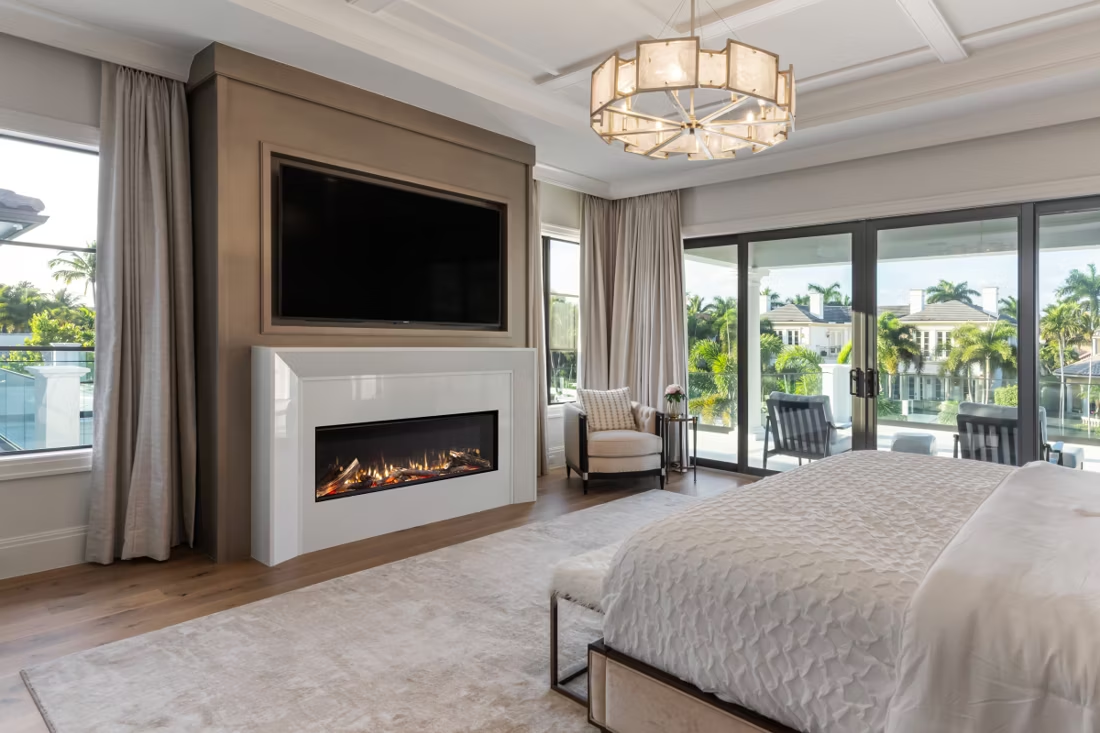
Four fuels. One honest answer for Pender County.
Three steps. No salesperson until you're ready.
Tell us about your project
Your zip code, your situation, and the fuel you're leaning toward—or let the answers point you to one.
See what's actually available
The brands dealers within 100 miles genuinely carry—real options, never a catalog mirage.
Get your dealer & Project Guide
A trusted local dealer, plus the free Project Guide & Parts List that names every component of the job.
Frequently Asked Questions
Which fireplace fuel makes the most sense in Pender County?
All four fuels work here, and the choice usually comes down to how you use the county rather than the climate forcing your hand—with a short, mild heating season and winter lows around 34°F, Pender's winters are mild enough that most fireplaces here supplement a heat pump rather than replace it. Wood is popular inland around Burgaw and Willard, where oak and hickory split locally burn long and hot, and a lot of that wood comes from private land clearing rather than forest permits. Gas is the low-maintenance choice, especially for Hampstead and Surf City homeowners who want reliable heat during a power outage without tending a fire—most of the county runs on propane rather than piped natural gas, so factor a tank into your install. Pellet stoves have a following too; Lignetics, Hamer Pellet Fuel, and Greenway Renewable Energy all distribute in the region, and a hopper-fed stove is an easy sell for anyone who wants wood-like ambiance without splitting logs. Electric fireplaces are common as a supplemental unit in bedrooms, sunrooms, and coastal homes on Topsail Island where venting a real chimney is impractical.
Do I need a permit to install a fireplace or stove in Pender County?
Yes, for anything beyond a plug-in electric unit. New wood stove and insert installs are permitted through Pender County's building inspections office in Burgaw, and since the county carries no non-attainment designation, there are no curtailment restrictions to navigate—the permit process is mainly about verifying clearances and a code-compliant chimney or liner. Gas installations need a separate permit and a licensed gas fitter, particularly since most of the county runs on propane tanks rather than municipal gas lines, which adds a step for tank placement and line runs. Pellet stove permitting is similar to wood but without any curtailment paperwork. Electric fireplaces usually skip permitting entirely unless you're hardwiring a built-in unit that needs a dedicated circuit. Most retailers we match homeowners with handle this paperwork as part of the installation.
Does hurricane season affect how people choose a fireplace here?
It does, especially for homeowners closer to the coast around Hampstead, Surf City, and Topsail Beach, where extended power outages during storms are a real memory for anyone who was here for Hurricane Florence in 2018. That's led a number of homeowners to prioritize wood stoves or gas units with a standing pilot light over fully electric-ignition gas fireplaces, since those can keep providing heat and even stovetop cooking capability when the grid goes down. If backup capability matters to you, ask your local dealer about pilot-light versus electronic-ignition gas models and about keeping a stocked woodpile or a spare propane tank on hand heading into storm season.
Can I find a retailer in Pender County that carries more than one fuel type?
Most Pender County hearth retailers carry two or three fuel types rather than specializing in just one, which fits how households here actually use fireplaces—often a heat pump for daily heating with a wood, gas, or pellet unit layered in for ambiance, backup heat, or storm-season resilience. Multi-fuel dealers are worth visiting if you're undecided, since you can compare a working wood stove, a gas insert, and a pellet unit side by side and talk through which fits your home, whether you're on propane in Hampstead or splitting your own oak near Willard. We match you with the retailer whose lineup and service area actually fit your project.
How does installation and service work across a county this spread out?
Pender County covers a lot of ground between the inland farm towns and the coast, and service crews typically split their routes between the Burgaw/Highway 53 corridor and the Hampstead/Surf City/Topsail Beach area. Expect a modest travel fee for the farthest coastal or western calls, and expect scheduling to tighten up in early fall as homeowners get their gas inspections and chimney sweeps done ahead of the first cold snap and, separately, ahead of hurricane season if you're relying on your hearth as storm backup. Booking service in late summer typically beats the fall rush.
What does a fireplace installation typically cost in Pender County?
Costs track fairly closely with regional norms, since Pender's mild climate mostly affects unit sizing rather than installation complexity. Wood stove or insert installs generally run $4,500–$9,000, more if you're building a new chimney chase rather than lining an existing one. Gas fireplaces, inserts, and stoves run roughly $4,500–$11,000, with propane tank placement and line runs adding to the cost for homes outside any piped gas service. Pellet stove or insert installs typically land at $4,500–$7,500. Electric fireplaces are the budget option—$200–$3,000 for the unit, plus $400–$1,200 in labor if it needs a dedicated circuit or a built-in surround. The county + fuel pages above break these numbers down further with local retailer pricing.
How much should I budget for a fireplace?
For an average home—covering the fireplace, the vent pipe, and basic installation—a budget between $3,900 and $5,500 gives you a lot of options across wood, gas, and pellet. By the time you add finish work, gas line, and electrical, the average complete installation lands between $5,000 and $12,000 all-in. In a remodel or new build, a good rule is to put about 2.5% of the total project cost toward the fireplace.
What is an in-home preview and do I need one?
It's a visit where a hearth professional measures your space, confirms the model you picked actually works in your home, and walks the specs—framing, gas line, venting, finish work—before anything is ordered. Some details you just can't know until you see the house. Never make a down payment without one; it's the single most-skipped step that burns buyers.
Can a fireplace actually lower my heating bill?
Yes—by creating a comfort zone. A furnace heats every square foot of the house just to warm the one room you're in; a gas fireplace on low burns roughly a sixth of the gas a typical furnace does. Set the furnace around 55–60 degrees as a baseline, then heat the rooms your family actually uses. Families who heat this way commonly save $20–$60 a month.
What are the biggest mistakes people make buying a fireplace?
Five come up constantly: budgeting for the unit but not the full job (vent, gas line, electrical, finish work); drowning in options instead of starting from style and fuel; buying without an in-home preview; handing installation to a handyman instead of a pro; and giving up out of sheer indecision. Every one is avoidable with a clear plan—step one, step two, step three.
Stove and Fireplace Dealers in Pender County
Listings include WhyFire partner dealers, dealers we have verified as authorized for the brands we recommend, and established local businesses that carry hearth products. Every listing shows which one it is. The ones marked Preferred run on WhyFire's software, so they can show you real pricing and book your appointment right here. No manufacturer pays for placement. How we verify dealers →
Progress Plumbing Inc.
Parker Gas
Stricks Lp Gas
Coastal Fireplace
Backyard Specialist
Ron's Fireside Shop
Sharp Energy
Coastal Eco Leisure & Buck Stove
J.t. Lee & Sons
What The Grill
Get matched with a local Pender County dealer.
Pick your fuel below and we'll put together a free Project Guide & Parts List—the right unit, the vent kit it needs, and the local dealer we recommend for your project.
Find Your Fireplace →