
Find the right hearth for your Jones County home.
Wood, gas, pellet, and electric fireplace resources for Trenton, Pollocksville, Comfort, and the rural stretches of Jones County in between. Find the right unit and connect with a trusted local hearth retailer.
Every Project Starts From One of These Five Situations
Mild winters and deep hardwood cover along North Carolina's coastal plain.
Jones County sits in climate zone 3A on North Carolina's coastal plain, bordering the Croatan National Forest to the south. Winters here are mild by national standards—lows dip into the 20s during a cold snap, but nothing close to what a Fargo ND or Duluth MN household deals with each January. The heating season is short and the loads are moderate, which is part of why so many county homes lean on a single wood stove, propane heater, or heat pump-plus-fireplace combo rather than a full-time furnace. Oak, hickory, maple, and pine grow throughout the county's farmland and bottomland forests, and self-cut or locally-bought firewood remains common on rural properties around Trenton and Pollocksville.
With a county population under 1,500, Jones County doesn't support a large roster of standalone hearth shops—most retailers and technicians serving local homes are based just outside the county line in New Bern or Kinston and travel in for consultations, installs, and service calls. That's normal for a county this size and doesn't mean coverage is thin: reputable multi-fuel dealers regularly work Trenton, Pollocksville, Comfort, and the rural crossroads along NC-58 and NC-17. Pick your fuel below for installation costs, recommended units, and dealer specifics.
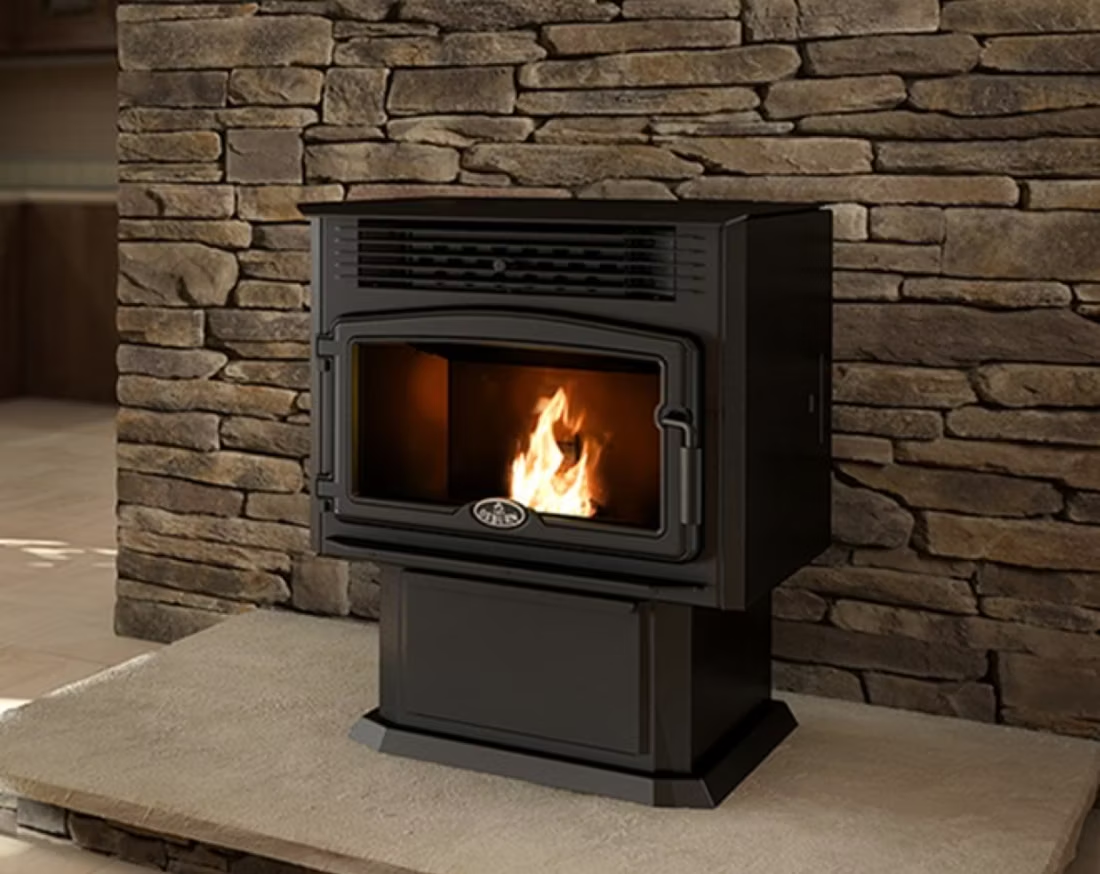
Four fuels. One honest answer for Jones County.
Three steps. No salesperson until you're ready.
Tell us about your project
Your zip code, your situation, and the fuel you're leaning toward—or let the answers point you to one.
See what's actually available
The brands dealers within 100 miles genuinely carry—real options, never a catalog mirage.
Get your dealer & Project Guide
A trusted local dealer, plus the free Project Guide & Parts List that names every component of the job.
Frequently Asked Questions
Which fuel works best in Jones County?
It depends on the home and the household's priorities, but the mild climate zone 3A winters here change the math compared to colder parts of the country. Wood remains a practical, low-cost choice—oak and hickory from local farmland burn hot and long, and many rural properties around Trenton and Pollocksville already have a woodlot or a neighbor who sells firewood by the truckload. Gas, almost always propane rather than piped natural gas out here, is the convenience option for homes that want instant heat without hauling wood. Pellet stoves are a solid middle ground, and regional brands like Lignetics, Hamer Pellet Fuel, and Greenway Renewable Energy keep fuel reasonably accessible without a long drive. Electric fireplaces work well as supplemental heat or ambiance in a county where winter heating loads are modest most of the season—they're rarely anyone's whole-house solution, but they don't need to be here.
Do I need a permit to install a fireplace in Jones County?
In most cases, yes. New wood stoves, wood inserts, gas appliances, and pellet stoves typically require a building permit through the county's permitting office, and wood-burning appliances need to meet current EPA emissions standards. Propane installations require gas line work performed by a licensed installer, separate from the appliance permit itself. Electric fireplaces are usually exempt unless the installation involves a hardwired built-in unit and new electrical work. Because Jones County is small and rural, most local retailers who install here are used to walking homeowners through the permitting process themselves rather than leaving it to the homeowner.
Are there air quality restrictions on wood burning in Jones County?
No—Jones County has no air quality non-attainment designations and no winter burn curtailment periods, unlike some western basin counties that issue advisory or mandatory no-burn days during inversions. That means wood stoves and inserts can generally be run whenever needed without seasonal restrictions. That said, choosing an EPA-certified stove is still worth it for efficiency and lower particulate output, especially if you're burning pine, which tends to run smokier than well-seasoned oak or hickory.
Can one local retailer handle all four fuel types for a Jones County home?
Often, yes. Because Jones County's population doesn't support multiple specialty single-fuel shops, the multi-fuel retailers based in New Bern and Kinston that regularly service Trenton and Pollocksville tend to carry wood, gas, and pellet product lines, with electric units as an add-on. That's actually convenient if you're cross-shopping—one visit can show you working displays across fuel types rather than requiring separate trips to separate specialists.
How does service work in rural Jones County?
Most technicians who sweep chimneys, service gas lines, or clean pellet stoves in Jones County are based out of New Bern, Kinston, or Jacksonville and travel into the county for appointments. Expect a modest travel fee for stops out along NC-58 or into the more remote parts of the county near Comfort. Booking ahead of the fall heating season—rather than waiting for a mid-winter breakdown—gets you a much easier scheduling window, since rural routes fill up fast once temperatures drop.
What's the typical cost range for fireplace installation across all fuel types in Jones County?
Wood stove or insert installation typically runs $3,500–$8,000, depending on chimney and hearth work. Gas fireplace, insert, or stove installation runs roughly $4,000–$9,500, with propane line work adding to the low end if service isn't already run to the appliance location. Pellet stove or insert installation generally falls between $4,000–$7,000. Electric fireplaces range from $200–$2,500 for the unit itself, with $300–$1,000 in labor for anything beyond a simple plug-in install. Because Jones County is served primarily by retailers based in neighboring counties, get a written quote that includes any travel or delivery charge before committing.
How much should I budget for a fireplace?
For an average home—covering the fireplace, the vent pipe, and basic installation—a budget between $3,900 and $5,500 gives you a lot of options across wood, gas, and pellet. By the time you add finish work, gas line, and electrical, the average complete installation lands between $5,000 and $12,000 all-in. In a remodel or new build, a good rule is to put about 2.5% of the total project cost toward the fireplace.
Can a fireplace actually lower my heating bill?
Yes—by creating a comfort zone. A furnace heats every square foot of the house just to warm the one room you're in; a gas fireplace on low burns roughly a sixth of the gas a typical furnace does. Set the furnace around 55–60 degrees as a baseline, then heat the rooms your family actually uses. Families who heat this way commonly save $20–$60 a month.
Can I install a fireplace myself?
If you're putting a fire in your house on purpose, it's best to work with an expert. Unless you're genuinely experienced in framing, gas line, vent pipe, and the national code on clearances to combustibles, have a professional do it—and ideally the same company that sells you the fireplace, so warranty, service, and liability all live under one roof.
Does a fireplace add value to my home?
On average, a fireplace adds back to the home about the same amount you spent installing it. Add the monthly savings from heating the rooms you actually use instead of the whole house—often hundreds of dollars a year—and the value case is strong before you even count what a fire does for how your family uses the room.
Stove and Fireplace Dealers in Jones County
Listings include WhyFire partner dealers, dealers we have verified as authorized for the brands we recommend, and established local businesses that carry hearth products. Every listing shows which one it is. The ones marked Preferred run on WhyFire's software, so they can show you real pricing and book your appointment right here. No manufacturer pays for placement. How we verify dealers →
Hart's Hearth & Homestead
Fireplace & Patio Shop
Grills & Fireplaces
Mallard Oil & Gas
Get matched with a hearth dealer in Jones County.
Tell us about your project and we'll match you with a trusted local retailer and send a free Project Guide & Parts List—the exact parts, vent kit included, and the dealer we recommend for your Jones County home.
Find Your Fireplace →