
Find your fireplace match in Hyde County.
Wood, gas, pellet, and electric fireplace resources for the whole county—from the marsh and farmland around Swan Quarter and Engelhard out to ferry-only Ocracoke Island. Pick a fuel and get matched with a local dealer who actually installs and services it out here.
Every Project Starts From One of These Five Situations
North Carolina's least populated county, split between mainland marsh and a ferry-only barrier island.
Hyde County has roughly 1,600 year-round residents spread across two very different landscapes: a mainland side built around Swan Quarter, Engelhard, and Fairfield, bordered by Lake Mattamuskeet and the Pocosin Lakes and Alligator River wildlife refuges, and Ocracoke Island, reached only by the NC Ferry system from Swan Quarter, Cedar Island, or Hatteras. Climate zone 3A means a mixed-humid, coastal winter—Pamlico Sound and the Atlantic moderate the cold, hard freezes are brief, and most homes here run a heat pump as primary heat rather than a wood stove. That said, oak, hickory, maple, and pine are all abundant in the bottomland and pocosin forest surrounding Swan Quarter and Engelhard, and a lot of households keep a wood or pellet stove running specifically for the weeks each winter when temperatures actually drop.
There's no natural gas main running out to this part of the coast, so every gas fireplace, insert, or stove in the county runs on propane rather than piped gas—bottled or tank delivery is the norm from Swan Quarter clear out to Ocracoke. Hyde County also sits low and close to the water, which means hurricane season matters as much as winter cold: a wood stove or propane fireplace that doesn't depend on grid power is a genuine backup heat source when Pamlico Sound floods a road or a storm knocks out electricity for days. This hub rolls up hearth retailers, service techs, and fuel suppliers covering the whole county—most of them based on the mainland in towns like Washington or Belhaven and running routes out to Hyde, with a smaller number making the ferry crossing to service Ocracoke. Pick your fuel below for local dealers, install costs, and recommendations specific to your part of the county.
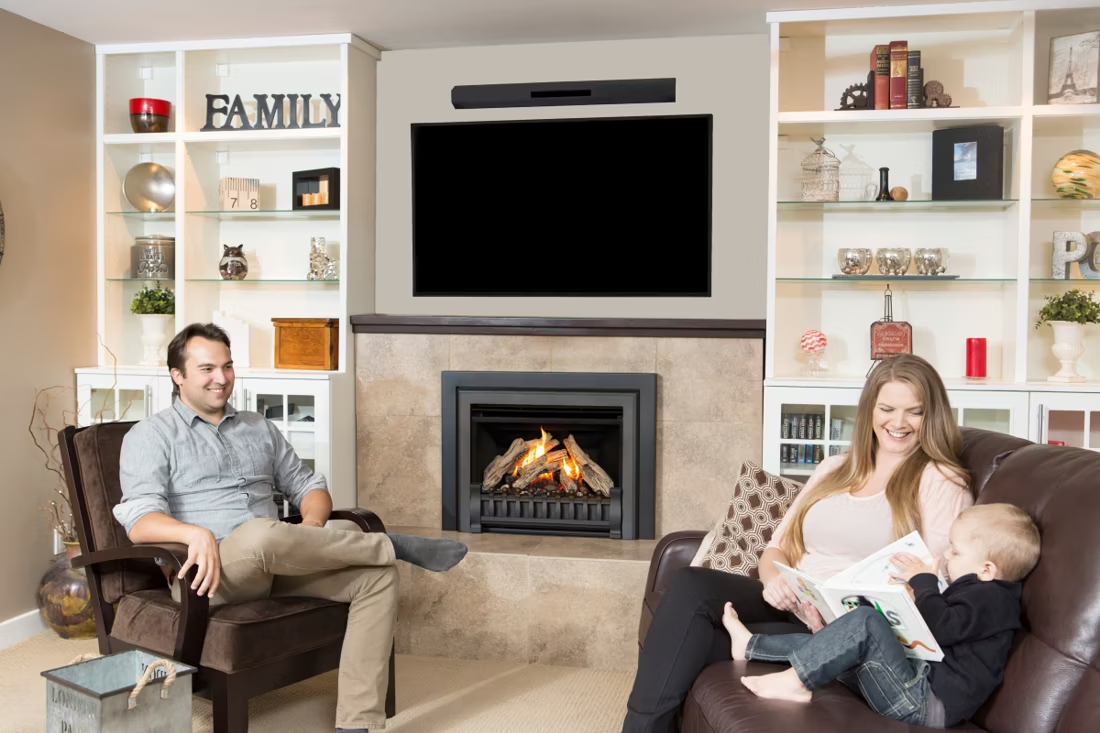
Four fuels. One honest answer for Hyde County.
Three steps. No salesperson until you're ready.
Tell us about your project
Your zip code, your situation, and the fuel you're leaning toward—or let the answers point you to one.
See what's actually available
The brands dealers within 100 miles genuinely carry—real options, never a catalog mirage.
Get your dealer & Project Guide
A trusted local dealer, plus the free Project Guide & Parts List that names every component of the job.
Frequently Asked Questions
Which fireplace fuel makes the most sense in Hyde County?
It depends on which part of the county you're in and what you're solving for. Most Hyde County homes heat primarily with an electric heat pump, since Climate Zone 3A winters here are short and mild—but wood and pellet stoves are genuinely popular as backup and supplemental heat, especially given how much oak and hickory grow in the bottomland forest around Swan Quarter and Engelhard. A cast-iron or steel wood stove burning well-seasoned oak will comfortably carry a home through the handful of hard-freeze nights the county sees each winter. Propane is the standard 'gas' fireplace fuel here since there's no natural gas main reaching this part of the coast—bottled or tank delivery is normal from the mainland out to Ocracoke. Pellet stoves, stocked with regional brands like Lignetics, Hamer Pellet Fuel, or Greenway Renewable Energy, appeal to homeowners who want wood-stove ambiance without splitting and stacking cordwood. And because this county floods and loses power during hurricanes and nor'easters, a lot of buyers specifically choose a wood or propane unit that keeps working when the grid doesn't.
Do I need a permit to install a wood stove, propane fireplace, or insert in Hyde County?
Yes. New hearth appliance installations and any chimney or vent work go through Hyde County's building inspections office, whether you're on the mainland in Swan Quarter or Engelhard or out on Ocracoke Island. Propane installations additionally require a licensed propane technician to size and connect the tank and line, since you're working with pressurized fuel rather than a piped utility. Wood stoves and inserts should carry EPA certification to pass inspection cleanly, and pellet stove installs follow a similar permitting path to wood without any additional restrictions. Most hearth retailers we match homeowners with handle this paperwork as part of the installation, which matters here since a return trip for a failed inspection means another drive—or ferry crossing—for the installer.
How does installation and service work on Ocracoke Island?
Everything on Ocracoke moves on ferry time. Installers and service techs who cover the island typically batch their trips—scheduling several jobs on the same crossing from Swan Quarter or Cedar Island rather than making a dedicated run for one stove or fireplace—so booking early and staying flexible on the exact date gets you serviced faster. Winter ferry schedules run less frequently than summer schedules, and weather can cancel a crossing outright, so if you're planning a wood stove or propane fireplace install on Ocracoke, give yourself a few extra weeks of buffer before you're counting on heat, and expect a trip fee that reflects the crossing. Annual chimney sweeps and propane system checks are worth scheduling for late summer, before storm season and before the ferry schedule tightens up for winter.
Does the humidity here affect firewood storage or stove choice?
It does. Hyde County sits at sea level between Pamlico Sound and a network of pocosins and swamp forest, so ambient humidity stays high most of the year, and oak and hickory—the two densest, most common local species—take noticeably longer to season properly here than they would in a drier climate. Firewood needs to be split, stacked off the ground, and covered on top while staying open on the sides for a full six to twelve months before it's dry enough to burn clean; wood that looks split but hasn't fully seasoned will smoke, creosote up a chimney faster, and burn far less efficiently. If you're buying rather than cutting your own, ask any local supplier how long their wood has been seasoned and where it was stored before committing to a delivery.
What does a fireplace installation typically cost in Hyde County?
Costs run close to regional norms, with a modest premium for the drive or ferry crossing on more remote jobs. Wood stove or insert installations generally run $4,000–$8,500 depending on chimney condition and whether new venting is needed. Propane fireplaces, inserts, and stoves typically run $4,000–$9,500, with tank setup or line work adding to that if you don't already have propane service at the property. Pellet stove or insert installs usually land around $4,000–$7,000. Electric fireplaces are the least expensive option—$200–$2,500 for the unit, plus $300–$1,000 in labor unless it's a simple plug-in placement. Ocracoke Island installs tend to run toward the higher end of each range given ferry logistics and trip time.
How far will a dealer or technician travel to reach my part of Hyde County?
Because Hyde County has so few residents spread across such a large, water-crossed area, almost no hearth retailers or service techs are headquartered inside the county itself—most work out of Washington, Belhaven, or Greenville and drive routes into Swan Quarter, Engelhard, and Fairfield, with a smaller group making regular ferry trips to Ocracoke. Expect a trip fee on top of the standard install or service cost, and expect scheduling to compress heading into hurricane season and again before the first hard freeze, when demand for backup heat and storm-ready appliances spikes. Booking your install or annual service in late spring or late summer, ahead of both rushes, is the easiest way to get a convenient date.
Can a fireplace actually lower my heating bill?
Yes—by creating a comfort zone. A furnace heats every square foot of the house just to warm the one room you're in; a gas fireplace on low burns roughly a sixth of the gas a typical furnace does. Set the furnace around 55–60 degrees as a baseline, then heat the rooms your family actually uses. Families who heat this way commonly save $20–$60 a month.
Does a fireplace add value to my home?
On average, a fireplace adds back to the home about the same amount you spent installing it. Add the monthly savings from heating the rooms you actually use instead of the whole house—often hundreds of dollars a year—and the value case is strong before you even count what a fire does for how your family uses the room.
Wood, gas, pellet, or electric—how do I choose?
Match the fuel to your life, not the other way around. Wood: lowest fuel cost and total power-outage independence, but you're hauling and stacking. Gas: press a button, set a thermostat, no maintenance to speak of. Pellet: wood economics with automatic feeding, in exchange for weekly cleaning and a need for electricity. Electric: plugs in anywhere with honest supplemental heat. Nobody regrets the fuel that fits how they actually live.
What is an in-home preview and do I need one?
It's a visit where a hearth professional measures your space, confirms the model you picked actually works in your home, and walks the specs—framing, gas line, venting, finish work—before anything is ordered. Some details you just can't know until you see the house. Never make a down payment without one; it's the single most-skipped step that burns buyers.
Stove and Fireplace Dealers in Hyde County
Listings include WhyFire partner dealers, dealers we have verified as authorized for the brands we recommend, and established local businesses that carry hearth products. Every listing shows which one it is. The ones marked Preferred run on WhyFire's software, so they can show you real pricing and book your appointment right here. No manufacturer pays for placement. How we verify dealers →
Owen Gas
Shorefire Gas Fireplaces
Jt Jones Propane & Fireplace
Tarheel Fireplace & Grill Shop
Grills & Fireplaces
Jernigan Oil & Gas- Williamston
Get matched with a local Hyde County dealer.
Pick your fuel below and we'll put together a free Project Guide & Parts List—the right unit, the vent kit it needs, and the local dealer we recommend, whether you're on the Swan Quarter mainland or out on Ocracoke Island.
Find Your Fireplace →