
Find the right fireplace for your Halifax County home.
Wood, gas, pellet, and electric fireplace resources for every city and rural community in Halifax County—from Roanoke Rapids to Enfield. Get matched with a trusted local hearth retailer who can actually install what your home needs.
Every Project Starts From One of These Five Situations
Mild-winter heating in Halifax County, North Carolina.
Halifax County sits in the inner Coastal Plain of northeastern North Carolina, split by the Roanoke River and anchored by Roanoke Rapids, Weldon, and Halifax. Climate zone 4A and roughly 3,558 heating degree days mean a heating season that's real but far shorter than the Upper Midwest—nothing like Duluth or Fargo. Average winter lows around 30°F mean most homes need supplemental heat for a solid stretch of the year, not round-the-clock combustion for months on end. Oak, hickory, and maple from the county's hardwood bottomlands are the traditional firewood here, with pine as a common kindling and secondary species. There are no regional wood-smoke air quality restrictions in Halifax County, which gives homeowners more flexibility than counties dealing with inversion advisories or non-attainment status.
What you'll find on this hub: hearth retailers, service technicians, and fuel suppliers serving every community in the county—from Roanoke Rapids and Weldon along I-95 to Halifax, Scotland Neck, Enfield, and the smaller Roanoke River towns. Pick your fuel below to drill into specifics—local dealers, installation costs, recommended units, and the resources that match your project. Whether you're heating a farmhouse near the river or a newer build off I-95, this is the starting point.
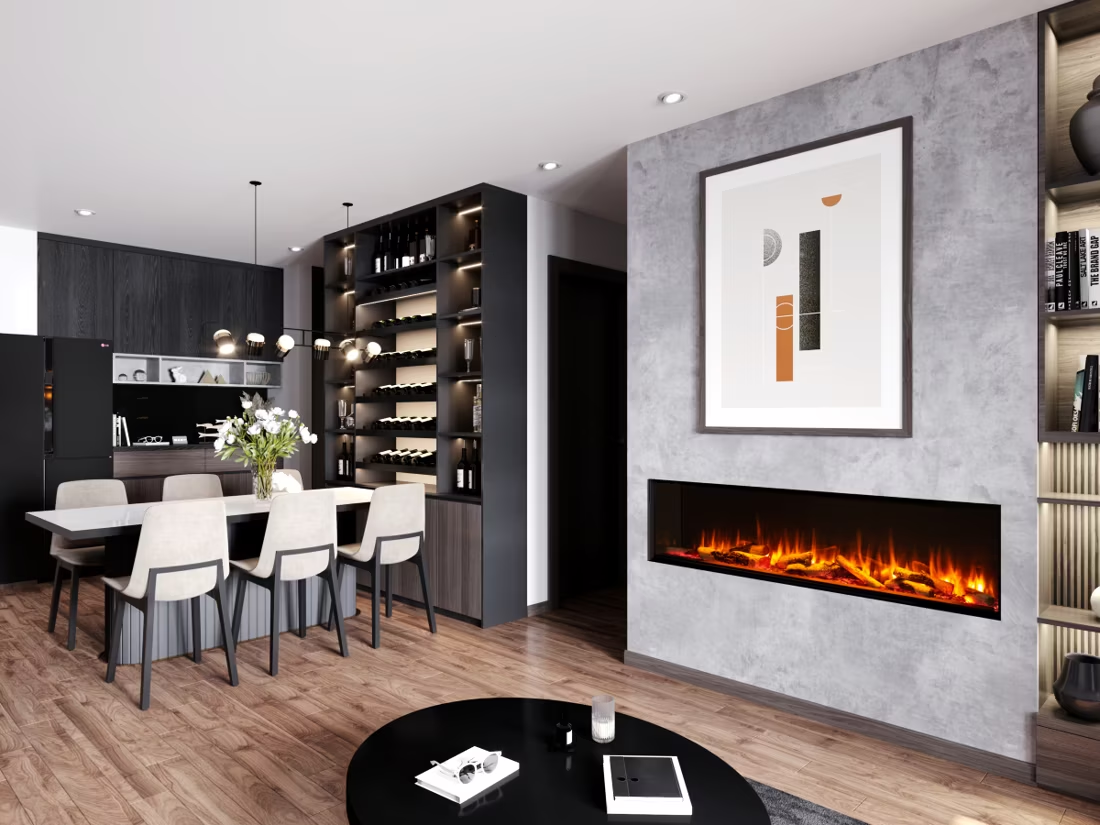
Four fuels. One honest answer for Halifax County.
Three steps. No salesperson until you're ready.
Tell us about your project
Your zip code, your situation, and the fuel you're leaning toward—or let the answers point you to one.
See what's actually available
The brands dealers within 100 miles genuinely carry—real options, never a catalog mirage.
Get your dealer & Project Guide
A trusted local dealer, plus the free Project Guide & Parts List that names every component of the job.
Frequently Asked Questions
Which fuel works best in Halifax County?
It depends on your home and how you use it. Wood is well-suited here—oak and hickory from local bottomland forests burn hot and clean, and with only about 3,558 heating degree days, a mid-size wood stove or insert comfortably handles the season without the marathon overnight burns you'd need in a place like Bismarck or Burlington. Gas is popular for convenience in Roanoke Rapids and Weldon, where propane service is common and homeowners want heat with the flip of a switch rather than a woodpile to manage. Pellet stoves work well too—Lignetics and Hamer Pellet Fuel (based right here in North Carolina) keep local pellet supply steady, and pellet units give wood-style ambiance without cutting or splitting. Electric fireplaces are mostly supplemental in Halifax County's mild winters—good for a bedroom, den, or secondary space, but not typically the primary heat source. Many homes here run a mix: wood or gas as the main heater, electric for ambiance in a room that doesn't need much extra heat.
Do I need a permit to install a fireplace in Halifax County?
Generally, yes, for anything beyond a plug-in electric unit. Halifax County requires building permits for new wood stoves, wood-burning inserts, gas fireplaces, gas inserts, gas stoves, and pellet stoves, whether the installation is inside city limits (Roanoke Rapids, Weldon, Halifax, Scotland Neck) or in the unincorporated county. Gas installations also need a separate gas line permit, typically pulled by a licensed gas-fitter or propane contractor. Electric fireplaces usually skip the permit process unless they're built-in units requiring new wiring or a dedicated circuit. Most local hearth retailers handle the permitting as part of the installation, so homeowners typically aren't filing paperwork themselves—but it's worth confirming with your dealer before work starts.
Are there air quality restrictions on wood burning in Halifax County?
No—Halifax County doesn't have wood-smoke air quality advisories, non-attainment designations, or seasonal burning curtailments like some western and mountain counties do. That said, new wood stove installations still need to meet EPA emissions standards, and a well-seasoned load of local oak or hickory burns considerably cleaner (and hotter) than green or wet wood regardless of local regulation. If you're clearing land or burning yard debris outside of a certified appliance, check with the North Carolina Forest Service on any statewide burn permit requirements—those are separate from hearth appliance rules.
Can one local hearth retailer handle all four fuel types?
Many hearth retailers serving Halifax County carry at least two or three fuel types, and a handful stock all four—wood, gas, pellet, and electric—which is worth asking about directly if you want to compare options side by side before deciding. Smaller dealers in the Roanoke Rapids and Weldon area sometimes specialize, focusing heavily on wood and gas with less emphasis on pellet or electric display units. If you're still weighing fuel types, a multi-fuel dealer can show working displays and walk through the real trade-offs for your specific home and chimney setup—that's part of what a matching service like Find My Fireplace is designed to sort out before you ever visit a showroom.
How does service work in rural parts of Halifax County?
Most chimney sweeps, gas technicians, and pellet stove service pros covering Halifax County are based near Roanoke Rapids and travel out to the smaller river towns and rural stretches—Scotland Neck, Littleton, Enfield, and the farmland between them. Expect a modest travel fee for calls well outside the I-95 corridor, and expect tighter scheduling in fall (September–November) as everyone tries to book pre-season chimney sweeps and gas inspections at once. Booking early in late summer is the easiest way to avoid a mid-winter wait, especially if you're relying on wood or pellet heat as your primary source.
What's the typical cost range for fireplace installation across all fuel types in Halifax County?
Costs vary by fuel and by how much existing infrastructure (chimney, gas line, electrical) is already in place. Wood stove or insert installation: roughly $3,800–$8,000 for a typical retrofit into an existing chimney, higher for new construction requiring full chimney and liner work. Gas fireplace, insert, or stove: roughly $4,000–$9,500 depending on whether a new gas line or propane tank setup is needed. Pellet stove or insert: roughly $4,000–$6,800 for most installs. Electric fireplace: $200–$2,800 for the unit itself, plus $300–$1,000 in labor for anything beyond a simple plug-and-play placement. These are general ranges—a local dealer can give you an exact number once they've seen your chimney, electrical panel, or gas access.
How much should I budget for a fireplace?
For an average home—covering the fireplace, the vent pipe, and basic installation—a budget between $3,900 and $5,500 gives you a lot of options across wood, gas, and pellet. By the time you add finish work, gas line, and electrical, the average complete installation lands between $5,000 and $12,000 all-in. In a remodel or new build, a good rule is to put about 2.5% of the total project cost toward the fireplace.
What is an in-home preview and do I need one?
It's a visit where a hearth professional measures your space, confirms the model you picked actually works in your home, and walks the specs—framing, gas line, venting, finish work—before anything is ordered. Some details you just can't know until you see the house. Never make a down payment without one; it's the single most-skipped step that burns buyers.
I know I want a fireplace—where do I actually start?
Do two things today: snap a photo of the wall or fireplace you want to transform, and take a tape measure to the space—width, height, depth. Those two artifacts answer most of a hearth professional's first questions. Then settle fuel (wood, gas, pellet, or electric) and set a realistic budget: $3,900–$5,500 covers fireplace, vent, and basic install for most homes.
Can I install a fireplace myself?
If you're putting a fire in your house on purpose, it's best to work with an expert. Unless you're genuinely experienced in framing, gas line, vent pipe, and the national code on clearances to combustibles, have a professional do it—and ideally the same company that sells you the fireplace, so warranty, service, and liability all live under one roof.
Stove and Fireplace Dealers in Halifax County
Listings include WhyFire partner dealers, dealers we have verified as authorized for the brands we recommend, and established local businesses that carry hearth products. Every listing shows which one it is. The ones marked Preferred run on WhyFire's software, so they can show you real pricing and book your appointment right here. No manufacturer pays for placement. How we verify dealers →
Daughtridge Gas & Oil Company
Parker Oil Company
Super Flame Gas Company
Daughtridge Gas & Oil Company
Williams Fuel
Area – Bracey, Va
Energy United Propane- Warrenton
Jernigan Oil & Gas- Ahoskie
Find your fireplace in Halifax County.
Pick your fuel below and we'll match you with a trusted local hearth retailer and send you a free Project Guide & Parts List—the exact parts, vent kit, and recommended dealer for your Halifax County home.
Find Your Fireplace →