
Warm, efficient heat for Greene County homes—the right fireplace, installed by a local pro.
Greene County's mild Coastal Plain winters call for practical heat, not a woodpile. Get matched with a trusted local dealer who can install the right fireplace for your Snow Hill, Maury, or Hookerton home—plus a free planning packet with the exact parts list.
Every Project Starts From One of These Five Situations
A mild-winter farming county where central heat, not wood stoves, does the heavy lifting.
Greene County sits in North Carolina's eastern Coastal Plain, a flat farming county of soybean, tobacco, and hog operations built up around the county seat of Snow Hill. With around 3,972 residents spread across mostly unincorporated land, it's a place where central heat pumps do the bulk of winter heating. Climate zone 3A keeps winters short—the average low sits around 32°F, and Greene County logs roughly 3,014 heating degree days a year, less than half what a place like Fargo, ND racks up in a single winter. That's a heating season measured in weeks, not months.
Because the climate is mild and central heat already covers most homes, wood stoves and pellet stoves see very little local demand here—even though oak, hickory, maple, and pine are all common regional hardwoods, and pellet plants like Lignetics, Hamer Pellet Fuel, and Greenway Renewable Energy operate in the broader region. What Greene County homeowners actually shop for is gas and electric fireplaces—for supplemental warmth on the occasional cold front and for the ambiance a heat pump can't provide. This hub rounds up the retailers, service techs, and fuel suppliers serving Snow Hill, Maury, Hookerton, Walstonburg, and the rest of the county for those two fuels.
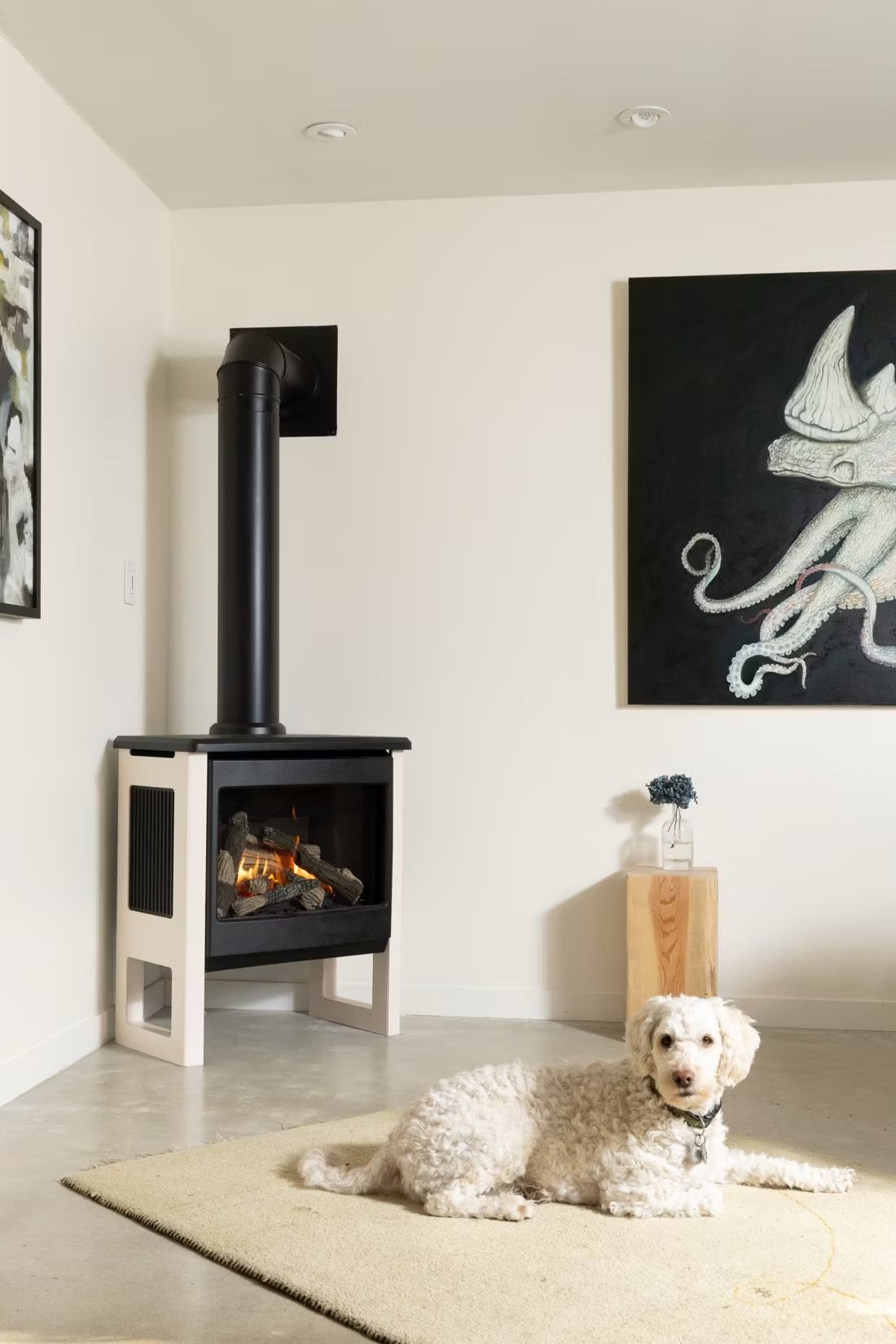
Four fuels. One honest answer for Greene County.
Three steps. No salesperson until you're ready.
Tell us about your project
Your zip code, your situation, and the fuel you're leaning toward—or let the answers point you to one.
See what's actually available
The brands dealers within 100 miles genuinely carry—real options, never a catalog mirage.
Get your dealer & Project Guide
A trusted local dealer, plus the free Project Guide & Parts List that names every component of the job.
Frequently Asked Questions
Which fuel works best in Greene County?
For most Greene County homes, it's gas or electric—not wood or pellet. With an average winter low around 32°F and only about 3,014 heating degree days a year, the county's heating season is short enough that central heat pumps handle the bulk of it, and a fireplace is more about supplemental warmth and ambiance than survival heat. Gas fireplaces (mostly propane-fed outside Snow Hill's town limits, since rural gas mains are limited) give instant heat with no chimney work. Electric fireplaces are the simplest option—plug-and-play units for a bedroom or living room, or a hardwired built-in for a renovation. Wood stoves and pellet stoves are technically available through dealers in nearby Kinston or Greenville, but very few Greene County homeowners install one; the oak and hickory that grow all over this county end up as firewood for outdoor burning or smokers more often than as primary home heat.
Do I need a permit to install a fireplace in Greene County?
Usually, yes. Gas fireplace, insert, or stove installations require a building permit through the Greene County Building Inspections Department, plus a separate gas permit and licensed gas-fitter for the propane or natural gas line work. Electric fireplaces that plug into an existing outlet typically don't need a permit; built-in electric units that require new wiring or a dedicated circuit do need an electrical permit. Most local dealers pull these permits as part of the installation quote, so you're not filing paperwork yourself.
Are there air quality restrictions on burning in Greene County?
No—Greene County has no listed air quality non-attainment issues or wood-smoke advisories, unlike higher-population or inversion-prone counties elsewhere in the state. That's partly a function of low population density and open Coastal Plain airflow. It's also part of why wood heat never became the default here the way it did in colder, more wooded parts of North Carolina—there's simply less local pressure, and less local tradition, pushing homeowners toward it.
Can one local retailer handle both gas and electric fireplace installs?
Yes, and in a county this size that's actually the norm. Because Greene County's population is under 4,000, you won't find big specialty hearth showrooms—dealers based in or near Snow Hill, and licensed electricians and propane technicians serving the county, typically handle both gas and electric work rather than specializing in one fuel. That's a practical advantage: one visit can cover a propane insert quote and an electric wall-mount quote side by side.
How does service work in rural parts of the county—Maury, Hookerton, Walstonburg?
Most gas techs and electricians serving Greene County are based in or around Snow Hill, Kinston, or Greenville and travel out to the smaller communities. Expect a modest trip fee for calls in Maury, Hookerton, Walstonburg, or the unincorporated stretches along Highway 258—often folded into the service call rather than billed separately. Fall (September–October) is the easiest time to book routine gas fireplace inspections before winter demand picks up.
What's the typical cost range for gas and electric fireplace installation in Greene County?
Gas fireplace, insert, or stove: roughly $3,500–$9,000 installed, with propane line work and venting pushing costs toward the top of that range for homes without existing gas service. Electric fireplace: $200–$2,500 for the unit itself, plus $300–$1,000 in labor for anything beyond a simple plug-in—built-ins with new wiring run higher. Because wood and pellet appliances are rarely installed locally, most Greene County budgeting questions we hear are about these two fuels specifically.
Does a fireplace add value to my home?
On average, a fireplace adds back to the home about the same amount you spent installing it. Add the monthly savings from heating the rooms you actually use instead of the whole house—often hundreds of dollars a year—and the value case is strong before you even count what a fire does for how your family uses the room.
How much should I budget for a fireplace?
For an average home—covering the fireplace, the vent pipe, and basic installation—a budget between $3,900 and $5,500 gives you a lot of options across wood, gas, and pellet. By the time you add finish work, gas line, and electrical, the average complete installation lands between $5,000 and $12,000 all-in. In a remodel or new build, a good rule is to put about 2.5% of the total project cost toward the fireplace.
Can I install a fireplace myself?
If you're putting a fire in your house on purpose, it's best to work with an expert. Unless you're genuinely experienced in framing, gas line, vent pipe, and the national code on clearances to combustibles, have a professional do it—and ideally the same company that sells you the fireplace, so warranty, service, and liability all live under one roof.
Can a fireplace actually lower my heating bill?
Yes—by creating a comfort zone. A furnace heats every square foot of the house just to warm the one room you're in; a gas fireplace on low burns roughly a sixth of the gas a typical furnace does. Set the furnace around 55–60 degrees as a baseline, then heat the rooms your family actually uses. Families who heat this way commonly save $20–$60 a month.
Stove and Fireplace Dealers in Greene County
Listings include WhyFire partner dealers, dealers we have verified as authorized for the brands we recommend, and established local businesses that carry hearth products. Every listing shows which one it is. The ones marked Preferred run on WhyFire's software, so they can show you real pricing and book your appointment right here. No manufacturer pays for placement. How we verify dealers →
Rand Wade Oil Company
Mallard Oil & Gas
Affordable Energy Solutions
Rutherford Equipment, Inc.
Daughtridge Gas & Oil Company
Fireplace Creation
Fireplace & Spa Center
Find your fireplace in Greene County.
Tell us about your Snow Hill, Maury, or Hookerton home and we'll match you with a trusted local dealer and send a free Project Guide & Parts List—the parts, the vent kit, and the dealer recommendation for your specific gas or electric project.
Find Your Fireplace →