
Find your fireplace in Avery County's high country.
Wood, gas, pellet, and electric fireplace resources for every town in Avery County—from Newland to Banner Elk to Beech Mountain. Find the right unit for your elevation and connect with a trusted local hearth retailer.
Every Project Starts From One of These Five Situations
Mountain heat for North Carolina's highest county.
Avery County holds the highest average elevation of any county east of the Mississippi, and it shows in how people heat their homes. Newland, the county seat, sits above 3,600 feet; Beech Mountain climbs past 5,000. Winters here run long and genuinely cold—closer to a Bozeman, Montana season than a typical Carolina one—and the region's oak, hickory, maple, and pine forests have supplied woodstoves and fireplaces for generations. With few natural gas mains reaching this far into the Blue Ridge, propane does the work gas normally does in flatter counties, and pellet stoves fed by regional suppliers like Lignetics, Hamer Pellet Fuel, and Greenway Renewable Energy have become a popular no-hassle alternative for full-time residents and second-home owners alike.
What you'll find on this hub: hearth retailers, service technicians, and fuel suppliers covering the whole county—from Newland and Crossnore up through Banner Elk, Elk Park, Linville, Minneapolis, and the ski communities of Beech Mountain and Sugar Mountain. Pick your fuel below to see local dealers, typical installation costs, and recommended units for your elevation and home type. Whether you're heating a year-round house in the valley or a rental cabin near the slopes, this is the starting point.
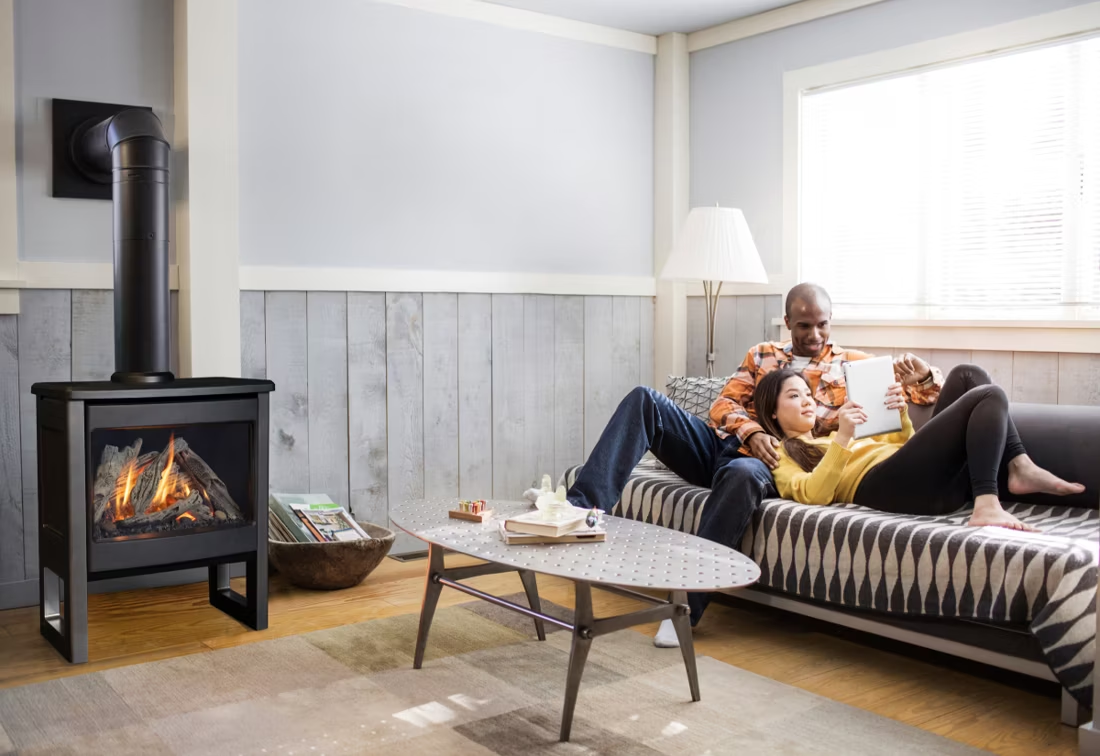
Four fuels. One honest answer for Avery County.
Three steps. No salesperson until you're ready.
Tell us about your project
Your zip code, your situation, and the fuel you're leaning toward—or let the answers point you to one.
See what's actually available
The brands dealers within 100 miles genuinely carry—real options, never a catalog mirage.
Get your dealer & Project Guide
A trusted local dealer, plus the free Project Guide & Parts List that names every component of the job.
Frequently Asked Questions
Which fuel works best in Avery County?
It depends on whether the home is a year-round residence or a mountain rental. Wood remains a strong choice for full-time Avery County homes—oak, hickory, and maple are abundant locally, and a good catalytic stove can carry a house through the long cold stretches at elevation, including power outages during winter storms on Beech Mountain and Sugar Mountain roads. Propane, not natural gas, is the realistic gas option here since gas mains don't reach most of the county—it's the go-to for cabin owners who want heat without tending a woodpile. Pellet stoves are popular for second homes because they're clean-burning and low-maintenance, and regional brands like Lignetics and Hamer Pellet Fuel keep local supply steady. Electric fireplaces work well as supplemental heat or ambiance in rental units and condos around Banner Elk and Beech Mountain, but they're not a primary heat source once temperatures drop hard at 4,000+ feet.
Do I need a permit to install a fireplace in Avery County?
In most cases, yes—new wood stoves, wood inserts, propane fireplaces, and pellet stoves generally require a building permit through Avery County's building inspections department, whether the home is in Newland, Banner Elk, or unincorporated parts of the county like Crossnore or Elk Park. Propane installations also involve the propane supplier's own line and tank hookup, separate from the building permit. Electric fireplace inserts usually don't require a permit unless they involve new wiring or a built-in installation. Most local hearth retailers handle permitting as part of the installation, which matters here given how many properties are seasonal cabins managed remotely by out-of-county owners.
Are there air quality restrictions on wood burning in Avery County?
No—Avery County doesn't have the inversion or non-attainment issues that affect some western mountain valleys. The terrain here doesn't trap smoke the way a closed basin does, so there are no curtailment days or burn bans tied to air quality. That said, with dense clusters of vacation cabins around Beech Mountain and Sugar Mountain, a clean-burning EPA-certified stove is still worth choosing—it burns less wood for more heat and keeps smoke down for neighbors who may be feet away on a shared mountainside.
Can one local hearth retailer handle all four fuel types?
Several Avery County-area retailers carry three or four fuel types, since the county's small population means dealers can't afford to specialize narrowly. A shop based near Banner Elk or Newland covering wood, propane, pellet, and electric gives you the ability to compare options in one visit rather than driving between towns. If you're outfitting a rental cabin near Beech Mountain, ask specifically about propane and pellet—both hold up well with intermittent occupancy and don't require someone splitting and stacking wood between guest turnovers.
How does service work in the more remote parts of Avery County?
Most technicians serving Avery County are based around Newland or Banner Elk and travel out to Elk Park, Crossnore, Minneapolis, and the steep roads up to Beech Mountain and Sugar Mountain. Winter access is the real variable—snow and ice at elevation can delay a service call for days, so scheduling chimney sweeps and propane inspections in September or October, before the first hard freeze, is far more reliable than trying to book mid-January. If you own a rental cabin managed from out of state, building a standing annual service appointment with a local tech before ski season starts avoids scrambling when a system fails during a booked weekend.
What's the typical cost range for fireplace installation across all fuel types in Avery County?
Costs run in line with rest of the western North Carolina mountains, with a bit of a premium for elevation and access. Wood stove or insert installation: roughly $4,000–$8,500 depending on chimney work. Propane fireplace, insert, or stove: roughly $4,000–$10,000, with tank setup and line run adding to jobs without existing propane service. Pellet stove or insert: roughly $4,000–$7,000 for a typical install. Electric fireplace: $200–$3,000 for the unit itself, plus $400–$1,200 in labor for anything beyond a plug-and-play unit. Cabin and second-home installs can run toward the higher end of these ranges due to steeper driveways and longer equipment carries. See the county + fuel pages above for retailer-specific pricing.
Does a fireplace add value to my home?
On average, a fireplace adds back to the home about the same amount you spent installing it. Add the monthly savings from heating the rooms you actually use instead of the whole house—often hundreds of dollars a year—and the value case is strong before you even count what a fire does for how your family uses the room.
Can a fireplace actually lower my heating bill?
Yes—by creating a comfort zone. A furnace heats every square foot of the house just to warm the one room you're in; a gas fireplace on low burns roughly a sixth of the gas a typical furnace does. Set the furnace around 55–60 degrees as a baseline, then heat the rooms your family actually uses. Families who heat this way commonly save $20–$60 a month.
Can I install a fireplace myself?
If you're putting a fire in your house on purpose, it's best to work with an expert. Unless you're genuinely experienced in framing, gas line, vent pipe, and the national code on clearances to combustibles, have a professional do it—and ideally the same company that sells you the fireplace, so warranty, service, and liability all live under one roof.
Wood, gas, pellet, or electric—how do I choose?
Match the fuel to your life, not the other way around. Wood: lowest fuel cost and total power-outage independence, but you're hauling and stacking. Gas: press a button, set a thermostat, no maintenance to speak of. Pellet: wood economics with automatic feeding, in exchange for weekly cleaning and a need for electricity. Electric: plugs in anywhere with honest supplemental heat. Nobody regrets the fuel that fits how they actually live.
Stove and Fireplace Dealers in Avery County
Listings include WhyFire partner dealers, dealers we have verified as authorized for the brands we recommend, and established local businesses that carry hearth products. Every listing shows which one it is. The ones marked Preferred run on WhyFire's software, so they can show you real pricing and book your appointment right here. No manufacturer pays for placement. How we verify dealers →
Harmon Fuel
Blue Ridge Propane Inc
Brinkley Hardware
Roan Mountain Lawn & Garden
L & L Furniture
Burleson Plumbing & Heating
Youngs Fuel Service
Superior Installation Inc.
Wallace Propane & Appliances
Thompson Gas- Boone
Mineral City Oil Company LLC
Blossman Gas
Blossman Gas And Appliance
Get matched with a hearth dealer in Avery County.
Tell us about your home or cabin and we'll send you a free Project Guide & Parts List—the exact parts, including the vent kit, and the local dealer we recommend for your project.
Find Your Fireplace →