
Find the fireplace that fits your Ashe County home.
Wood, gas, pellet, and electric fireplace resources for every town and hollow in Ashe County—from West Jefferson to Lansing. Get matched with a trusted local dealer who knows what actually works at 3,000 feet in the Blue Ridge.
Every Project Starts From One of These Five Situations
Heating a high-elevation county in North Carolina's Blue Ridge.
Ashe County sits high in North Carolina's Blue Ridge Mountains, with most communities between 2,800 and 3,600 feet in elevation. With winters that run longer and colder than most of the rest of the state and average winter lows near 22°F, the heating season here is closer to what you'd see in Burlington, Vermont than in Charlotte or Raleigh. Oak, hickory, maple, and pine grow throughout the county's hardwood forests and Christmas tree farms, and split hardwood has heated homes here for generations. With a population under 4,000 spread across a rural county best known for producing more Fraser firs than anywhere else in the country, most homes are freestanding, on well systems, and heat with a mix of fuels rather than a single centralized source.
This hub covers hearth retailers, service technicians, and fuel suppliers across every community in Ashe County—West Jefferson and Jefferson in the county seat area, Lansing to the north, and the unincorporated communities of Crumpler, Fleetwood, Todd, and Warrensville. Pick your fuel below to see local dealers, typical installation costs, and the units that hold up at elevation. Whether you're heating a farmhouse near the New River or a cabin off the Blue Ridge Parkway, this is the place to start.
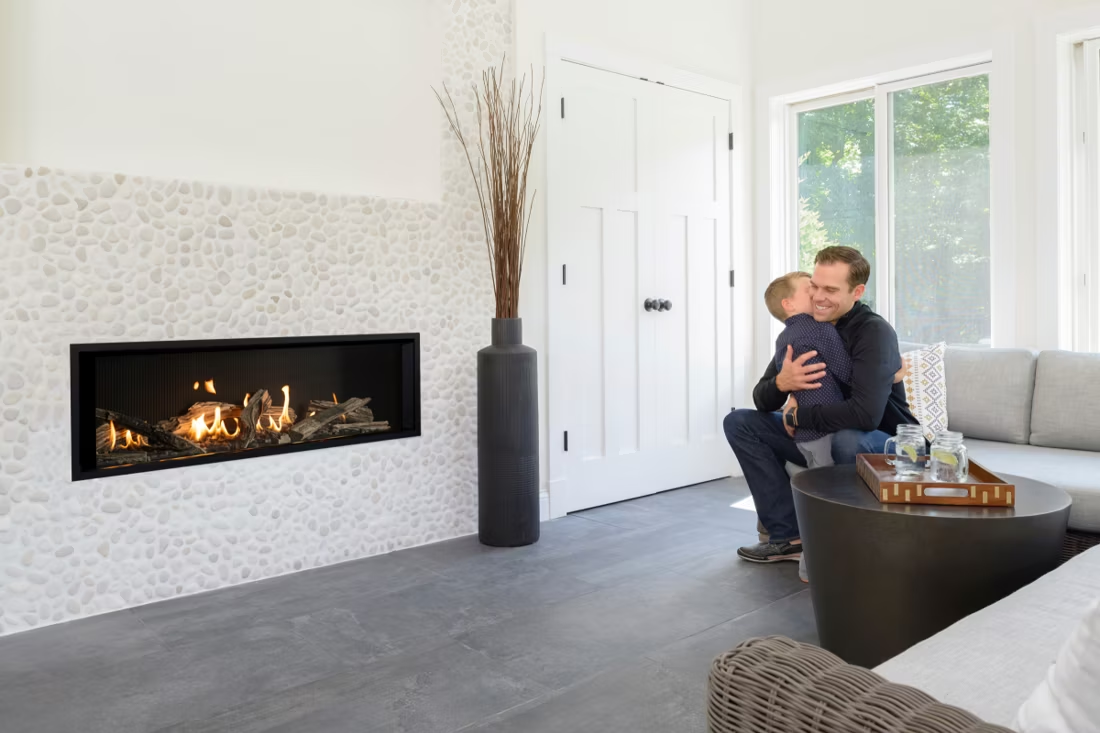
Four fuels. One honest answer for Ashe County.
Three steps. No salesperson until you're ready.
Tell us about your project
Your zip code, your situation, and the fuel you're leaning toward—or let the answers point you to one.
See what's actually available
The brands dealers within 100 miles genuinely carry—real options, never a catalog mirage.
Get your dealer & Project Guide
A trusted local dealer, plus the free Project Guide & Parts List that names every component of the job.
Frequently Asked Questions
Which fuel works best for a home in Ashe County?
It depends on your home and how remote it is. Wood is the traditional heating fuel here—oak, hickory, and maple from local forests split easily and burn long and hot, and a wood stove keeps working when winter storms knock out power on the mountain roads. Gas, almost always propane rather than piped natural gas given the terrain, is the convenience choice for instant heat with no wood-hauling. Pellet stoves are a solid middle ground—regional brands like Lignetics and Hamer Pellet Fuel keep supply local, and a pellet stove needs less daily tending than a wood stove, though it does need power to run the auger and blower. Electric fireplaces work well as supplemental heat for a bedroom or bonus room but aren't enough on their own at Ashe County's average winter lows near 22°F. Most households here run two fuels—a wood or pellet stove as the workhorse, propane or electric filling in elsewhere.
Do I need a permit to install a fireplace in Ashe County?
Generally yes. Wood stoves, wood inserts, gas appliances, and pellet stoves typically require a building permit through the Ashe County building inspections office, and any wood-burning appliance installed new should meet current EPA emissions standards. Propane installations also need the gas line and tank connection handled by a licensed installer, which is usually bundled into the job by whichever hearth retailer does the install. Electric fireplaces usually skip the permit process unless you're doing a built-in unit that needs a new circuit. Most local dealers pull the permit as part of the installation, so you're not left tracking down paperwork on your own.
Are there wood-burning restrictions in Ashe County?
No—Ashe County doesn't have the winter inversion or non-attainment issues that trigger burn advisories in some mountain valleys. The county's elevation and open terrain mean smoke disperses well, so there aren't seasonal burn bans to plan around. That said, an EPA-certified stove still burns cleaner and more efficiently than an old uncertified unit—you'll get more heat out of the same load of oak or hickory, and it's worth asking your dealer about certification when you're shopping.
Will one dealer carry all four fuel types?
Some do, some specialize. In a county this size, expect a handful of hearth retailers based around West Jefferson that carry wood, gas, and pellet units, with electric fireplaces as a smaller add-on line. If you're cross-shopping fuels—say, deciding between a wood insert and a propane unit—a multi-fuel dealer can show you working displays and walk through what venting and clearances look like for each. Fuel suppliers (firewood dealers, propane companies, pellet distributors) are separate from hearth retailers—you'll want a retailer for the appliance and a supplier for ongoing fuel.
How does service work in the more remote parts of Ashe County?
Most technicians are based near West Jefferson and travel out to Lansing, Todd, Warrensville, Fleetwood, and the hollows in between. Steep, narrow mountain roads mean travel time matters more than mileage—a call that's technically 12 miles away might take 30 minutes each way. Scheduling annual service in late summer or early fall, before the first cold snap, is the easiest way to avoid a mid-winter wait when everyone's chimney needs sweeping at once. If you're on a wood stove as primary heat, keep a backup plan for snow days when a service truck simply can't get up the driveway.
What's the typical cost range for fireplace installation in Ashe County?
Costs run in line with national averages, adjusted for a rural service area. Wood stove or insert installation: roughly $4,000–$8,500 for a typical job, more if new chimney work is needed. Gas or propane fireplace, insert, or stove: about $4,000–$10,000 depending on whether a propane tank and line already exist. Pellet stove or insert: typically $4,000–$7,000. Electric fireplace: $200–$3,000 for the unit itself, plus $400–$1,200 in labor for anything beyond a plug-and-play install. See the county + fuel pages above for cost detail tied to specific local retailers.
Can I install a fireplace myself?
If you're putting a fire in your house on purpose, it's best to work with an expert. Unless you're genuinely experienced in framing, gas line, vent pipe, and the national code on clearances to combustibles, have a professional do it—and ideally the same company that sells you the fireplace, so warranty, service, and liability all live under one roof.
Wood, gas, pellet, or electric—how do I choose?
Match the fuel to your life, not the other way around. Wood: lowest fuel cost and total power-outage independence, but you're hauling and stacking. Gas: press a button, set a thermostat, no maintenance to speak of. Pellet: wood economics with automatic feeding, in exchange for weekly cleaning and a need for electricity. Electric: plugs in anywhere with honest supplemental heat. Nobody regrets the fuel that fits how they actually live.
How much should I budget for a fireplace?
For an average home—covering the fireplace, the vent pipe, and basic installation—a budget between $3,900 and $5,500 gives you a lot of options across wood, gas, and pellet. By the time you add finish work, gas line, and electrical, the average complete installation lands between $5,000 and $12,000 all-in. In a remodel or new build, a good rule is to put about 2.5% of the total project cost toward the fireplace.
Can a fireplace actually lower my heating bill?
Yes—by creating a comfort zone. A furnace heats every square foot of the house just to warm the one room you're in; a gas fireplace on low burns roughly a sixth of the gas a typical furnace does. Set the furnace around 55–60 degrees as a baseline, then heat the rooms your family actually uses. Families who heat this way commonly save $20–$60 a month.
Stove and Fireplace Dealers in Ashe County
Listings include WhyFire partner dealers, dealers we have verified as authorized for the brands we recommend, and established local businesses that carry hearth products. Every listing shows which one it is. The ones marked Preferred run on WhyFire's software, so they can show you real pricing and book your appointment right here. No manufacturer pays for placement. How we verify dealers →
Ferrellgas
Blue Ridge Energy - West Jefferson
Thompson Gas- Boone
Wallace Propane & Appliances
Blue Ridge Energy - Sparta
Thompson Gas- North Wilksboro
Find your fireplace in Ashe County.
Pick your fuel below and I'll match you with a trusted local dealer plus a free Project Guide & Parts List—the exact parts, including the vent kit, for your Ashe County project.
Find Your Fireplace →