
Convenient, steady heat for the tip of the Northern Peninsula.
St. Anthony sits exposed to the Labrador Sea with winter lows averaging -15.7°C and a heating season that starts early and holds on late. A pellet stove gives you that same solid-fuel independence the Northern Peninsula is known for, without the felling and splitting. We'll help you find a trusted local dealer who knows the venting, the permit, and what actually holds up here.
Every Project Starts From One of These Five Situations
A wood-heating culture, with a push-button option.
Few places in Canada cut their own wood the way the Northern Peninsula does. Balsam fir, black spruce, white birch, and trembling aspen come off domestic cutting areas through NL Forestry, Agriculture and Lands district offices for $25 a year, or $16.25 for seniors, and a lot of St. Anthony households still heat primarily this way. It's a real tradition, and a practical one at a climate zone 7A latitude where winter lows average -15.7°C and the season runs long. Pellet stoves fit alongside that tradition rather than against it, giving households an option that trades the chainsaw and woodpile for a hopper and a thermostat, without giving up the resilience of burning something other than grid electricity.
Pellet supply comes largely through Exploits Pelletizing and Shaw Resources, running roughly $400 to $575 a tonne, though freight up the peninsula adds to that once you're past central Newfoundland, so most local burners stock up early rather than reordering mid-storm. A typical install runs $6,000 to $10,000 CAD depending on whether you're fitting a freestanding stove or an insert into an existing chimney chase, and every install falls under the CSA B365 code, with a WETT inspection commonly required by insurers even on a pellet appliance. St. Anthony's building department handles the permit, and most dealers who work this far up the peninsula fold that step into the quote.
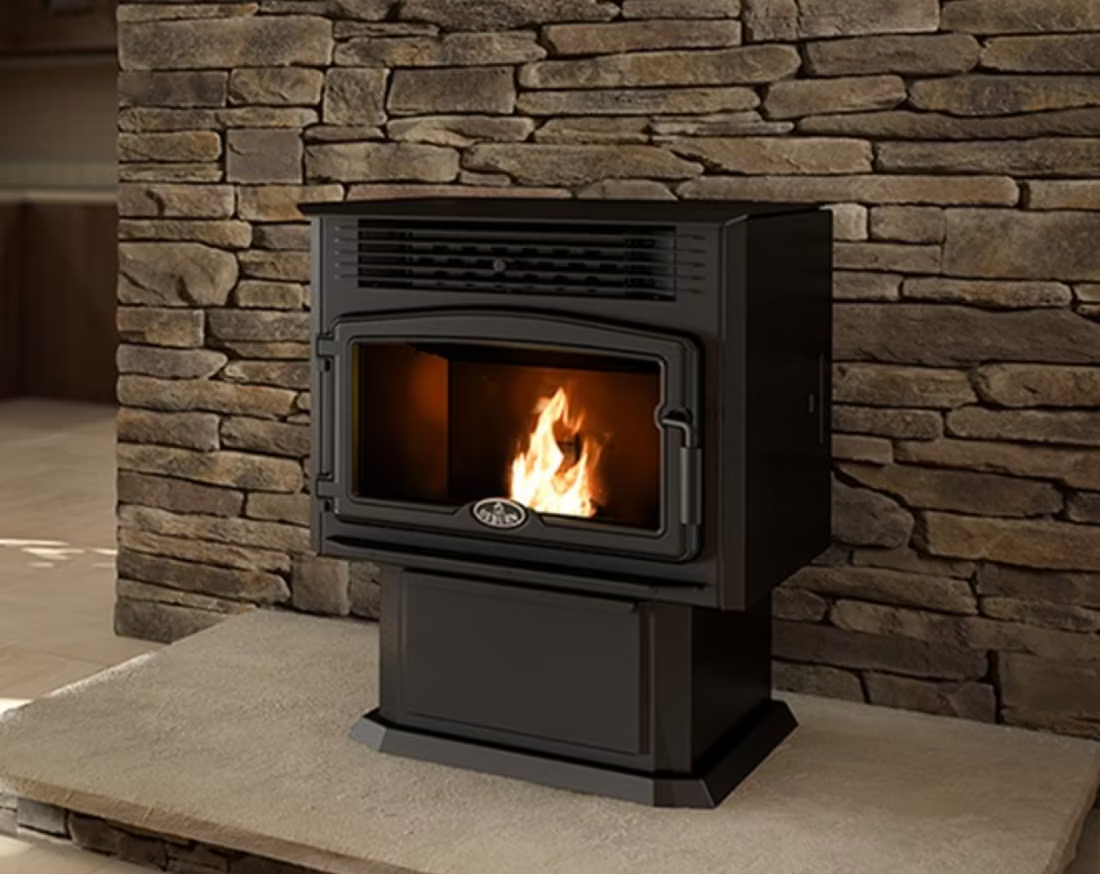
Three steps. No salesperson until you're ready.
Tell us about your project
Your postal code, your situation, and the fuel you're leaning toward—or let the answers point you to one.
See what's actually available
The brands dealers within 100 miles genuinely carry—real options, never a catalog mirage.
Get your dealer & Project Guide
A trusted local dealer, plus the free Project Guide & Parts List that names every component of the job.
Frequently Asked Questions
How much does a pellet stove installation cost in St. Anthony?
Typical installs run $6,000 to $10,000 CAD. An insert going into an existing masonry firebox in one of the older homes around town sits toward the lower end, since the chimney chase is already there. A freestanding stove in a newer build without a chimney needs fresh through-wall venting, which pushes toward the top of that range. Either way it falls under the CSA B365 installation code, and your dealer typically pulls the permit through the municipal building department as part of the job.
Why would I switch to pellets when domestic cutting permits here are so cheap?
It's a fair question in a place where a permit through NL Forestry, Agriculture and Lands runs $25 a year, or $16.25 for seniors, and balsam fir, black spruce, and birch are close at hand. Wood wins on raw fuel cost every time. Pellet stoves win on labour and consistency: no felling, splitting, stacking, or hauling, and a hopper that feeds itself for a day or more at a steady rate rather than a firebox you're loading by hand through a six-month season. A lot of households here that are getting older, or that don't have easy woodlot access anymore, move to pellets for that reason and keep the wood stove as backup rather than retiring it.
Where do I actually buy pellets on the Northern Peninsula?
Exploits Pelletizing and Shaw Resources supply most of the pellets sold into this part of Newfoundland, typically $400 to $575 a tonne. Because St. Anthony sits well up the peninsula from where those pellets are bagged, freight adds noticeably to the delivered price compared to buying in central Newfoundland. Most local burners order a full season's supply in fall rather than counting on restocking mid-winter, since road conditions on the peninsula can get unpredictable once the snow sets in.
Do I need a permit to install a pellet stove in St. Anthony?
Yes. The municipal building department issues the permit, and the installation has to meet the CSA B365 code that governs solid-fuel appliances in Newfoundland and Labrador. Insurers commonly ask for a WETT inspection too, even on a pellet unit rather than a cordwood stove, since a WETT-qualified technician is checking clearances and venting, not just fuel type. Most dealers who install this far up the peninsula are used to handling both the permit and the inspection paperwork.
What size pellet stove do I need for a St. Anthony home?
With winter lows averaging -15.7°C and a coastal exposure to the Labrador Sea that adds real wind chill on top of that, this is a harder climate than its low elevation of 9 metres suggests—closer in feel to a place like Thunder Bay for how long and hard the season runs. If the pellet stove is carrying your main living space through winter, size toward the middle-to-large end of the manufacturer's range rather than the smallest unit that technically fits the square footage. If you're keeping a wood stove as your primary heat and adding pellets for convenience or shoulder-season use, a smaller unit is fine.
What happens to a pellet stove during a power outage?
It stops, at least without a backup plan. Pellet stoves need electricity to run the auger and combustion blower, and winter storms do knock out power across the Newfoundland Power and NL Hydro service area on the peninsula. Some households run a small battery backup or inverter sized for the stove's draw, but the more common local solution is simpler: keep the wood stove or insert in the house as the outage fallback, and let the pellet unit handle day-to-day convenience heating. Given how deep the wood-cutting tradition runs here, most homes already have that option available.
How often does a pellet stove need cleaning in this climate?
With a heating season that starts early and runs long at this latitude, plan on cleaning the burn pot and ash tray weekly during steady winter use, and a full service including the glass, gaskets, and venting once a year, ideally before the season starts rather than mid-winter when appointments book up. Because insurers here typically want a WETT inspection on file for solid-fuel appliances, scheduling that annual service with a WETT-qualified technician covers both maintenance and paperwork in one visit.
Are there rebates for moving off electric heat to a pellet stove?
Check the takeCHARGE program run jointly by Newfoundland Power and NL Hydro, which periodically offers efficiency incentives relevant to heating upgrades. At a residential rate around 13.8 cents per kWh, electric baseboard heat through a full St. Anthony winter adds up, and a pellet stove handling the main living area can meaningfully cut that draw. Program details shift year to year, so a local dealer who's installed here recently is usually your fastest source for what's actually funded this season.
Pellet stove or wood stove—which makes more sense for a St. Anthony home?
Wood wins on cost, given $25-a-year cutting permits and abundant balsam fir, black spruce, and birch on the peninsula, and it keeps working through a power outage, which matters here. Pellets win on convenience: consistent heat output, no splitting or stacking, and a fuel that stores in bags rather than a cord pile taking up yard space. Plenty of households on the Northern Peninsula end up running both—wood as the resilient primary or backup, pellets for the days you want heat without tending a fire.
Why do fireplace quotes vary so much?
Because a fireplace is an iceberg—there's more behind the wall than in front of it. A low quote often covers only the unit; the full scope includes vent pipe, gas line or electrical, framing, and the tile or stone that has to come off and go back on. Make every bidder price the whole job. If a dealer can't speak to the full scope with confidence, that's your signal to keep looking.
Is it worth replacing an old fireplace that still sort of works?
Ask three questions: Is it ugly? Is it drafty? Does it actually work? Most old fireplaces fail at least two. Beyond looks, an old unit leaks air around the damper year-round and—if it's gas with a standing pilot—quietly burns a couple hundred dollars a year. A modern replacement seals the wall, heats the room, and changes how the whole space gets used.
What should I look for in pellet stove design?
Three things separate the field: how easy the burn pot is to clean (trapdoor designs let the ash drop straight into the pan), how the auger moves pellets (top-mounted augers that pull instead of push jam less and wear slower), and diagnostics (self-diagnosing control boards tell you exactly which part needs attention instead of leaving you guessing). Heat output is table stakes—livability is in these details.
Do I need a permit to install a fireplace?
In most jurisdictions, yes—fireplace and stove installations involve venting, clearances, and often gas or electrical work that gets permitted and inspected. That's a feature, not a hassle: the inspection protects your family and your homeowner's insurance. A professional installer pulls the permit, installs to code, and stands behind the inspection. If someone suggests skipping it, keep looking.
Nearby Dealers
Hearth shops serving St. Anthony and the surrounding area. Every listing shows whether it is a WhyFire partner, a dealer we have verified as authorized for the brands we recommend, or a local business carrying hearth products. No manufacturer pays for placement. How we verify dealers →
Pellet Brands Stocked Around St. Anthony
Typical price runs $400-$575 per ton—buy early-season for the best rates. Manufacturers will point you to the nearest stocking dealer.
Exploits Pelletizing
Shaw Resources
Get your free Project Guide & Parts List for a St. Anthony pellet stove.
Tell us about your home and how you're heating it now, and we'll help you find a trusted local dealer and send a free Project Guide & Parts List—sized for the Northern Peninsula's long winters, with the vent kit and CSA B365 requirements already worked out.
Find Your Fireplace →