
On-demand heat on a peninsula with no mains gas line.
Goulds sits on the southern edge of St. John's with winter lows averaging -8.2°C and a damp, raw heating season that runs half the year. There's no piped natural gas here, so a "gas fireplace" means propane. We'll help you find a trusted local dealer who knows the tank sizing, the venting, and what's realistic for your street.
Every Project Starts From One of These Five Situations
Convenience heat in wood country.
Newfoundland's domestic wood-cutting tradition is among the strongest in Canada, and Goulds is no exception—balsam fir, black spruce, white birch, and trembling aspen cut under a $25-a-year district permit (NL Forestry, Agriculture and Lands) still heat a lot of homes here through a long, damp season that starts biting well before Christmas and holds on into April. Winters average -8.2°C at the low end, cold enough by North Atlantic standards but nothing like the deep continental freezes of Winnipeg or Thunder Bay—it's the wet, wind-driven chill off the Atlantic that makes a dependable secondary heat source worth having in the main living room.
What's different in Goulds is that there's no mains natural gas distribution network anywhere in Newfoundland—so a gas fireplace here runs on a propane tank set on the property, not a utility line. That's a completely standard setup across the Avalon and Eastern Newfoundland region, not a compromise: propane fireplaces and inserts fire instantly, don't need a woodpile, and keep working during the power outages that come with Nor'easters and post-tropical storms, provided the unit has battery-backed ignition. Typical installs run $6,000 to $15,000 CAD, and most households running one still keep a wood stove or insert going as their primary heat, with the propane unit handling convenience and backup.
Three steps. No salesperson until you're ready.
Tell us about your project
Your postal code, your situation, and the fuel you're leaning toward—or let the answers point you to one.
See what's actually available
The brands dealers within 100 miles genuinely carry—real options, never a catalog mirage.
Get your dealer & Project Guide
A trusted local dealer, plus the free Project Guide & Parts List that names every component of the job.
Frequently Asked Questions
How much does a gas fireplace installation cost in Goulds?
Most propane fireplace installs in Goulds run $6,000 to $15,000 CAD. A direct-vent insert dropping into an existing masonry firebox—common in older Goulds homes originally built around a wood fireplace burning balsam fir or birch—sits toward the low end. A new built-in unit for an addition or a full renovation, with fresh gas line runs from the propane tank and new wall or roof venting, lands at the top. Tank placement and the distance from the house also factor in, since your dealer needs to route line to wherever the unit goes.
Since there's no natural gas line here, how does a gas fireplace actually run?
It runs on propane from a tank set on your property, either a smaller cylinder for a single fireplace or a larger tank if you're also running a furnace or water heater off it. This is the normal setup across Avalon and Eastern Newfoundland, since there's no mains gas distribution anywhere in the province. Your dealer sizes the tank and regulator to the fireplace's BTU rating and arranges delivery through a regional propane supplier—Superior Propane and a handful of other Atlantic Canada suppliers service the St. John's area, including Goulds.
Do I need a permit to install a gas fireplace in Goulds?
Yes. You'll need a permit through the municipal building department, and the propane installation itself follows the CSA B149.1 code for propane and natural gas appliances, which means the gas-side work has to be done by a licensed gas fitter. That's a separate code from CSA B365, which governs solid-fuel appliances and is why WETT inspections come up for wood stoves but not for gas—insurers still like to see proof of a certified propane install on file, and most local dealers provide that paperwork as part of the job.
What's the difference between a gas fireplace, insert, and stove for my house?
A built-in gas fireplace is framed into a wall, which suits new construction or a full remodel. A gas insert slides into an existing masonry firebox, which is the common upgrade in older Goulds homes that started out with an open wood fireplace burning fir or spruce and already have a working chimney chase to reuse. A gas stove is freestanding on a hearth pad, similar footprint to a wood stove but connected to a propane line and regulator instead of split wood. For most existing homes here, an insert is the least disruptive option since it works with the chimney you already have.
Will a propane fireplace still work if the power goes out?
Most will, and that matters in Goulds given how often Atlantic storms and post-tropical systems knock out power along the Avalon Peninsula. Units with intermittent pilot ignition run on AA battery backup that kicks in automatically, while some models skip batteries entirely because the pilot's thermocouple generates its own current. Ask your dealer which ignition system is on any unit you're considering—for a coastal area with regular multi-day outages, that's worth deciding up front rather than discovering it in a January storm.
Gas vs. wood—which makes more sense for a Goulds home?
Wood still wins on fuel cost here—a district cutting permit through NL Forestry, Agriculture and Lands runs $25 a year ($16.25 for seniors) for access to designated domestic cutting areas, and balsam fir, black spruce, and birch are all locally available. Wood also keeps working with zero electricity, which matters through a storm-prone winter. Propane wins on convenience: instant heat with no stacking or splitting, and no smoke to manage during a run of damp, still days. Most households in Goulds that install a propane fireplace already have wood as their primary heat and want propane specifically for the main living room or as a backup they can trust.
How often does a propane fireplace need servicing in Goulds?
Plan on an annual check, ideally in late summer or early fall before the first real cold snap rather than mid-winter when technicians are booked solid. A technician checks the burner, pilot assembly, gas connections, and venting, and cleans the glass. The salt-laden Atlantic air along the Avalon Peninsula can accelerate corrosion on exterior venting components faster than it would inland, so a coastal home in Goulds benefits from that yearly look even more than a similar setup further from the water. Expect roughly $150-$250 CAD for a standard visit.
Vented vs. vent-free propane fireplaces—what should I know for Goulds?
Direct-vent units pull combustion air from outside and exhaust it back outside through sealed venting, which is the standard, code-compliant choice for daily use through a long heating season. Vent-free units burn into the room and come with strict room-sizing limits. Given how many Goulds homes are older and tightly sealed against wind off the Atlantic, most local dealers steer homeowners toward direct-vent so moisture and combustion byproducts aren't adding to an already damp indoor climate through six or more months of daily use.
What size gas fireplace do I need for a Goulds home?
With winter lows around -8.2°C and a long, wet heating season rather than an extreme cold one, most Goulds homes do fine with a mid-size unit rated for the room it's actually heating rather than the whole house—propane fireplaces here are usually a convenience and backup heat source layered on top of a wood stove, not the sole source of heat. A local dealer will size it against your room's insulation, ceiling height, and window area rather than square footage alone, since an older Goulds home with single-pane windows loses heat differently than a newer build.
Can a gas fireplace run on a thermostat?
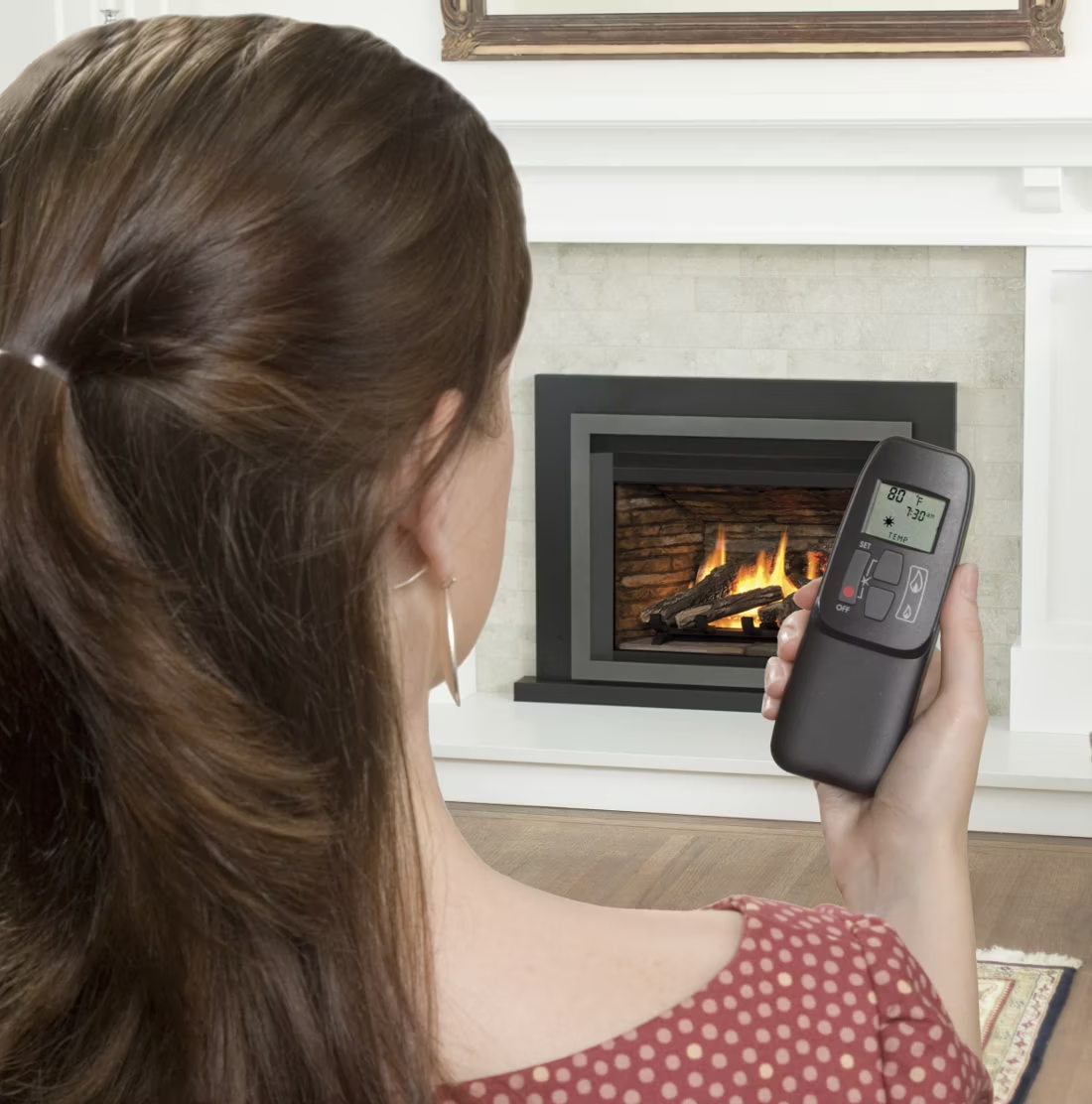
Most modern gas fireplaces can—turn it on and off from the couch with a remote, or set a room temperature and let the fireplace hold the comfort zone for you. If low maintenance matters to your family, this is the feature set that makes gas the convenience pick over wood and pellet.
Why do fireplace quotes vary so much?
Because a fireplace is an iceberg—there's more behind the wall than in front of it. A low quote often covers only the unit; the full scope includes vent pipe, gas line or electrical, framing, and the tile or stone that has to come off and go back on. Make every bidder price the whole job. If a dealer can't speak to the full scope with confidence, that's your signal to keep looking.
Are new gas fireplaces really better than old ones?
Two ways, and they're both big. Looks: modern gas fireplaces are realistic enough that it's hard to believe they aren't burning wood. Cost: old units burn a standing pilot year-round (roughly $200 a year), while new ones use pilot-on-demand ignition and modern burners. Add remote controls and thermostat operation, and the day-to-day experience isn't close.
Does a gas fireplace work when the power is out?
Yes—modern gas fireplaces have a battery backup for the ignition system that lasts for weeks, so no power equals no problem. Your furnace can't say that: no electricity, no blower, no heat. It's one of the most common reasons families add a fireplace, and worth confirming on any model you're considering.
Nearby Dealers
Hearth shops serving Goulds and the surrounding area. Every listing shows whether it is a WhyFire partner, a dealer we have verified as authorized for the brands we recommend, or a local business carrying hearth products. No manufacturer pays for placement. How we verify dealers →
Get your free Project Guide & Parts List for a Goulds gas fireplace.
Tell us about your home and your propane setup, and we'll help you find a trusted local dealer and send a free Project Guide & Parts List with the exact vent kit and parts your project needs—sized for a Goulds winter, not a catalogue average.
Find Your Fireplace →