
Zone heat that skips the chimney entirely.
Fogo Island averages a winter low near -9.6°C, and Newfoundland Power and NL Hydro price electricity around 13.8 cents a kilowatt-hour, among the more affordable rates in Atlantic Canada. We'll help you find a trusted local dealer who knows what a 120-volt or 240-volt install actually takes on an island reached by ferry from Farewell.
Every Project Starts From One of These Five Situations
The easiest heat upgrade on an island built around wood.
Fogo Island has one of the strongest domestic wood-cutting traditions in the country, and it shows: a lot of outport homes in Fogo, Joe Batt's Arm, Tilting, and Seldom still heat primarily with balsam fir, black spruce, white birch, and trembling aspen cut under an NL Forestry, Agriculture and Lands domestic permit that runs just $25 a year, or $16.25 for seniors. That's a real, working heat system, not a backup plan, and it's why any conversation about electric heat here starts from a different place than in a city where wood is purely decorative.
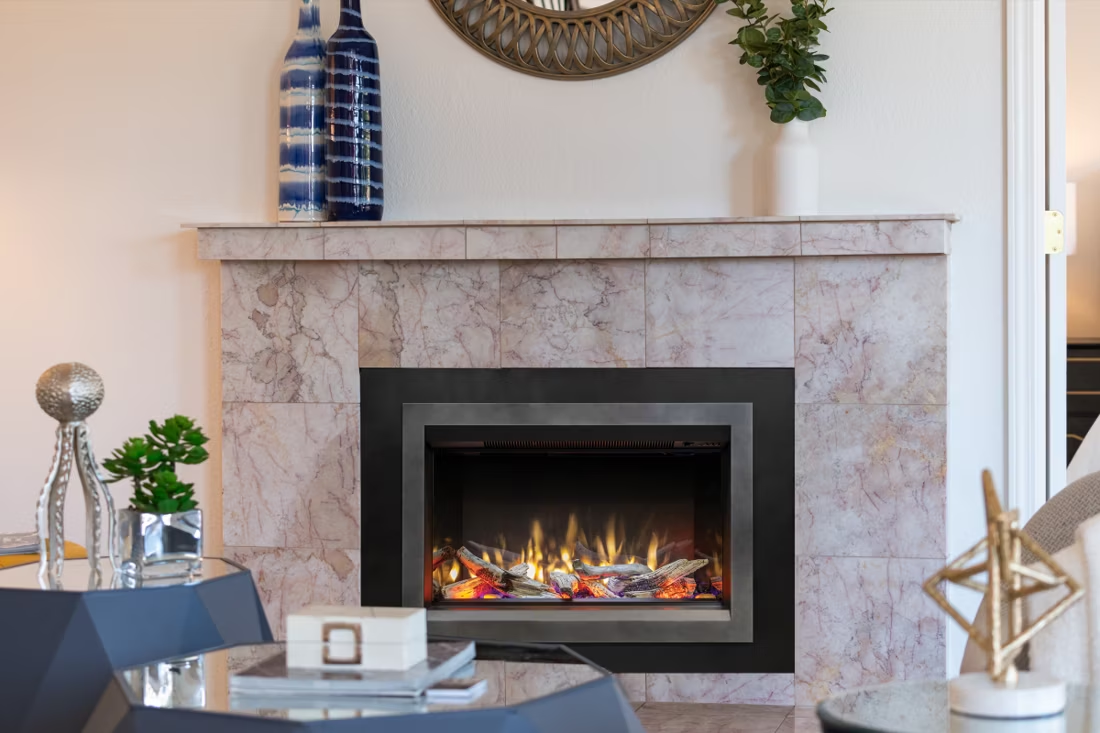
Where electric earns its keep is everywhere a chimney doesn't make sense: additions, sunrooms, basements, ensuite bedrooms, and the seasonal cottages and artist studios scattered around the island that nobody wants to keep stocked with cordwood over the winter. There's no mains natural gas service out here, and a wood install with CSA B365 compliance and a WETT inspection for insurance typically runs $6,000-$12,000. An electric fireplace, by contrast, is usually $500-$1,600 CAD installed, plugs into a standard outlet or a single dedicated 240-volt circuit, and needs no venting, no flue, and no annual sweep at all.
Three steps. No salesperson until you're ready.
Tell us about your project
Your postal code, your situation, and the fuel you're leaning toward—or let the answers point you to one.
See what's actually available
The brands dealers within 100 miles genuinely carry—real options, never a catalog mirage.
Get your dealer & Project Guide
A trusted local dealer, plus the free Project Guide & Parts List that names every component of the job.
Frequently Asked Questions
How much does an electric fireplace cost to install on Fogo Island?
Most jobs run $500-$1,600 CAD. A freestanding or insert unit that plugs into a standard 120-volt outlet sits at the low end and often needs nothing more than the unit itself and a bit of trim work. A built-in wall unit wired to its own 240-volt circuit, more common in newer builds and additions, runs toward the top of that range once a licensed electrician is involved. Either way, it's a fraction of the $6,000-$12,000 a certified wood system costs once you factor in chimney, CSA B365 compliance, and a WETT inspection for insurance.
Do I need a permit for an electric fireplace here?
Usually not for a plug-in freestanding unit or insert. A built-in model tied into your home's panel on a dedicated 240-volt circuit typically needs an electrical permit, coordinated through the municipal building department covering your part of the island, and the wiring itself needs to be done by a licensed electrician. None of the wood-specific requirements apply, there's no CSA B365 installation code to meet and no WETT inspection needed for insurance purposes, since there's no combustion or venting involved.
Is electric heat actually affordable given local rates?
Newfoundland Power and NL Hydro bill residential customers around 13.8 cents a kilowatt-hour, which is on the lower end for Atlantic Canada, so running an electric fireplace as zone heat in a bedroom or sunroom is genuinely cheap day to day. That said, most islanders still lean on wood as the primary heat source through the coldest months, partly out of tradition and partly because a domestic cutting permit costs just $25 a year. Electric fits best as the easy, always-on layer in the rooms wood heat doesn't reach.
Will an electric fireplace still work if the power goes out?
No, it needs grid power to run, and that matters on an island served by underwater cable and exposed to Atlantic storms that can knock out power in outport communities like Tilting or Seldom for stretches at a time. It's a big reason so many Fogo Island homes keep a wood stove burning balsam fir or black spruce as the real backup heat source, with an electric fireplace handling day-to-day ambiance and zone heat in rooms where running a flue was never practical.
What's the difference between an electric fireplace, insert, and stove?
A freestanding electric stove sits on the floor like a small appliance, a good fit for a mudroom or enclosed porch. An electric insert slides into an existing masonry firebox, which works well in an older saltbox home that has an unused fireplace opening but no interest in maintaining a wood chimney. A built-in wall unit recesses into the framing, popular in newer renovations and additions with the large glass and clean lines you see in a lot of the island's contemporary builds.
Which rooms make the most sense for an electric fireplace on Fogo Island?
Additions, basements, primary bedrooms, and sunrooms are the natural fits, along with any space where a heritage roofline makes running new venting impractical. It's also a common choice for the rental cottages and artist studios spread across the island's outport communities, where an owner wants ambiance and a bit of heat without arranging a wood supply or checking on a stove between stays.
What brands do local dealers actually carry?
Because Fogo Island's own dealer network is thin, most homeowners find a manufacturer-authorized dealer based in Gander or Grand Falls-Windsor who services the island across the ferry route from Farewell. Dimplex, Napoleon, and Amantii are the lines that show up most often, and all three build both 120-volt plug-in units and 240-volt built-ins suited to the damp, salt-air coastal climate out here.
How does maintaining an electric fireplace compare to a wood stove here?
There's very little to it: an occasional vacuum of the vents, a dusted glass front, and eventually a bulb replacement. Compare that to a wood system, which needs an annual sweep and a WETT inspection to satisfy most insurers, plus keeping a supply of split and seasoned balsam fir or birch on hand. For a seasonal cottage owner who isn't on the island through the winter, that low-maintenance profile is often the whole reason to add an electric unit.
Electric vs. wood, which makes more sense for a Fogo Island home?
Wood still carries the island, cheap to cut under a $25-a-year NL Forestry domestic permit and reliable when the power goes down, with a certified stove or insert typically running $6,000-$12,000 installed. Electric wins on upfront cost, at $500-$1,600, and on simplicity, no venting, no chimney, no annual inspection. Most households end up running both, wood as the dependable primary or backup heat source, electric as the low-fuss focal point in a room like a new sunroom or ensuite where a flue was never in the plan.
How much does an electric fireplace cost to run?
With the heater on, a typical unit draws about 1,500 watts—at average electric rates that's roughly 20 cents an hour. Run the flame effect alone and it costs pennies; the flames are LED-driven and use about as much power as a light bulb. There's no pilot light, no fuel delivery, and essentially no maintenance.
What fireplace styles should I know before shopping?
Four cover most of the market: screen-front traditional (mesh front, open feel, fits craftsman homes), traditional door set (the classic look you grew up with), modern linear (wide, low, the statement piece for entertaining), and clean face contemporary (no trim—your tile or stone runs right to the fire's edge). Walk in knowing those four terms and you're ahead of most buyers.
Do electric fireplaces actually produce heat?
Yes—most put out around 4,800–5,000 BTUs from a standard outlet, which comfortably warms a bedroom, office, or den as a comfort-zone heater. What they won't do is carry a whole house the way wood, gas, or pellet can. Think of electric as ambiance-first with honest supplemental heat: flames on with no heat in July, flames plus warmth in January.
Does an electric fireplace need a vent or chimney?
No—that's its superpower. An electric fireplace needs a wall and an outlet, period. No vent pipe, no gas line, no clearances to design around, which is why it works in bedrooms, offices, apartments, and walls where venting a gas or wood unit would be impractical or impossible. Installation is typically the simplest and least expensive of any fireplace type.
Nearby Dealers
Hearth shops serving Fogo Island and the surrounding area. Every listing shows whether it is a WhyFire partner, a dealer we have verified as authorized for the brands we recommend, or a local business carrying hearth products. No manufacturer pays for placement. How we verify dealers →
Electric Service in Fogo Island
An electric fireplace's heater draws about 1,500 watts—pennies per hour at local rates.
Newfoundland Power
Nl Hydro
Get your free Project Guide & Parts List for a Fogo Island electric fireplace.
Tell us about your home, whether you're near Fogo, Joe Batt's Arm, Tilting, or Seldom, and whether you're looking at a plug-in unit or a 240-volt built-in, and we'll help you find a trusted local dealer and send a free Project Guide & Parts List with the exact parts your project needs.
Find Your Fireplace →