
Steady flame for a coast with no gas mains.
There's no natural gas utility anywhere in Newfoundland, so every gas fireplace in Clarenville-Shoal Harbour runs on propane. We'll help you find a trusted local dealer who can size the tank, the line, and the unit correctly for your home.
Every Project Starts From One of These Five Situations
A propane flame that backs up wood and baseboard heat.
Clarenville-Shoal Harbour sits at the head of Random Sound on the Bonavista Peninsula, at essentially sea level, where the Atlantic moderates a winter low averaging around -11°C. That's a friendlier number than you'd see in Fredericton NB or Thunder Bay ON, but the damp coastal cold works into a house differently than dry inland cold does, and a long heating season is still the norm here. Wood remains deeply rooted in this part of the province—balsam fir, black spruce, white birch, and trembling aspen are cut under NL Forestry, Agriculture and Lands domestic permits for just $25 a year ($16.25 for seniors)—and a lot of households in the region still heat primarily with wood, backed by electric baseboards through Newfoundland Power or NL Hydro.
Gas fits into that mix as propane, not pipeline gas—there is no mains natural gas network anywhere in Newfoundland and Labrador, so every direct-vent gas fireplace or insert installed here runs off a delivered propane tank rather than a utility meter. That's exactly why gas still counts as a standard, mainstream option in Clarenville-Shoal Harbour: a propane fireplace lights instantly during the nor'easters that periodically knock out NL Hydro's grid along this stretch of coast, without asking anyone to split wood or feed a stove overnight. Typical installs run $6,000-$15,000 CAD, with tank setup and gas line runs being the biggest swing factor between a simple retrofit and a full new install.
Three steps. No salesperson until you're ready.
Tell us about your project
Your postal code, your situation, and the fuel you're leaning toward—or let the answers point you to one.
See what's actually available
The brands dealers within 100 miles genuinely carry—real options, never a catalog mirage.
Get your dealer & Project Guide
A trusted local dealer, plus the free Project Guide & Parts List that names every component of the job.
Frequently Asked Questions
How much does a propane fireplace installation cost in Clarenville-Shoal Harbour?
Most installs run $6,000 to $15,000 CAD. A direct-vent insert going into an existing masonry firebox, common in the older housing stock around Shoal Harbour, sits toward the lower end since the chimney chase is already there. A new built-in unit for an addition or a home without an existing hearth costs more once you add a propane line run and a tank setup—either a portable cylinder exchange or a larger bulk tank from a local propane supplier. Homes converting from electric baseboard as their main heat source should budget for the full range, since there's no existing gas infrastructure to tie into.
Is there natural gas service in Clarenville-Shoal Harbour?
No. There is no mains natural gas utility anywhere in Newfoundland and Labrador, including here. Every gas fireplace, insert, or stove installed in Clarenville-Shoal Harbour runs on propane, either from a portable tank swapped by a local supplier or a larger bulk tank set up on the property for higher-use households. A trusted local dealer will size the tank to your fireplace's BTU output and how much of your home's heat load it's expected to carry.
Do I need a permit to install a propane fireplace here?
Yes. The municipal building department requires a permit for the installation, and the propane gas work itself needs to be done and certified by a licensed gas fitter under the CSA B149 propane installation code—separate from the CSA B365 code that governs wood stove installs in this province. Unlike a wood appliance, a propane fireplace generally doesn't need a WETT inspection for insurance, but your insurer will typically want proof of the gas fitter's certification on file, so keep that paperwork after the install.
Will a propane fireplace still work if the power goes out?
Most will, and that's a real selling point along this stretch of coast, where winter storms off Trinity Bay have knocked out Newfoundland Power and NL Hydro service for extended stretches in recent years. Units with intermittent pilot ignition run their controls off AA batteries that kick in automatically during an outage. Standing-pilot models skip batteries entirely since the pilot flame generates its own current through a thermocouple. Ask your dealer which ignition system is on any model you're considering—it matters more here than it would in a milder, grid-stable market.
Gas vs. wood—which makes more sense for a Clarenville-Shoal Harbour home?
Wood still has deep roots here—balsam fir, black spruce, and white birch cut under a $25-a-year NL Forestry domestic permit keep fuel costs low for households willing to split and stack it, and a wood stove keeps running with zero power at all. Propane wins on convenience: no cutting, no stacking, and instant heat at the flip of a switch or remote, plus battery-backed ignition that rides out a Hydro outage almost as well as wood does. A common pattern in this region is a wood stove as primary heat with a propane fireplace or insert in a secondary room for quick, low-effort warmth.
What size propane fireplace do I need for my home here?
Climate zone 6A and a winter low around -11°C mean most Clarenville-Shoal Harbour homes need a fireplace sized to genuinely contribute heat, not just for ambiance. A small direct-vent unit works fine as a supplement to electric baseboard in one room, but if you're aiming to offset a meaningful share of your Newfoundland Power or NL Hydro bill through the winter, a mid-size unit rated for your actual square footage—factoring in older homes' typically thinner insulation near Shoal Harbour and Random Island—is the better call. A local dealer will size it against your layout rather than square footage alone.
Vented vs. vent-free propane units—what should I know here?
Direct-vent units draw combustion air from outside and exhaust fully outside through sealed venting, and they're the standard, code-compliant choice for daily heating use. Vent-free propane units burn into the room air and come with strict square-footage limits, which makes them a tighter fit in the smaller, tightly-built homes common in this area. Most local dealers steer Clarenville-Shoal Harbour homeowners toward direct-vent, especially for a unit that's going to run for hours at a stretch through a long Atlantic winter.
How often does a propane fireplace need servicing?
Plan on an annual check, ideally in late summer or early fall before the first cold snap rather than mid-winter when local technicians serving the Bonavista Peninsula are booked solid. A service visit covers the burner, pilot assembly, propane line connections, and venting, plus a tank inspection if you're on a bulk system. It's a lighter job than a wood chimney sweep, but skipping it on a unit that's carrying real heating load through a six-month season is how an ignition fault shows up on the coldest night.
Can I convert an existing wood fireplace to propane?
Yes, and it's a common request in the older parts of Clarenville-Shoal Harbour where masonry fireboxes were originally built for burning balsam fir or birch. A propane insert typically slides into that existing firebox with a liner run through the current chimney, and a gas fitter runs the propane line and connects a tank. Since the appliance is propane rather than wood, the CSA B365 wood-appliance code and WETT inspection requirement no longer apply—you're working under the CSA B149 propane code instead, which most local dealers handle as a routine part of the conversion.
Can a gas fireplace run on a thermostat?
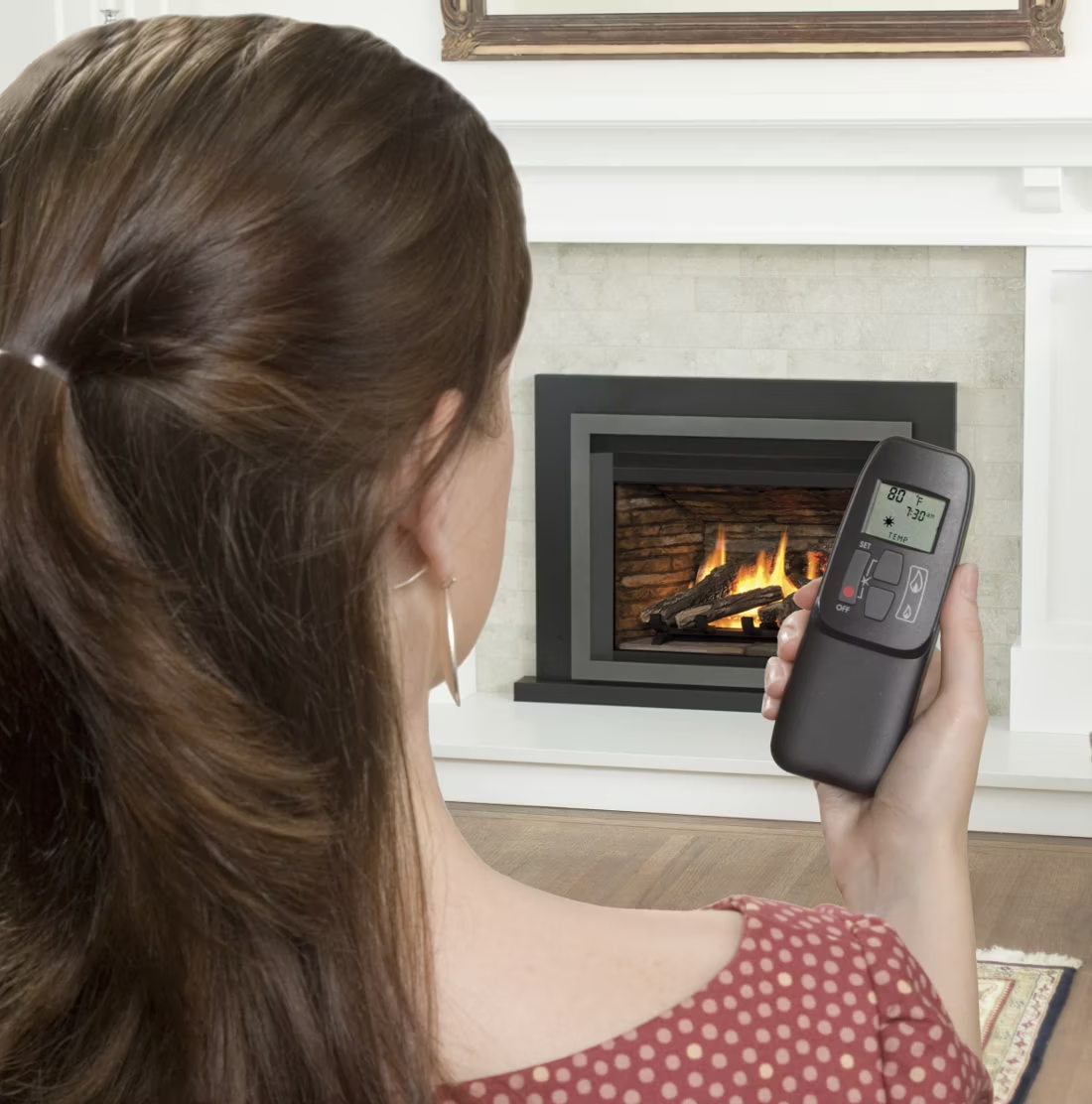
Most modern gas fireplaces can—turn it on and off from the couch with a remote, or set a room temperature and let the fireplace hold the comfort zone for you. If low maintenance matters to your family, this is the feature set that makes gas the convenience pick over wood and pellet.
Why do fireplace quotes vary so much?
Because a fireplace is an iceberg—there's more behind the wall than in front of it. A low quote often covers only the unit; the full scope includes vent pipe, gas line or electrical, framing, and the tile or stone that has to come off and go back on. Make every bidder price the whole job. If a dealer can't speak to the full scope with confidence, that's your signal to keep looking.
What fireplace styles should I know before shopping?
Four cover most of the market: screen-front traditional (mesh front, open feel, fits craftsman homes), traditional door set (the classic look you grew up with), modern linear (wide, low, the statement piece for entertaining), and clean face contemporary (no trim—your tile or stone runs right to the fire's edge). Walk in knowing those four terms and you're ahead of most buyers.
Are new gas fireplaces really better than old ones?
Two ways, and they're both big. Looks: modern gas fireplaces are realistic enough that it's hard to believe they aren't burning wood. Cost: old units burn a standing pilot year-round (roughly $200 a year), while new ones use pilot-on-demand ignition and modern burners. Add remote controls and thermostat operation, and the day-to-day experience isn't close.
Nearby Dealers
Hearth shops serving Clarenville-Shoal Harbour and the surrounding area. Every listing shows whether it is a WhyFire partner, a dealer we have verified as authorized for the brands we recommend, or a local business carrying hearth products. No manufacturer pays for placement. How we verify dealers →
Get your free Project Guide & Parts List for a Clarenville-Shoal Harbour propane fireplace.
Tell us about your home and your current heat source—wood, electric baseboard, or both—and we'll help you find a trusted local dealer and send a free Project Guide & Parts List with the tank sizing, vent kit, and parts your project needs.
Find Your Fireplace →