
Consistent heat for Newfoundland's windiest coastline.
Winter lows here average -8.3°C, but it's the constant Cabot Strait wind, not the thermometer, that drives the heating season in Channel-Port aux Basques. We'll help you find a trusted local dealer who can size a pellet stove for this coast and send a free planning packet.
Every Project Starts From One of These Five Situations
A wood-burning town with room for something cleaner.
Channel-Port aux Basques sits on the exposed southwest tip of Newfoundland, the landing point for the Marine Atlantic ferry and a short drive from Wreckhouse, famous across the province for winds strong enough to tip loaded trucks off the Trans-Canada. Winter lows averaging -8.3°C look mild compared with Thunder Bay or Sudbury, but the near-constant coastal wind and damp air stretch the heating season well past what a climate zone 6A rating suggests, and the utility grid here takes a real beating from those same windstorms most winters.
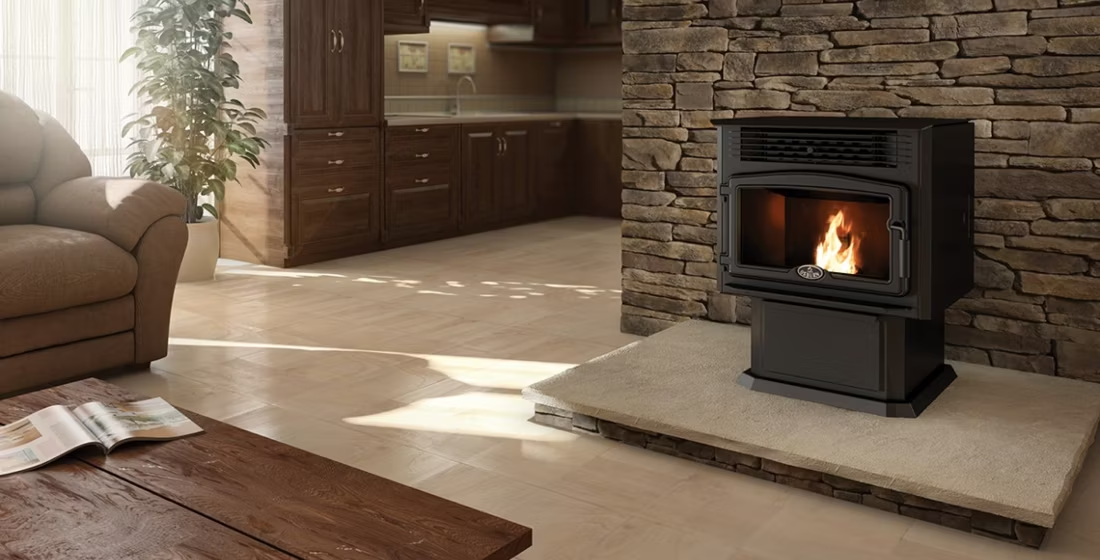
This is a town where wood cutting runs deep: households pull domestic permits from NL Forestry, Agriculture and Lands for around $25 a year ($16.25 for seniors) and split balsam fir, black spruce, white birch, and trembling aspen in numbers that put the region among the strongest wood-heating traditions in Canada. Pellet stoves fit alongside that tradition rather than replacing it, offering thermostat-controlled, low-maintenance heat for households who don't want to stack cordwood in a gale or who need a second heat source for a smaller in-town lot. With no mains natural gas here and Newfoundland Power and NL Hydro billing around 13.8 cents a kWh, a pellet stove supplied through Exploits Pelletizing or Shaw Resources at roughly $400-$575 a tonne often costs less to run day to day than electric baseboard alone.
Three steps. No salesperson until you're ready.
Tell us about your project
Your postal code, your situation, and the fuel you're leaning toward—or let the answers point you to one.
See what's actually available
The brands dealers within 100 miles genuinely carry—real options, never a catalog mirage.
Get your dealer & Project Guide
A trusted local dealer, plus the free Project Guide & Parts List that names every component of the job.
Frequently Asked Questions
How much does a pellet stove installation cost in Channel-Port aux Basques?
Most installs run $6,000-$10,000 CAD, with the range driven by venting. A pellet insert going into an existing masonry firebox in one of the town's older saltbox-style homes typically lands toward the low end since the chimney chase is already there. A freestanding stove in a newer build without an existing flue needs full through-wall venting, which pushes toward the top of that range. Either way, you'll need a permit through the municipal building department, and installation has to meet the CSA B365 code that applies across the province.
With such a strong wood-cutting tradition here, why would someone choose a pellet stove instead?
Plenty of households in Channel-Port aux Basques will keep cutting balsam fir and black spruce under their NL Forestry domestic permit no matter what, but pellet stoves solve a different problem: hopper-fed, thermostat-controlled heat that doesn't require hauling and splitting cordwood in a Wreckhouse gale, and no creosote buildup to manage. It's a common choice for older residents downsizing off wood heat, for smaller in-town lots without space to season a woodpile, or as a second heat source in a home that already burns wood as its primary fuel.
Where do people in Channel-Port aux Basques buy pellets, and how much do they cost?
Exploits Pelletizing and Shaw Resources are the regional brands most commonly stocked by Newfoundland dealers, running roughly $400-$575 a tonne. Because Port aux Basques is at the end of the province's road network and a ferry crossing from freight sources on the mainland, prices sit toward the higher end of that range and supply can tighten in a hard winter. Most local dealers recommend buying a season's worth early rather than restocking bag by bag once the snow starts.
Do I need a permit to install a pellet stove in Channel-Port aux Basques?
Yes. New installations go through the municipal building department and must meet the CSA B365 installation code that governs solid-fuel appliances across Newfoundland and Labrador. Most insurers also want a WETT inspection on file before they'll write or renew coverage on a home with a pellet or wood appliance, even though pellet units burn cleaner than an open wood stove—it's a standard step your dealer should walk you through, not an extra hurdle.
What size pellet stove do I need for a home in Channel-Port aux Basques?
A lot of the housing stock here is older, wind-exposed, and built before current insulation standards, so undersizing is the more common misstep. A stove rated for 1,200-1,800 square feet suits most detached homes in town as a primary or near-primary heat source, while something smaller works fine as a supplemental unit in a home that leans on wood or electric baseboard for the rest of its heat. A local dealer will size against your actual wall assembly and exposure to wind, not just floor area, since a house catching the full brunt of Cabot Strait gusts loses heat faster than the same square footage inland.
Will a pellet stove still run if the power goes out?
Not without help—the auger and blower need electricity, and Port aux Basques sees real outages when Wreckhouse-strength wind takes down lines along the Newfoundland Power grid. A small battery backup or generator will keep a pellet stove running through most outages, but it's a real planning question here in a way it isn't in calmer climates. It's one reason many households still keep a wood stove as the household's primary or backup heat source and treat pellet as the daily-convenience option.
How much maintenance does a pellet stove need in this climate?
Plan on a full service once a year, ideally in late summer or early fall before the first cold snap, when a WETT-certified technician can clean the burn pot, exhaust venting, and hopper and check the gaskets. Given the damp, salt-air coastal environment here, venting components tend to need a closer look than they might inland, and most local installers will flag corrosion-prone hardware during that annual visit rather than waiting for a mid-winter failure.
Are there any rebates or programs for pellet heat in Newfoundland and Labrador?
Newfoundland Power and NL Hydro run efficiency programs from time to time under the takeCHARGE banner, though coverage for solid-fuel appliances varies and isn't guaranteed year to year—it's worth asking your local dealer what's currently available before you commit to a model, since program terms shift. There's no dedicated wood-or-pellet-stove rebate we can promise here the way some provinces offer, so budget based on the $6,000-$10,000 CAD install range and treat any rebate as a bonus rather than a given.
Pellet stove vs. electric baseboard—which makes more sense here?
Electric baseboard through Newfoundland Power or NL Hydro at about 13.8 cents a kWh is simple and needs no fuel storage, but it offers no heat at all during an outage, which matters on a coast that loses power regularly to Wreckhouse winds. A pellet stove costs more upfront and needs a battery backup to survive an outage, but it burns Exploits Pelletizing or Shaw Resources pellets at a lower ongoing cost than whole-home electric heat and can carry one room through a multi-day outage with a small generator. Most households here end up using pellet or wood as the workhorse and electric baseboard as the backup for rooms the stove doesn't reach.
Why do fireplace quotes vary so much?
Because a fireplace is an iceberg—there's more behind the wall than in front of it. A low quote often covers only the unit; the full scope includes vent pipe, gas line or electrical, framing, and the tile or stone that has to come off and go back on. Make every bidder price the whole job. If a dealer can't speak to the full scope with confidence, that's your signal to keep looking.
Is it worth replacing an old fireplace that still sort of works?
Ask three questions: Is it ugly? Is it drafty? Does it actually work? Most old fireplaces fail at least two. Beyond looks, an old unit leaks air around the damper year-round and—if it's gas with a standing pilot—quietly burns a couple hundred dollars a year. A modern replacement seals the wall, heats the room, and changes how the whole space gets used.
Can a pellet stove heat a whole house?
It genuinely can. I burned a pellet stove as my only heat source for years after a furnace died, and it kept the entire house warm. Pellets feed automatically from a hopper, so you get wood-heat economics with thermostat-style control. Two honest caveats: it needs weekly cleaning during the season, and most models need electricity to run—ask about battery backup if outages are a concern.
What does it take to replace an existing fireplace?
Fireplaces are like icebergs—bigger behind the wall than in front of it. Replacement means removing the surrounding tile or stone (the finish material laps onto the fireplace face), pulling the old unit, setting the new one in the same enclosure, and re-finishing the wall. A hearth professional can determine what's behind your wall without demolition during an in-home preview.
Nearby Dealers
Hearth shops serving Channel-Port aux Basques and the surrounding area. Every listing shows whether it is a WhyFire partner, a dealer we have verified as authorized for the brands we recommend, or a local business carrying hearth products. No manufacturer pays for placement. How we verify dealers →
The Tin Man Inc.
Pellet Brands Stocked Around Channel-Port aux Basques
Typical price runs $400-$575 per ton—buy early-season for the best rates. Manufacturers will point you to the nearest stocking dealer.
Exploits Pelletizing
Shaw Resources
Get your free Project Guide & Parts List for a Channel-Port aux Basques pellet stove.
Tell us about your home and we'll help you find a trusted local dealer and send a free Project Guide & Parts List—sized for this coast's wind and damp, with the vent kit and parts specified so there's no guesswork once the project starts.
Find Your Fireplace →