
Find the right heating fuel for Washington County's long winters.
Wood, gas, pellet, and electric fireplace resources for every town in Washington County—from Hudson Falls and Fort Edward to Whitehall, Granville, Cambridge, and Salem. Get matched with a trusted local dealer who knows what actually works at 7,408 heating degree days.
Every Project Starts From One of These Five Situations
Heating homes on New York's Vermont border.
Washington County runs along the eastern edge of New York, from Champlain Valley farmland near Whitehall up into the Taconic foothills around Cambridge and Salem. At 7,408 heating degree days and a climate zone of 5A, the county's winters run comparable to Burlington, Vermont, just across Lake Champlain—winter lows average around 10°F, with real cold snaps well below zero most years. The heating season stretches from October into April, and local woodlots—heavy in oak, maple, birch, and ash—have supplied cordwood to farms and villages here for generations.
What you'll find on this hub: hearth retailers, service technicians, and fuel suppliers covering every town in the county—Hudson Falls and Fort Edward along the Hudson, Whitehall and Granville near the Vermont line, Cambridge and Salem to the south, Greenwich and Argyle in between. Pick your fuel below to drill into local dealers, installation costs, and the units that actually make sense for a Washington County winter—whether you're heating a farmhouse outside Cambridge or a village home in Hudson Falls.
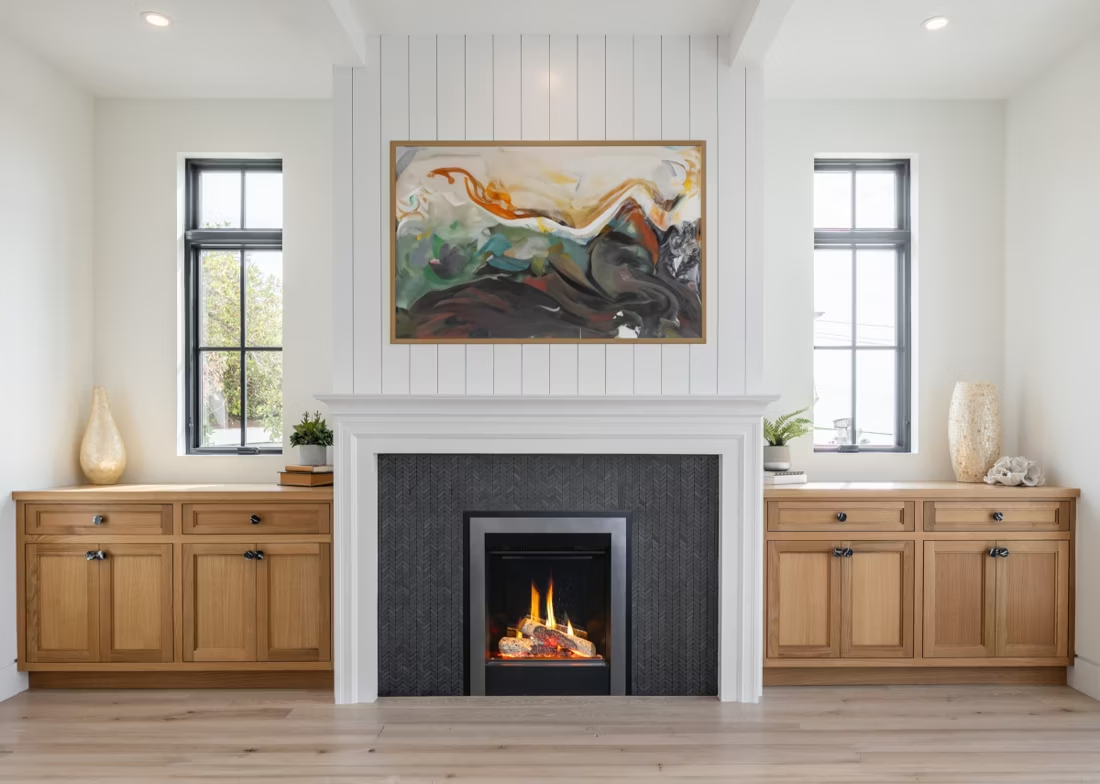
Four fuels. One honest answer for Washington County.
Three steps. No salesperson until you're ready.
Tell us about your project
Your zip code, your situation, and the fuel you're leaning toward—or let the answers point you to one.
See what's actually available
The brands dealers within 100 miles genuinely carry—real options, never a catalog mirage.
Get your dealer & Project Guide
A trusted local dealer, plus the free Project Guide & Parts List that names every component of the job.
Frequently Asked Questions
Which fuel works best in Washington County?
It depends on your home and situation. Wood remains a strong choice here—oak, maple, birch, and ash are all common in local woodlots, and a well-seasoned cord burns clean and hot through the long heating season that runs from October into April. At 7,408 heating degree days, Washington County sits in a climate comparable to Burlington, Vermont, just across Lake Champlain—cold enough that catalytic wood stoves or high-efficiency inserts make real sense for overnight burns. Gas is common in the villages (Hudson Falls, Fort Edward, Greenwich) where natural gas service exists, and propane fills in for rural homes outside those service areas. Pellet stoves are popular too—Energex, Hamer Pellet Fuel, and Greene Team Pellet Fuel are all regionally available, giving pellet-burning households reliable local supply without the splitting and stacking that cordwood requires. Electric fireplaces work well as supplemental heat in bedrooms or finished basements, but with winter lows averaging 10°F, they're not a realistic primary heat source on their own. Many households here run two fuels—wood or pellet as the primary heater, gas or electric for secondary rooms.
Do I need a permit to install a fireplace in Washington County?
Yes, in most cases. Washington County doesn't have a single centralized building department—each town and village (Hudson Falls, Fort Edward, Whitehall, Granville, Cambridge, Salem, Greenwich, Argyle) issues its own building permits for wood stoves, wood inserts, gas fireplaces, gas inserts, and pellet stoves, following the New York State Uniform Fire Prevention and Building Code. New wood-burning appliances need to meet EPA 2020 NSPS emissions standards. Gas installations typically require a separate permit and licensed gas-fitter for the line work. Electric fireplaces usually skip the permit process unless you're hardwiring a built-in unit into a new circuit. Most local retailers handle the permit paperwork with your town office as part of the installation, so it's rarely something homeowners have to sort out themselves.
Can I cut my own firewood on public land in Washington County?
Washington County itself has very little national forest land—most local firewood comes from private woodlots and farms, which is part of why oak, maple, birch, and ash cordwood is so widely available and affordably priced here. If you're looking to cut your own on federal land, the nearest permit office is the combined Green Mountain & Finger Lakes National Forest office, which administers both the Green Mountain National Forest across the border in Vermont and the Finger Lakes National Forest to the west—worth checking directly for permit availability and cutting units, since neither forest sits inside Washington County proper. For most homeowners here, a local firewood dealer or a farm-adjacent woodlot is the simpler and more common route.
Are there air quality restrictions on wood burning in Washington County?
Unlike parts of the West with winter inversion advisories, Washington County has no formal wood-smoke air quality restrictions or non-attainment designations—this is an area where wood heat is used year after year without the burn bans you'd find in a place like the Klamath Basin. That doesn't mean emissions don't matter: EPA 2020 NSPS-certified stoves burn dramatically cleaner and more efficiently than older pre-1990s units, often using roughly a third less wood for the same heat output. If you're replacing an old stove, upgrading to a certified unit is worth it for efficiency and lower chimney creosote buildup, even without a regulatory push to do so.
Can one local hearth retailer handle all four fuel types?
Some do, some specialize. Retailers based in the larger villages—Hudson Falls, Fort Edward, and Greenwich—tend to carry a broader mix, often wood, gas, and pellet, with electric fireplaces as a smaller display category. Smaller shops in Whitehall or Granville may focus more narrowly on wood and pellet, reflecting what's most in demand in their part of the county. If you want to compare fuel types side by side, look for a retailer with working display units of at least three fuel types—that's usually a sign they can walk you through the real trade-offs for your specific chimney, home, and budget, rather than just steering you toward what they happen to stock.
What's the typical cost range for fireplace installation across all fuel types in Washington County?
Costs vary by fuel and by how much venting or gas line work your home needs. Wood stove or insert installation typically runs $4,000–$8,500, more if you need a full new chimney liner or masonry work. Gas fireplaces, inserts, or stoves run $4,000–$10,000 depending on whether you're extending a gas line or converting an existing hearth—propane conversions in rural parts of the county often land on the higher end. Pellet stove or insert installation is usually $4,000–$7,000. Electric fireplaces are the least expensive route—$200–$2,800 for the unit itself, plus $300–$1,000 in labor for anything beyond a simple plug-in install. The county + fuel pages above break these numbers down further with local retailer pricing.
Wood, gas, pellet, or electric—how do I choose?
Match the fuel to your life, not the other way around. Wood: lowest fuel cost and total power-outage independence, but you're hauling and stacking. Gas: press a button, set a thermostat, no maintenance to speak of. Pellet: wood economics with automatic feeding, in exchange for weekly cleaning and a need for electricity. Electric: plugs in anywhere with honest supplemental heat. Nobody regrets the fuel that fits how they actually live.
Can I install a fireplace myself?
If you're putting a fire in your house on purpose, it's best to work with an expert. Unless you're genuinely experienced in framing, gas line, vent pipe, and the national code on clearances to combustibles, have a professional do it—and ideally the same company that sells you the fireplace, so warranty, service, and liability all live under one roof.
What is an in-home preview and do I need one?
It's a visit where a hearth professional measures your space, confirms the model you picked actually works in your home, and walks the specs—framing, gas line, venting, finish work—before anything is ordered. Some details you just can't know until you see the house. Never make a down payment without one; it's the single most-skipped step that burns buyers.
Can a fireplace actually lower my heating bill?
Yes—by creating a comfort zone. A furnace heats every square foot of the house just to warm the one room you're in; a gas fireplace on low burns roughly a sixth of the gas a typical furnace does. Set the furnace around 55–60 degrees as a baseline, then heat the rooms your family actually uses. Families who heat this way commonly save $20–$60 a month.
Stove and Fireplace Dealers in Washington County
Listings include WhyFire partner dealers, dealers we have verified as authorized for the brands we recommend, and established local businesses that carry hearth products. Every listing shows which one it is. The ones marked Preferred run on WhyFire's software, so they can show you real pricing and book your appointment right here. No manufacturer pays for placement. How we verify dealers →
Find your fireplace in Washington County.
Pick your fuel below and get matched with a trusted local dealer. You'll receive a free Project Guide & Parts List—the exact parts, vent kit, and recommended local installer for your project.
Find Your Fireplace →