
Find the right fireplace for Chautauqua County's lake-effect winters.
Wood, gas, pellet, and electric fireplace resources for every city and rural community in Chautauqua County—from the Lake Erie shoreline in Westfield and Dunkirk to the Allegheny foothills near Sherman and Clymer. Find the right unit and connect with a trusted local hearth retailer.
Every Project Starts From One of These Five Situations
Snowbelt heating from Lake Erie to the Allegheny foothills.
Chautauqua County stretches from the Lake Erie shoreline—where towns like Westfield, Dunkirk, and Silver Creek sit inside the classic snowbelt lake-effect band—up onto the Chautauqua Ridge and the hillier southern towns near the Pennsylvania border and the Allegheny National Forest. With an average winter low of 16°F and a winter heating load about on par with Buffalo's, the local heating season runs comparably to Buffalo, about 70 miles up the shoreline—long, cold, and often snow-covered from late October into April. The county's hardwood forests, thick with oak, maple, birch, and ash, have made wood heat a practical, low-cost option here for generations, and many southern-county residents still hold cutting permits through the Allegheny National Forest.
What you'll find on this hub: hearth retailers, service technicians, and fuel suppliers serving every community in the county—from Jamestown, the county's largest city with its own municipal utility, out to Dunkirk and Fredonia along the lake, south through Mayville and Westfield, and into the hill towns of Sherman, Clymer, Cherry Creek, and Ellington. Pick your fuel below to drill into specifics—local dealers, installation costs, recommended units, and the resources that match your project, whether you're heating a lakefront cottage or a farmhouse up on the ridge.
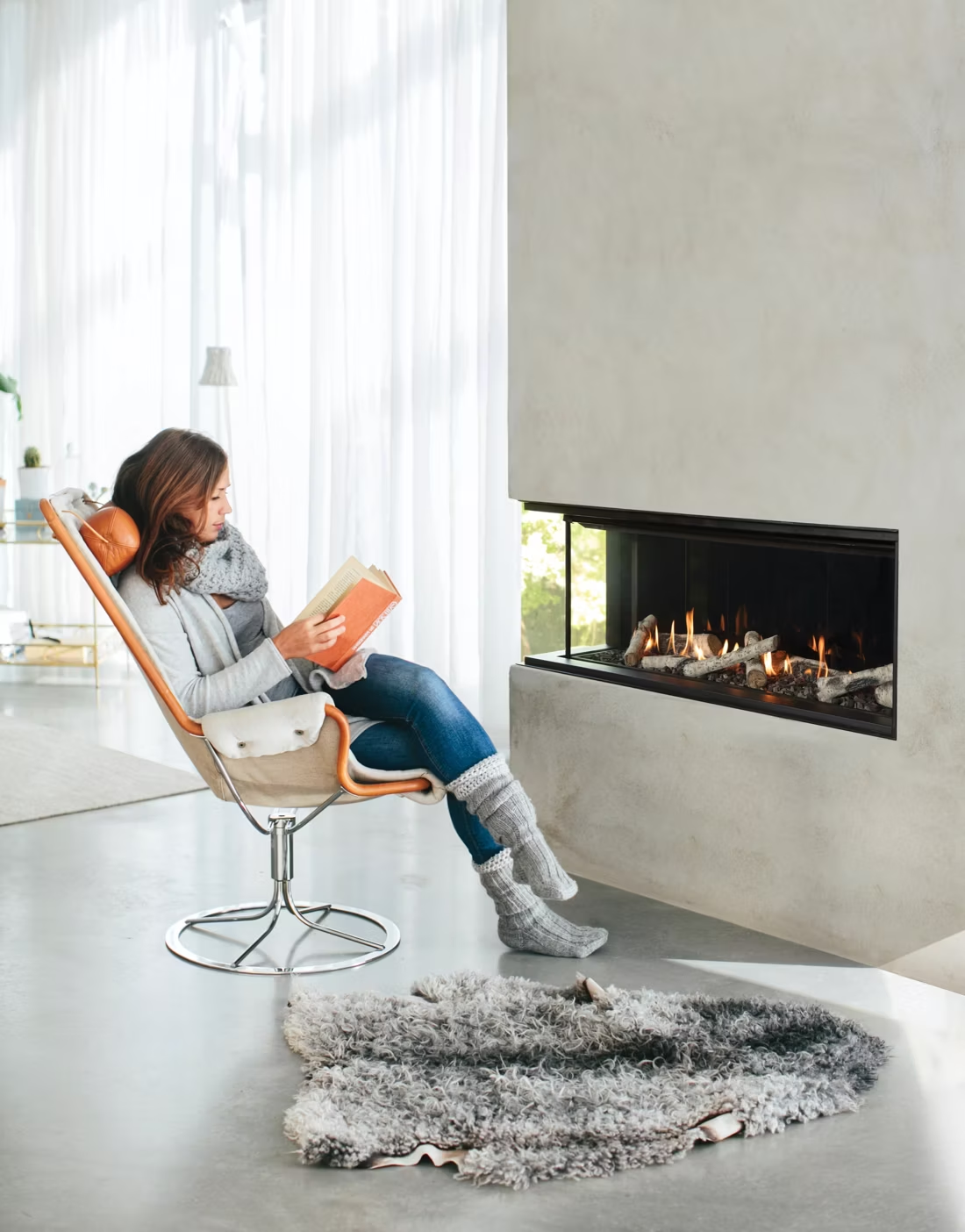
Four fuels. One honest answer for Chautauqua County.
Three steps. No salesperson until you're ready.
Tell us about your project
Your zip code, your situation, and the fuel you're leaning toward—or let the answers point you to one.
See what's actually available
The brands dealers within 100 miles genuinely carry—real options, never a catalog mirage.
Get your dealer & Project Guide
A trusted local dealer, plus the free Project Guide & Parts List that names every component of the job.
Frequently Asked Questions
Which fuel works best in Chautauqua County?
It depends on where you are in the county and what you're set up for. Wood is well-supported here—oak, maple, birch, and ash grow throughout the Allegheny Plateau hillsides, and southern-county residents often hold cutting permits through the Allegheny National Forest to source their own firewood. Gas is the convenience choice: the City of Jamestown runs its own municipal utility (the Board of Public Utilities) that supplies natural gas within city limits, while NYSEG serves most of the rest of the county, including Dunkirk, Fredonia, and Westfield. Pellet is a strong middle ground, with regional brands like Energex, Hamer Pellet Fuel, and Greene Team Pellet Fuel widely stocked at local dealers. Electric works well as supplemental heat—useful for bedrooms, sunrooms, or backup ambiance during the power outages that sometimes follow heavy lake-effect snow, but not a primary heat source given the county's 16°F average winter lows.
Do I need a permit for a wood stove, gas fireplace, or pellet insert in Chautauqua County?
Generally, yes. New York follows the Uniform Fire Prevention and Building Code, and permits are issued at the local level—through the City of Jamestown, the City of Dunkirk, or the town or village building department where you live, such as Westfield, Fredonia, Mayville, or Silver Creek, rather than through the county directly. Wood stove and pellet insert installs typically require a clearance-to-combustibles review and a chimney or vent inspection. Gas fireplace and insert installs need a separate gas line permit and hookup by a licensed technician, coordinated through NYSEG or, within Jamestown, the Board of Public Utilities. Electric fireplaces are usually permit-exempt unless the install involves a new hardwired circuit.
Are there wood-burning restrictions in Chautauqua County?
No—Chautauqua County doesn't have the inversion-driven burn advisories that some western counties do, and there's no non-attainment designation here affecting wood burning. That said, given the humid climate and the density of oak and ash in local woodlots, seasoning matters a lot: those species typically need 12 or more months of drying time to reach the roughly 20% moisture content that burns clean and keeps a chimney creosote-free. Local retailers often recommend buying firewood at least a year ahead, or leaning on pellet fuel from producers like Energex or Greene Team Pellet Fuel when you need something burn-ready right away. Any new wood stove installation should still meet current EPA 2020 NSPS emissions standards regardless of local air quality status.
Can one hearth retailer in Chautauqua County handle wood, gas, pellet, and electric?
Many can. It's common for a single dealer based in Jamestown or Dunkirk to carry wood stoves, gas fireplaces, and pellet stoves side by side, since demand for all three fuels is real here—pellet supply in particular is easy to stock locally thanks to regional producers like Energex and Greene Team Pellet Fuel. Electric fireplaces usually occupy a smaller display section, since they're more often a secondary purchase for a bedroom or sunroom rather than the main heat source. If you're still deciding between fuels, a multi-fuel dealer is the best place to compare working units before you commit.
How does installation and service work in the hillier, rural parts of Chautauqua County?
Most hearth retailers and chimney service technicians are based along the Route 5 and Route 20 corridor near Jamestown, Dunkirk, and Fredonia, and travel out to the southern hill towns—Sherman, Clymer, Cherry Creek, Ellington, Charlotte—for installations and annual service. Those inland, higher-elevation areas tend to hold snow cover longer through the winter than the lakeshore does, so scheduling a fall service appointment in September or October, before the first heavy snow, is far more reliable than trying to book a mid-winter emergency call to a rural address, which can mean a multi-day wait and a travel fee.
What does fireplace installation cost across fuel types in Chautauqua County?
Ranges vary by fuel. Wood stove or insert installation: roughly $4,000–$8,500 for a typical retrofit, up to $12,000 for new construction that requires a full masonry chimney. Gas fireplace, insert, or stove: roughly $4,000–$10,000, depending mostly on how far the gas line has to run—homes already on NYSEG or Jamestown BPU gas service land at the lower end. Pellet stove or insert: roughly $3,800–$7,000 for a typical install. Electric fireplace: $200–$2,800 for the unit itself, plus $300–$1,000 in labor for anything beyond a simple plug-in, which covers most wall-mount and insert installs. A local dealer can walk you through the specific breakdown once they've seen your chimney, gas access, or wall setup.
Wood, gas, pellet, or electric—how do I choose?
Match the fuel to your life, not the other way around. Wood: lowest fuel cost and total power-outage independence, but you're hauling and stacking. Gas: press a button, set a thermostat, no maintenance to speak of. Pellet: wood economics with automatic feeding, in exchange for weekly cleaning and a need for electricity. Electric: plugs in anywhere with honest supplemental heat. Nobody regrets the fuel that fits how they actually live.
Can I install a fireplace myself?
If you're putting a fire in your house on purpose, it's best to work with an expert. Unless you're genuinely experienced in framing, gas line, vent pipe, and the national code on clearances to combustibles, have a professional do it—and ideally the same company that sells you the fireplace, so warranty, service, and liability all live under one roof.
What are the biggest mistakes people make buying a fireplace?
Five come up constantly: budgeting for the unit but not the full job (vent, gas line, electrical, finish work); drowning in options instead of starting from style and fuel; buying without an in-home preview; handing installation to a handyman instead of a pro; and giving up out of sheer indecision. Every one is avoidable with a clear plan—step one, step two, step three.
Can a fireplace actually lower my heating bill?
Yes—by creating a comfort zone. A furnace heats every square foot of the house just to warm the one room you're in; a gas fireplace on low burns roughly a sixth of the gas a typical furnace does. Set the furnace around 55–60 degrees as a baseline, then heat the rooms your family actually uses. Families who heat this way commonly save $20–$60 a month.
Stove and Fireplace Dealers in Chautauqua County
Listings include WhyFire partner dealers, dealers we have verified as authorized for the brands we recommend, and established local businesses that carry hearth products. Every listing shows which one it is. The ones marked Preferred run on WhyFire's software, so they can show you real pricing and book your appointment right here. No manufacturer pays for placement. How we verify dealers →
Stone And Outdoor Living Center
Chautauqua Brick
Solstice Heating
Stoves & Stuff-(Ny)
Clymer Hardware & Home Center
Find your fireplace in Chautauqua County.
Pick your fuel below and we'll match you with a trusted local dealer and send over a free Project Guide & Parts List—a plan for your project with the exact parts, including the vent kit, and the dealer we recommend near you.
Find Your Fireplace →