
The Right Fireplace for a Finger Lakes Winter.
Wood, gas, pellet, and electric fireplace resources for every city and rural community in Cayuga County—from Auburn on Owasco Lake to the farm towns near the Seneca River. Find the right unit for your home and connect with a trusted local hearth retailer.
Every Project Starts From One of These Five Situations
Long, lake-effect winters across Cayuga County, New York.
Cayuga County sits in the Finger Lakes region of central New York, with roughly 6,892 heating degree days a year and average winter lows around 15°F—a heating season on par with Burlington, Vermont. Lake Ontario's lake-effect snow bands push into the county's northern towns most winters, and the seasonal swing between an August garden and a January woodpile is real here. Oak, maple, birch, and ash are the woods most local homeowners burn, and they're also the species that split cleanest and hold the longest, hottest coal beds for overnight burns in a Zone 5A climate.
What you'll find on this hub: hearth retailers, service technicians, and fuel suppliers covering every community in the county—from Auburn, the county seat on Owasco Lake, out to Weedsport, Moravia, Union Springs, Port Byron, and Aurora. Pick your fuel below to get into the specifics—local dealers, installation costs, recommended units, and the details that matter for your project. Whether you're heating a farmhouse near Cato or a lakefront cottage on Owasco, this hub is the starting point.
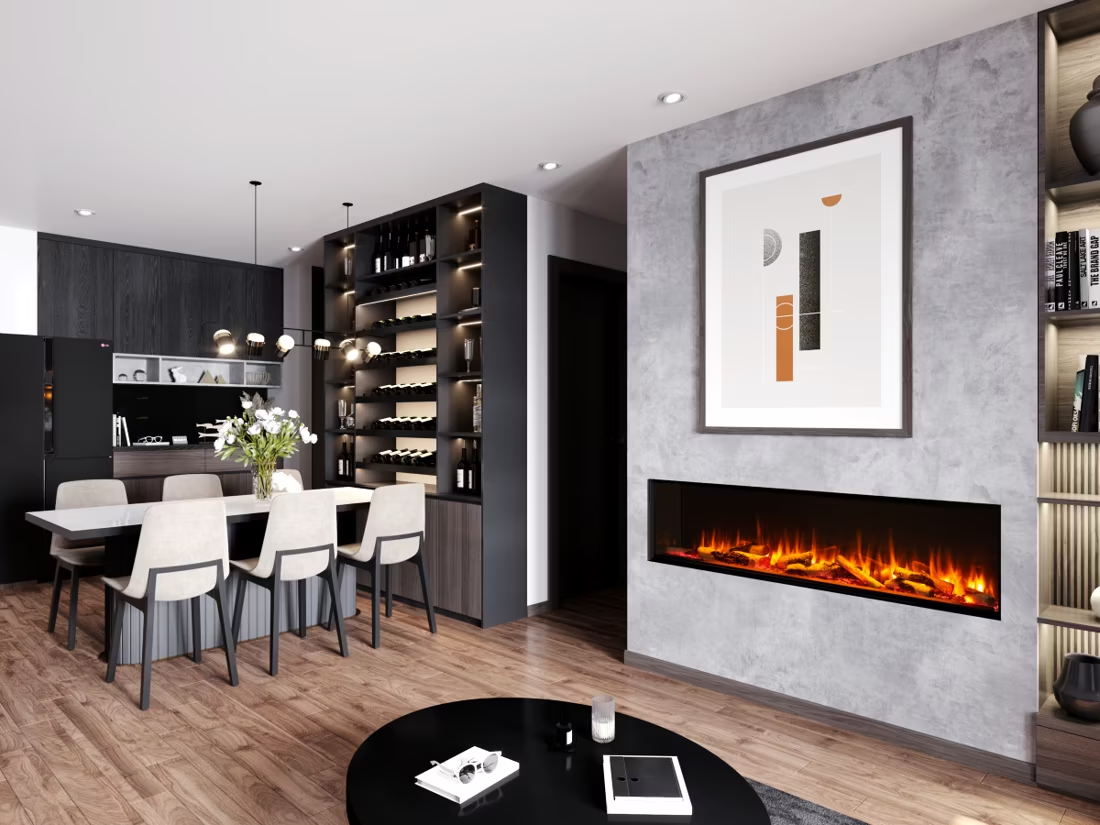
Four fuels. One honest answer for Cayuga County.
Three steps. No salesperson until you're ready.
Tell us about your project
Your zip code, your situation, and the fuel you're leaning toward—or let the answers point you to one.
See what's actually available
The brands dealers within 100 miles genuinely carry—real options, never a catalog mirage.
Get your dealer & Project Guide
A trusted local dealer, plus the free Project Guide & Parts List that names every component of the job.
Frequently Asked Questions
Which fuel works best in Cayuga County?
It depends on the home and the household. Wood remains a strong choice in Cayuga County's rural towns—oak, maple, and ash are locally abundant, split and season well, and a good catalytic or non-cat stove can hold a fire through a 15°F night without a 2 a.m. reload. Gas is the low-maintenance option in Auburn and the towns with natural gas service, and propane fills the same role in the outlying areas—no wood handling, quick heat, easy to run from a thermostat. Pellet is the middle path: hopper-fed convenience with wood-like ambiance, and regional brands like Energex and Greene Team Pellet Fuel keep supply local rather than trucked in from out of state. Electric is best treated as supplemental heat—a bedroom or sunroom unit—rather than the primary source through a full Finger Lakes winter. Plenty of Cayuga County homes run two fuels: wood or pellet as the workhorse, gas or electric for convenience in secondary rooms.
Do I need a permit to install a fireplace in Cayuga County?
In most cases, yes. New wood stoves, wood inserts, gas fireplaces, gas inserts, gas stoves, and pellet stoves are permitted through your local municipal code enforcement office, working from the New York State Fire Prevention and Building Code. Gas installations also need a licensed gas-fitter for the line work and a separate inspection on the gas connection. Electric fireplaces usually skip the permit unless you're hardwiring a built-in unit into a new circuit, in which case an electrical permit applies. Auburn residents apply through the city; homeowners in the surrounding towns go through their town or the Cayuga County code office. Most local hearth retailers pull the permit as part of the installation, so it's rarely something homeowners have to manage themselves.
Are there air quality restrictions on wood burning in Cayuga County?
No—Cayuga County doesn't have the winter inversion or non-attainment issues that trigger mandatory burn bans elsewhere in the country, and there's no local air quality advisory that limits wood burning here. That said, an EPA-certified stove is still the right call: newer catalytic and non-cat units burn 60-70% less wood than an old pre-1990s stove for the same heat output, which matters over a 6,892-degree-day heating season, and it's simple courtesy in denser towns like Auburn where houses sit close together. If you're replacing an older stove, ask your retailer about current units—the efficiency gain alone often pays back the difference in wood costs within a few winters.
Can one local hearth retailer handle all four fuel types?
Many Cayuga County retailers carry three or four fuel types, which is useful if you're still deciding between, say, a wood insert and a pellet stove. A shop that stocks wood, gas, pellet, and electric units side by side lets you see working displays and compare real trade-offs—heat output, maintenance, and install cost—rather than guessing from a spec sheet. Some smaller local shops specialize more narrowly, focusing on wood and pellet stoves without much of an electric fireplace line, so if you want a full side-by-side comparison, ask up front what's on the showroom floor before you drive out.
How does service work in rural areas of Cayuga County?
Most chimney sweeps and gas techs serving Cayuga County are based near Auburn and drive out to the outlying towns—Genoa, Ledyard, Sempronius, Sterling—for scheduled service. Expect to pay a modest trip fee for the farther corners of the county, and expect that fee to matter more in a lake-effect snow event than it would in a milder climate. Booking your annual sweep or gas inspection in September or October, ahead of the first hard freeze, gets you a far easier appointment than calling in January when everyone else's chimney backs up smoke on the same cold week. If you're heating with wood as backup for a pellet stove, keep dry, split hardwood on hand in case a lake-effect storm knocks out power for a few days.
What's the typical cost range for fireplace installation across all fuel types in Cayuga County?
Costs vary by fuel and by how much venting or gas line work the job needs. Wood stove or insert installation typically runs $4,500-$9,500, higher for full masonry chimney work in an older Auburn home. Gas fireplace, insert, or stove installation runs roughly $5,000-$12,000, with the low end covering conversions where gas service already reaches the room. Pellet stove or insert installs generally fall between $4,500-$8,000. Electric fireplaces run $200-$3,000 for the unit itself, plus $400-$1,200 in labor for anything beyond a simple plug-in—most wall-mount and built-in installs fall in that range. For numbers tied to a specific fuel and local retailer pricing, see the county + fuel pages above.
Can a fireplace actually lower my heating bill?
Yes—by creating a comfort zone. A furnace heats every square foot of the house just to warm the one room you're in; a gas fireplace on low burns roughly a sixth of the gas a typical furnace does. Set the furnace around 55–60 degrees as a baseline, then heat the rooms your family actually uses. Families who heat this way commonly save $20–$60 a month.
How much should I budget for a fireplace?
For an average home—covering the fireplace, the vent pipe, and basic installation—a budget between $3,900 and $5,500 gives you a lot of options across wood, gas, and pellet. By the time you add finish work, gas line, and electrical, the average complete installation lands between $5,000 and $12,000 all-in. In a remodel or new build, a good rule is to put about 2.5% of the total project cost toward the fireplace.
Can I install a fireplace myself?
If you're putting a fire in your house on purpose, it's best to work with an expert. Unless you're genuinely experienced in framing, gas line, vent pipe, and the national code on clearances to combustibles, have a professional do it—and ideally the same company that sells you the fireplace, so warranty, service, and liability all live under one roof.
Should the dealer who sells my fireplace also install it?
Ideally, yes. A fireplace project involves vent pipe, gas line, electrical, and often tile or stone. Hire three or four separate trades and you own the liability and the game of telephone between them. One company selling and installing means one accountable party, start to finish—ask about factory training, on-time completion records, and what happens if an inspection fails.
Stove and Fireplace Dealers in Cayuga County
Listings include WhyFire partner dealers, dealers we have verified as authorized for the brands we recommend, and established local businesses that carry hearth products. Every listing shows which one it is. The ones marked Preferred run on WhyFire's software, so they can show you real pricing and book your appointment right here. No manufacturer pays for placement. How we verify dealers →
Martin's Stove & Fireplace
Fayette Sales And Service
Cny Fireplace
Countryside Stove & Chimney Of Cny
Expert Chimney Services, Inc.
Phillip Knapp Contracting
Hearth Cabinets & More
Martin's Outdoor Power Equip
Sensenig's Landscape Supply
Get matched with a Cayuga County hearth dealer.
Pick your fuel below and we'll match you with a trusted local dealer and send over a free Project Guide & Parts List—the exact parts, including the vent kit, for your project in Cayuga County.
Find Your Fireplace →