
Real Heat for Buffalo's Lake-Effect Winters.
Instant, reliable warmth for a city that averages over 6,400 heating degree days a year. Find the right gas fireplace or insert and connect with a trusted local dealer.
Every Project Starts From One of These Five Situations
Instant heat for a city that knows real winter.
Buffalo sits at the eastern edge of Lake Erie in climate zone 5A, where lake-effect snow bands and a winter low average of 19°F push the city to roughly 6,466 heating degree days a season—in the same range as Duluth, Minnesota. Winters here are long, gray, and occasionally violent, as anyone who lived through the December 2022 blizzard remembers. Gas fireplaces have become a default upgrade across Buffalo's West Side, Elmwood Village, and North Buffalo neighborhoods, where instant, thermostat-controlled heat matters more than tending a fire.
Natural gas service is close to universal across the city's zip codes, delivered by National Grid (the modern successor to Niagara Mohawk, which still serves the region's electric accounts). Because most Buffalo homes already run gas furnaces and water heaters, adding a fireplace is usually a matter of tapping an existing line rather than running new service. Buffalo's housing stock—a lot of it prewar two-flats and brick rowhouses with original masonry fireplaces—is especially well suited to direct-vent gas inserts that reuse the existing chimney while dramatically improving heat output over an old open hearth.
Three steps. No salesperson until you're ready.
Tell us about your project
Your zip code, your situation, and the fuel you're leaning toward—or let the answers point you to one.
See what's actually available
The brands dealers within 100 miles genuinely carry—real options, never a catalog mirage.
Get your dealer & Project Guide
A trusted local dealer, plus the free Project Guide & Parts List that names every component of the job.
Frequently Asked Questions
How much does a gas fireplace installation cost in Buffalo?
A typical gas fireplace installation in Buffalo runs roughly $4,000 to $10,000, depending on the unit, whether you're installing into an existing masonry fireplace or a room with no chimney at all, and how much gas line work is required. A direct-vent insert into an existing fireplace with a gas line already nearby tends to land on the lower end. New construction, additions, or rooms requiring a fresh gas line run and full venting package push toward the higher end. Given Buffalo's older housing stock, unexpected masonry or framing repairs during the install are common enough that it's worth getting a firm in-home quote rather than a phone estimate.
Can I convert my existing wood fireplace to gas?
Yes, and it's one of the most common projects for Buffalo's older homes. Many of the city's prewar two-flats and Elmwood-area houses have original masonry fireboxes that were never efficient to begin with. A gas insert installed into that opening, vented through a stainless liner run up the existing chimney, typically runs $4,000 to $8,500 depending on the insert and whether the flue needs relining. The conversion keeps the mantel and brick surround intact while turning a drafty, rarely used fireplace into a real heat source you'll actually use through a Buffalo winter.
Do I need natural gas to install a gas fireplace, or can I use propane?
Within the city of Buffalo and most of its inner-ring suburbs, natural gas service through National Grid reaches nearly every block, so propane is rarely necessary. If you already have a gas furnace, range, or water heater, tapping into that same line for a fireplace is straightforward. Propane becomes the more relevant option only farther out in Erie County's rural fringes, where gas mains don't reach. Most gas fireplace models can be configured for either fuel, so the choice comes down to what's already running to your house.
Will my gas fireplace work during a power outage?
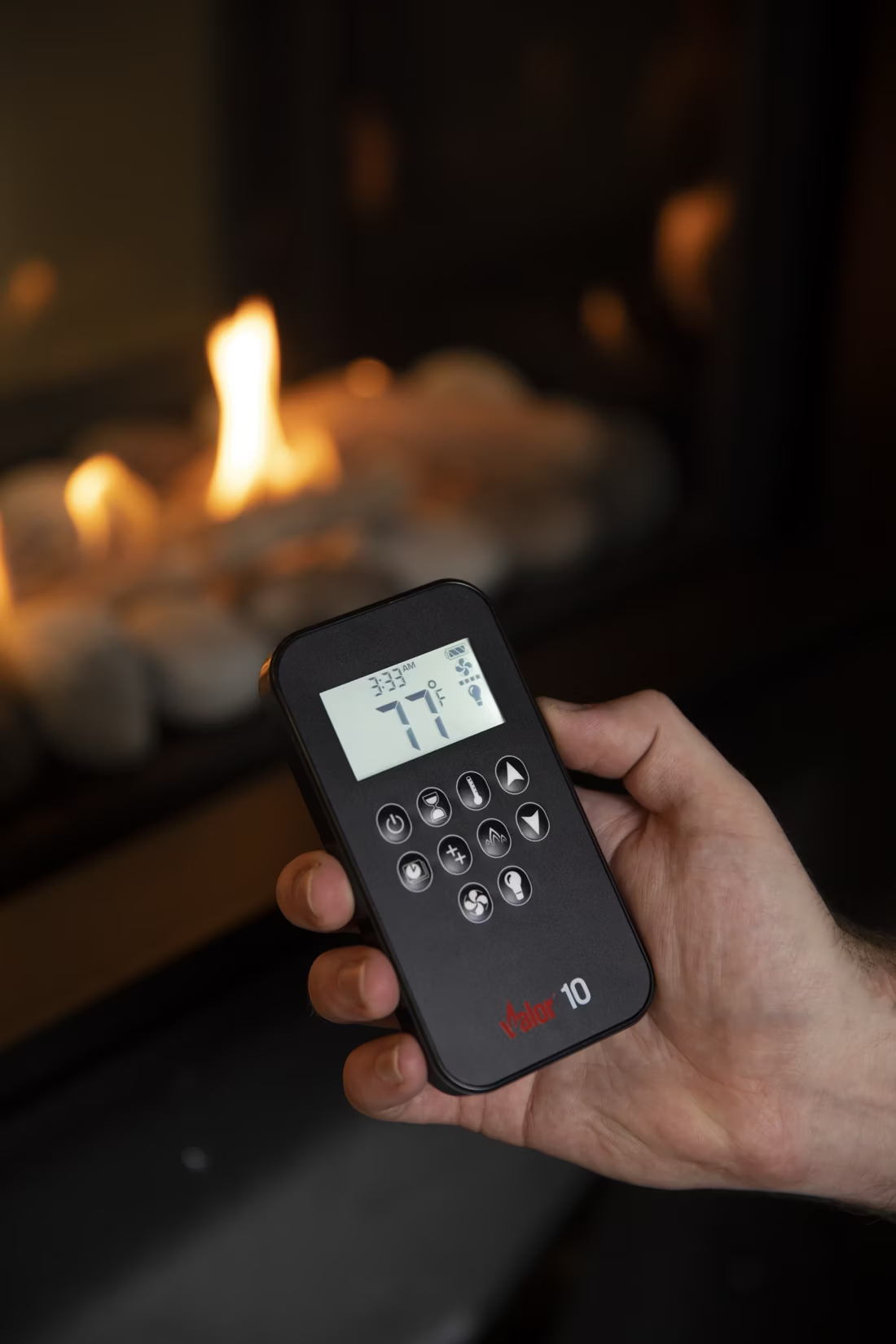
Most modern gas fireplaces will, which matters in a city where major storms have knocked out power for days at a time—the December 2022 blizzard left tens of thousands of Buffalo-area homes without electricity through Christmas. Units with IPI (intermittent pilot ignition) run on a battery backup that kicks in automatically when the grid drops, so the fireplace still lights on demand. Valor's gas fireplaces skip batteries entirely, generating their own power through the pilot's thermocouple. Given how often lake-effect storms interrupt National Grid service here, ask your local dealer specifically about the ignition system before you buy.
What's the difference between a gas fireplace, gas insert, and gas stove?
A gas fireplace is a fully built-in unit framed into a wall—the standard choice for new construction or a gut remodel. A gas insert slides into an existing masonry opening and vents through the existing chimney with a liner, which is why it's so common in Buffalo's older housing stock. A gas stove is a freestanding cast-iron or steel unit that sits on the floor and can go almost anywhere with the right clearances, including rooms that never had a fireplace at all. For most Buffalo homeowners working with an existing brick fireplace, an insert is the natural fit; homes without one usually do better with a built-in unit or freestanding stove.
Do I need a permit to install a gas fireplace in Buffalo?
Yes. The City of Buffalo Department of Permit and Inspection Services requires both a building permit and a gas work permit for a new gas fireplace or insert installation, and the gas line itself has to be run or connected by a licensed plumber or gasfitter. Most established hearth dealers in the Buffalo area handle the permit filing and coordinate the gas work as part of the installation, which is one reason to avoid a handyman install—improper gas connections are a leading cause of carbon monoxide incidents in older housing stock like Buffalo's.
What's the difference between vented and vent-free gas fireplaces?
Vented (direct-vent) gas fireplaces pull combustion air from outside and exhaust all combustion byproducts back outside through a sealed pipe—they're the standard, code-compliant choice everywhere including New York State. Vent-free units burn gas directly into the room without external venting; New York permits them under strict conditions (oxygen depletion sensors, minimum room volume), but many Buffalo-area code officials and dealers steer homeowners toward direct-vent units anyway, especially in the smaller, tightly built rooms common in the city's older two-flats. If you're weighing the two, ask a local dealer to walk through both the code requirements and the real air-quality tradeoffs for your specific room.
How often should my gas fireplace be serviced?
Plan on an annual inspection, ideally in late summer or early fall before Buffalo's heating season kicks in. A certified technician checks the burner, pilot assembly, venting, and gas connections, and cleans the glass and interior—usually $150 to $250 for a straightforward unit. Given how much use a gas fireplace gets across a Buffalo winter that regularly runs from October into April, skipping the annual check is a common way small igniter or venting issues turn into no-heat calls in January.
Gas vs. electric fireplace—which is right for my Buffalo home?
Gas delivers real heat output—enough to meaningfully offset a furnace bill during Buffalo's long heating season—plus battery-backup ignition that keeps working when a lake-effect storm takes down the grid. Electric fireplaces cost far less to install (often under $1,000), require no venting or gas line, and can go into apartments, condos, or rentals where gas work isn't an option, but they produce only supplemental warmth and go dark the moment the power does. For a primary living space in a Buffalo home with existing gas service, gas is usually the better long-term investment; for a bedroom, rental unit, or ambiance-only application, electric is often the more practical, lower-cost fit.
Can I put a TV above my fireplace?
Yes—with an asterisk. Fireplaces are hot and TVs don't like heat. Either put a mantel between them to deflect rising warmth, or choose a fireplace with heat-management technology that creates a cool zone on the wall above—the wall stays around 125 degrees, barely warm, while the room still gets full heat. If you like clean lines and don't want a mantel, heat management is the answer.
What's the difference between an insert and a zero-clearance fireplace?
An insert is a fireplace that slides into a pre-existing wood-burning fireplace—if you don't have one, there's nothing to insert it into. A zero-clearance fireplace is built into a framed wall, which makes it the answer for remodels and new construction. Simple test: existing masonry fireplace means insert; blank or framed wall means zero-clearance.
Can I install a fireplace myself?
If you're putting a fire in your house on purpose, it's best to work with an expert. Unless you're genuinely experienced in framing, gas line, vent pipe, and the national code on clearances to combustibles, have a professional do it—and ideally the same company that sells you the fireplace, so warranty, service, and liability all live under one roof.
How much should I budget for a fireplace?
For an average home—covering the fireplace, the vent pipe, and basic installation—a budget between $3,900 and $5,500 gives you a lot of options across wood, gas, and pellet. By the time you add finish work, gas line, and electrical, the average complete installation lands between $5,000 and $12,000 all-in. In a remodel or new build, a good rule is to put about 2.5% of the total project cost toward the fireplace.
Nearby Dealers
Hearth shops serving Buffalo and the surrounding area. Every listing shows whether it is a WhyFire partner, a dealer we have verified as authorized for the brands we recommend, or a local business carrying hearth products. No manufacturer pays for placement. How we verify dealers →
Holiday Fireplace Shop
Buffalo Fire Place
Pro Fireplace
Fireplace Outlet
Recreational Distributors Inc.
Felber's Building Supply & Lumber
Felbers Building Supply
Aaa Timberline
All-Ways Warm Stove & Chimney
Countryside Stove & Chimney/klz Enterprises
Enviro-Niagara Hearth And Barbeque
King Brothers Fireplace & Stove
Arcade Lumber & Millwork, Inc
Find your gas fireplace in Buffalo.
Tell us about your home and your existing fireplace or gas line, and we'll match you with a trusted Buffalo-area dealer and send over a free Project Guide & Parts List—the exact parts, including the vent kit, for your specific installation.
Find Your Fireplace →