
Bring Your Brooklyn Fireplace Back to Life.
From Park Slope brownstones to Downtown high-rises, most Brooklyn fireplaces are decorative shells waiting for real heat. Find the right gas unit and get matched with a trusted local dealer.
Every Project Starts From One of These Five Situations
From decorative to actually functional.
Brooklyn's housing stock is dominated by pre-war brownstones, limestones, and apartment buildings, many with a decorative masonry firebox that hasn't held a real fire in decades—often boarded, painted shut, or fitted with a fake log set that produces no heat at all. At 4,600 heating degree days and average winter lows around 28°F, Brooklyn's climate is milder than upstate cold-weather cities like Buffalo, but drafty single-pane windows in older Park Slope, Bed-Stuy, and Clinton Hill row houses still mean real supplemental heat matters in January and February.
Natural gas service from National Grid runs through nearly every block in Brooklyn, from Bay Ridge to Greenpoint, since most buildings already use gas for cooking and hot water—which makes adding a gas fireplace or insert a straightforward hookup rather than a new utility connection. That matters more in a borough where Con Edison's residential electric rate runs north of $0.34/kWh, making an all-electric heat source expensive to run daily. A properly installed direct-vent gas insert turns an existing brownstone firebox into a real, cost-effective zone-heat source without the wood storage, ash, or chimney maintenance that a dense city lot simply doesn't have room for.
Three steps. No salesperson until you're ready.
Tell us about your project
Your zip code, your situation, and the fuel you're leaning toward—or let the answers point you to one.
See what's actually available
The brands dealers within 100 miles genuinely carry—real options, never a catalog mirage.
Get your dealer & Project Guide
A trusted local dealer, plus the free Project Guide & Parts List that names every component of the job.
Frequently Asked Questions
How much does a gas fireplace installation cost in Brooklyn?
A direct-vent gas insert installed into an existing brownstone masonry firebox typically runs $6,000 to $12,000 in Brooklyn, with the range driven by the insert model, whether a chimney liner is needed, and NYC labor rates. A brand-new built-in gas fireplace in a gut renovation or high-rise unit—with framing, through-wall venting, and a new gas line run by a licensed plumber—usually lands between $9,000 and $16,000. Co-op and condo buildings often add board application fees and building engineer sign-off on top of the installer's quote, so it's worth asking your dealer whether they've worked in your building before.
Can I convert my brownstone's decorative fireplace to a working gas fireplace?
Yes, and it's one of the most common projects Brooklyn hearth installers handle, especially in Park Slope, Clinton Hill, and Bed-Stuy brownstones where the original firebox was sealed decades ago. A gas insert or vented log set is installed into the existing masonry opening, typically running a stainless liner up the old chimney or venting directly through the rear wall if the flue is compromised. Cost usually falls between $5,500 and $11,000 depending on whether the existing flue is usable, and whether National Grid service already runs to that floor of the building. Buildings in a designated historic district, like the Park Slope or Brooklyn Heights Historic Districts, may need Landmarks Preservation Commission sign-off if any exterior venting is visible from the street.
Do I need propane, or is natural gas available in Brooklyn?
Nearly every occupied building in Brooklyn already has natural gas service from National Grid for cooking, hot water, or heat, so a gas fireplace installation is almost always a natural gas hookup rather than a propane setup. Propane tanks are impractical on Brooklyn's dense residential lots and aren't something you'll see local installers recommend for a rowhouse or apartment building. If your building genuinely has no gas service, your installer will confirm that with National Grid before quoting the job—but for the overwhelming majority of Brooklyn addresses, natural gas is the default and the simpler path.
Will my gas fireplace work during a power outage?
Most modern gas fireplaces with IPI (intermittent pilot ignition) include a battery backup that automatically takes over if Con Edison power drops—which matters in Brooklyn during nor'easters and the occasional summer storm outage. The fireplace lights on demand off the batteries until power is restored. Valor fireplaces work differently: their pilot generates its own electricity through the thermocouple, so there's no battery to maintain or forget about. For older Brooklyn buildings prone to outages during heavy weather, ask your installer which ignition system a given unit uses.
What's the difference between a gas fireplace, gas insert, and gas stove in a Brooklyn apartment or brownstone?
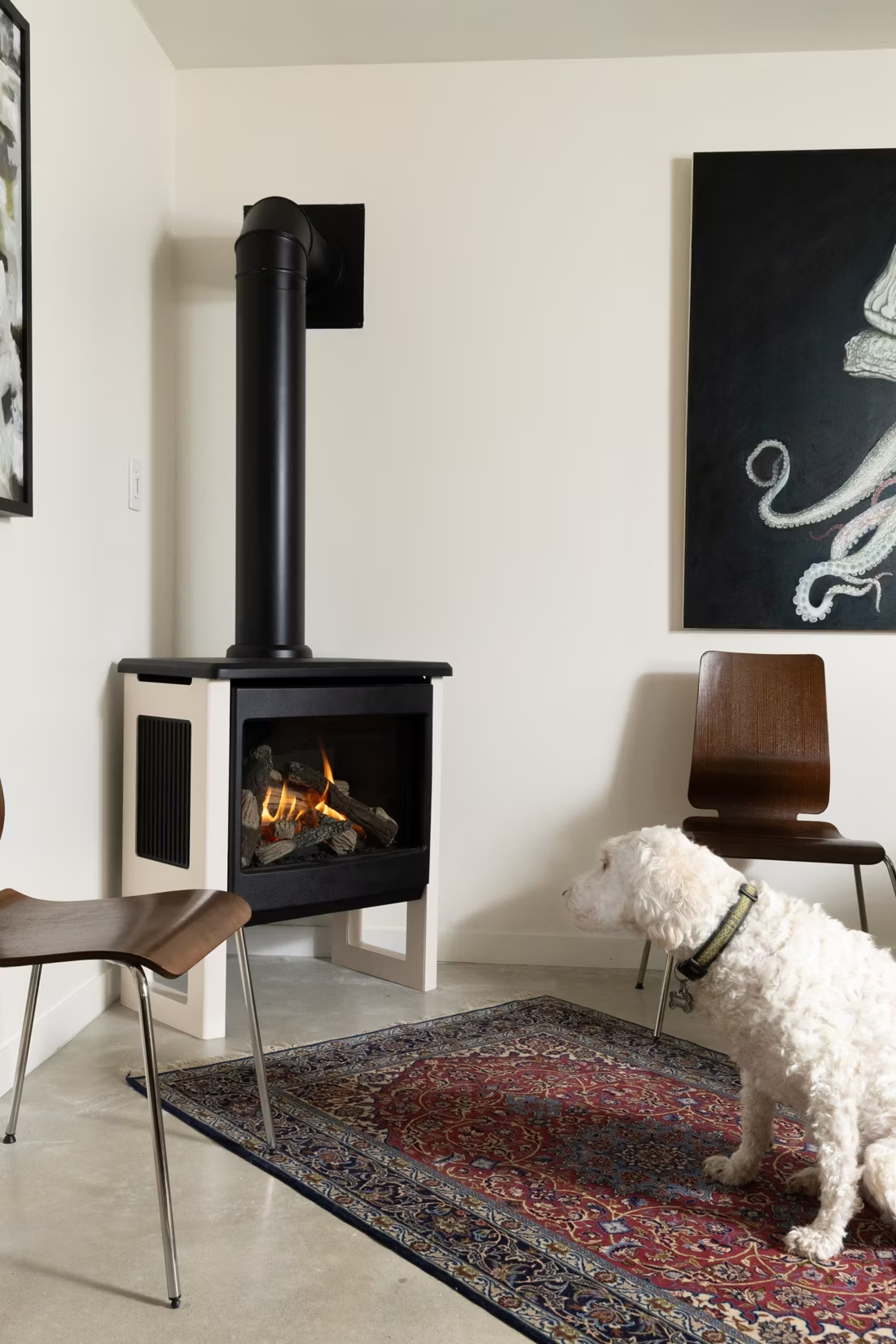
A gas insert fits into an existing masonry firebox and is the most common choice for brownstones with a pre-war fireplace already in place. A built-in gas fireplace is framed into a wall from scratch—common in gut renovations or new-construction condo buildings where there's no existing chimney. A freestanding gas stove sits on the floor and can work in either setting, but is less common in Brooklyn apartments due to floor space. For high-rise co-ops and condos with no chimney at all, direct-vent units that terminate through an exterior wall are typically the only workable option, and your installer will need to confirm the building allows exterior venting penetrations.
Do I need a permit to install a gas fireplace in Brooklyn?
Yes. Gas fireplace work in Brooklyn requires an NYC Department of Buildings permit and an FDNY gas work permit, and the gas line itself must be run or modified by a licensed master plumber. If you're in a co-op or condo, expect to also submit an alteration agreement to the building's board and get sign-off from the building's managing agent or engineer before work starts. In designated historic districts, exterior venting changes may additionally require Landmarks Preservation Commission approval. A local installer who has worked in Brooklyn buildings before will typically coordinate the DOB and FDNY paperwork as part of the job.
Are vent-free gas fireplaces allowed in Brooklyn?
Generally, no. New York City's Fuel Gas Code does not permit unvented (vent-free) gas fireplaces in most residential dwelling units, which is different from many other states. Direct-vent, sealed-combustion units—which draw outside air for combustion and exhaust gases back outside—are the standard and code-compliant choice across Brooklyn, whether venting through an existing chimney or straight through an exterior wall. If a dealer offers you a vent-free unit for a Brooklyn installation, confirm it's actually permittable under NYC code before moving forward.
How often should my gas fireplace be serviced?
Plan on an annual inspection, ideally before the heating season starts in the fall. A licensed technician checks the burner, pilot assembly, venting, and gas connections, and cleans the glass and interior components. In Brooklyn, annual service typically runs $150 to $275, and it's worth using a technician familiar with brownstone chimney liners and through-wall vent terminations specifically, since improper venting in a dense rowhouse block can send exhaust toward a neighbor's window rather than clear air.
Why do so few Brooklyn fireplaces burn actual wood?
Wood-burning fireplaces exist in some older Brooklyn brownstones, and species like oak, maple, birch, and ash are what you'll find from regional firewood suppliers serving the metro area—but wood heat is genuinely uncommon here. Storing cordwood on a Brooklyn lot with no yard is impractical, many co-op and condo bylaws prohibit solid-fuel burning appliances outright, and older chimneys in row houses often need expensive relining work to burn wood safely. Gas solves all of that: no fuel storage, no ash, and a hookup to gas service most buildings already have. For the small number of owners with a legally operable wood-burning masonry fireplace, a gas insert is still often the easier and more heavily used option day to day.
Why is a fireplace insert so efficient?
An insert does two things: it seals the chimney completely, so you stop losing air you already paid to heat, and it radiates warmth into the room through the firebox and glass. Most add a heat-exchange fan that pulls cool room air underneath, wraps it around the hot firebox, and pushes it back out warm. Your home is more efficient before you've even lit the first fire.
Is my gas fireplace wasting gas?
If it was installed more than 15 years ago, probably. Older gas fireplaces keep a standing pilot light burning all the time, and that little flame can cost a couple hundred dollars a year. Newer models use pilot-on-demand ignition—the pilot lights only when you use the fireplace and goes out when you turn it off.
Can I install a fireplace myself?
If you're putting a fire in your house on purpose, it's best to work with an expert. Unless you're genuinely experienced in framing, gas line, vent pipe, and the national code on clearances to combustibles, have a professional do it—and ideally the same company that sells you the fireplace, so warranty, service, and liability all live under one roof.
Can a fireplace actually lower my heating bill?
Yes—by creating a comfort zone. A furnace heats every square foot of the house just to warm the one room you're in; a gas fireplace on low burns roughly a sixth of the gas a typical furnace does. Set the furnace around 55–60 degrees as a baseline, then heat the rooms your family actually uses. Families who heat this way commonly save $20–$60 a month.
Nearby Dealers
Hearth shops serving Brooklyn and the surrounding area. Every listing shows whether it is a WhyFire partner, a dealer we have verified as authorized for the brands we recommend, or a local business carrying hearth products. No manufacturer pays for placement. How we verify dealers →
D & D Design Center
Big Apple Fireplaces
Harris Hearth And Home
Hot Concepts Fireplaces
Costello's Hearth & Spa - Garden City Park
L&r Fireplace & Barbecue
All Shore Appliance
Builders Architectural Millwork
The Valley Fireplace
The Fireplace Store
East Coast Energy Products Inc.
Fireplaces R Us
Flue Tech
Find your gas fireplace in Brooklyn.
Tell us about your brownstone, co-op, or condo and we'll match you with a trusted Brooklyn gas fireplace installer, plus a free Project Guide & Parts List with the exact parts and vent kit your building needs.
Find Your Fireplace →