
Find your fireplace in San Miguel County, New Mexico.
Wood, gas, pellet, and electric fireplace resources for the whole county—from the county seat of Las Vegas down through the Pecos valley to Villanueva and Anton Chico. Pick a fuel and get matched with a local dealer who actually installs it here.
Every Project Starts From One of These Five Situations
High-desert winters, 6,092 heating degree days, and a county still rebuilding after fire.
San Miguel County spans the eastern foothills of the Sangre de Cristo Mountains, from the county seat of Las Vegas at roughly 6,400 feet down through the Pecos River valley toward Villanueva and Anton Chico. Average winter lows near 11°F and 6,092 heating degree days put the county in heating-load territory similar to Helena, Montana—a heating season that typically runs from October through April, with hard overnight cold more than deep snow. Pinyon, juniper, and ponderosa pine are the wood species most households here burn, much of it cut under Forest Service permits through the Santa Fe National Forest above Gallinas Canyon and Rociada, or the Carson National Forest to the north near Mora.
The county's defining hazard is wildfire, not winter smog: the 2022 Hermits Peak/Calf Canyon Fire, the largest in New Mexico history, burned across the mountains above Las Vegas and Pecos, and it's changed how a lot of homeowners here think about woodpile placement, spark arrestor screens, and defensible space around a chimney. Wood heat is still the backbone fuel across the county's rural stretches, natural gas service through New Mexico Gas Company reaches Las Vegas proper, and pellet stoves stocked with Forest Energy or Lignetics fuel give households outside the gas footprint a cleaner-burning option that doesn't depend on a woodpile near the house. This hub rolls up hearth retailers, service techs, and fuel suppliers across the whole county, from Las Vegas east to Trementina and Anton Chico, south to Villanueva and Ribera, and up into Pecos and the canyon communities. Pick your fuel below for local dealers, install costs, and unit recommendations specific to your town.
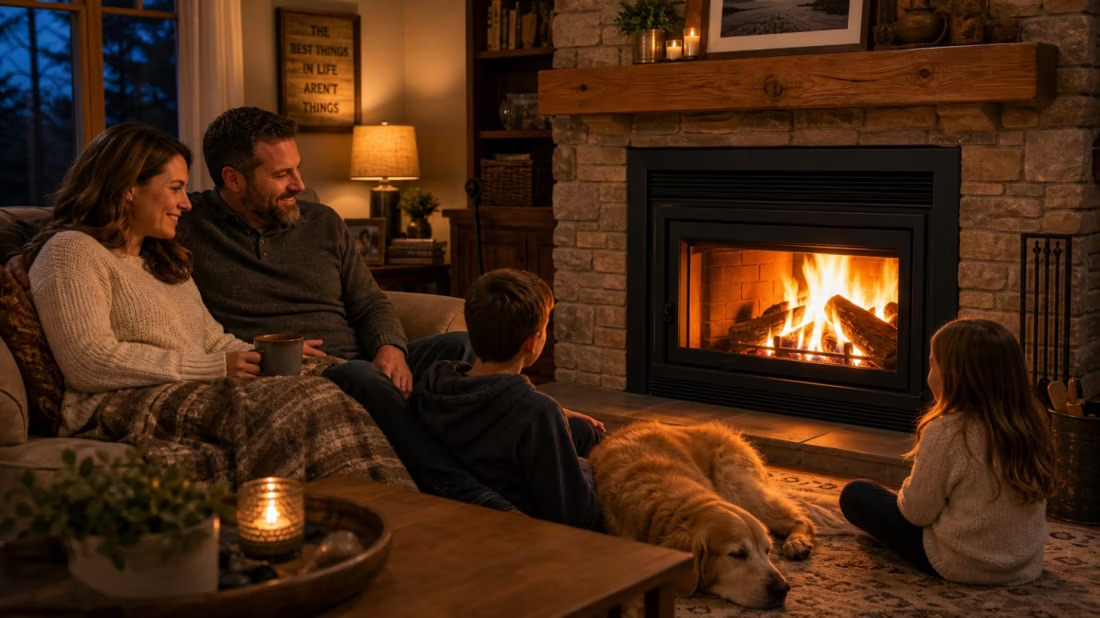
Four fuels. One honest answer for San Miguel County.
Three steps. No salesperson until you're ready.
Tell us about your project
Your zip code, your situation, and the fuel you're leaning toward—or let the answers point you to one.
See what's actually available
The brands dealers within 100 miles genuinely carry—real options, never a catalog mirage.
Get your dealer & Project Guide
A trusted local dealer, plus the free Project Guide & Parts List that names every component of the job.
Frequently Asked Questions
Which fireplace fuel makes the most sense in San Miguel County?
All four fuels show up here, but which one fits depends on where you sit in the county. Wood is still the backbone fuel in the rural stretches—pinyon, juniper, and ponderosa pine, much of it self-cut under permits from the Santa Fe or Carson National Forest, and a catalytic stove burning that mix will hold a fire through the overnight lows near 11°F that this county sees most winters. Gas is the convenience option in and around Las Vegas, where New Mexico Gas Company service reaches; homes further out toward Villanueva or Ribera typically run propane instead. Pellet stoves have a real following since the Hermits Peak/Calf Canyon Fire, since Forest Energy and Lignetics pellets sold regionally mean less need to store cordwood right next to the house. Electric fireplaces are supplemental almost everywhere in the county—they're not built to carry a home through a 6,092-HDD winter on their own, but they're a good fit for a bedroom or a room already heated by wood or gas.
Do I need a permit to install a wood stove or fireplace in San Miguel County?
In most cases, yes. New wood stove and insert installs typically require an EPA-certified unit and a building permit—through San Miguel County's building department for unincorporated areas, or the City of Las Vegas if your property is inside city limits. Gas installs need a separate gas-line permit and a licensed installer for the connection. If you're planning to cut your own firewood rather than buy it, that requires a separate permit from the Santa Fe National Forest or Carson National Forest depending on which side of the county you're on, and those permits are unrelated to your home's building permit. Most retailers we match homeowners with handle the building-permit paperwork directly as part of the install.
How does wildfire risk affect fireplace and wood-stove decisions here?
The 2022 Hermits Peak/Calf Canyon Fire burned across a large portion of the mountains above Las Vegas and Pecos, and it changed how a lot of local homeowners think about wood heat even though the fire itself was a summer event, not a heating-season one. Spark arrestor screens on chimney caps, keeping stacked firewood at least several feet from siding and decks, and clearing dry brush around outdoor wood storage are all more front-of-mind now, and some insurers in the burn-scar area ask about these details directly. None of that has pushed households away from wood heat—pinyon and juniper are still the most-burned species in the county—but it has pushed some homeowners toward pellet stoves, which don't require an outdoor woodpile at all.
Can I find a retailer that carries more than one fuel type?
Most San Miguel County hearth retailers stock at least two fuel types rather than specializing in just one, which fits a county where a lot of households run wood as primary heat and add a gas or electric unit somewhere else in the house. A multi-fuel dealer lets you compare working wood, gas, and pellet units side by side and talk through what actually fits your address—whether you're inside the New Mexico Gas Company service area around Las Vegas or relying on propane further out toward Villanueva. We match you with the retailer whose lineup and service radius fit your project rather than sending you to whoever's biggest.
How does installation and service work for homes outside Las Vegas?
Installation crews and service techs are based mostly in Las Vegas but regularly travel out to Pecos, Villanueva, Ribera, Anton Chico, and the canyon communities. Expect a modest trip fee for the farthest calls, and expect scheduling to get tight once temperatures drop into the low double digits and everyone's booking chimney sweeps and gas inspections at once—getting on the calendar in late summer or early fall beats waiting for the first hard freeze. For properties well up into the canyons or near the Santa Fe National Forest boundary, it's worth asking your installer about spare parts and a battery backup for gas ignition, since a winter storm on the back roads can delay a return visit by a few days.
What does a fireplace installation typically cost in San Miguel County?
Costs track pretty closely with what fuel you choose and how much venting or gas-line work is involved. Wood stove or insert installs typically run $4,500–$9,000, with full chimney work for new construction pushing toward $14,000. Gas fireplaces, inserts, and stoves run roughly $4,500–$11,000 depending on whether a gas line needs to be extended out to your hearth. Pellet stove or insert installs generally land at $4,500–$7,500. Electric fireplaces are the outlier—$200–$3,000 for the unit, plus $400–$1,200 in labor for anything beyond a plug-and-play placement. The county + fuel pages above break these numbers down further with local retailer pricing.
What is an in-home preview and do I need one?
It's a visit where a hearth professional measures your space, confirms the model you picked actually works in your home, and walks the specs—framing, gas line, venting, finish work—before anything is ordered. Some details you just can't know until you see the house. Never make a down payment without one; it's the single most-skipped step that burns buyers.
Does a fireplace add value to my home?
On average, a fireplace adds back to the home about the same amount you spent installing it. Add the monthly savings from heating the rooms you actually use instead of the whole house—often hundreds of dollars a year—and the value case is strong before you even count what a fire does for how your family uses the room.
What are the biggest mistakes people make buying a fireplace?
Five come up constantly: budgeting for the unit but not the full job (vent, gas line, electrical, finish work); drowning in options instead of starting from style and fuel; buying without an in-home preview; handing installation to a handyman instead of a pro; and giving up out of sheer indecision. Every one is avoidable with a clear plan—step one, step two, step three.
Can a fireplace actually lower my heating bill?
Yes—by creating a comfort zone. A furnace heats every square foot of the house just to warm the one room you're in; a gas fireplace on low burns roughly a sixth of the gas a typical furnace does. Set the furnace around 55–60 degrees as a baseline, then heat the rooms your family actually uses. Families who heat this way commonly save $20–$60 a month.
Stove and Fireplace Dealers in San Miguel County
Listings include WhyFire partner dealers, dealers we have verified as authorized for the brands we recommend, and established local businesses that carry hearth products. Every listing shows which one it is. The ones marked Preferred run on WhyFire's software, so they can show you real pricing and book your appointment right here. No manufacturer pays for placement. How we verify dealers →
Hacienda Home Centers
Tierra Woodstoves
Rocky Mountain Chimney Sweep
Dan's Flooring
Tierra Wood Stoves
High Desert Hearth Products
Get matched with a local San Miguel County dealer.
Pick your fuel below and we'll put together a free Project Guide & Parts List—the right unit, the vent kit it needs, and the local dealer we recommend for your project.
Find Your Fireplace →