
Find the right fireplace for your Ocean County home.
From barrier-island homes on Long Beach Island to mainland neighborhoods in Toms River and Brick, fireplaces are the practical fit for most Ocean County houses. Connect with a trusted local hearth retailer who knows the flood-zone codes and utility service in your part of the county.
Every Project Starts From One of These Five Situations
Shore geography decides how Ocean County heats.
Ocean County stretches from the barrier islands of Long Beach Island, Seaside Park, and Seaside Heights across Barnegat Bay to mainland communities like Toms River, Brick, Lakewood, and Manchester, with the Pine Barrens filling out the county's inland reach. Winters here are mild by Northeast standards—Climate Zone 4A, an average winter low near 22°F, and a heating season on par with a typical Mid-Atlantic coastal winter rather than the deep-cold interior. That moderation, combined with the county's housing stock, shapes fuel choice more than temperature does. Barrier-island homes are built on pilings under FEMA flood-zone rules, and a large share of the mainland's housing is made up of 55+ communities like Leisure Village, Holiday City, and Silver Ridge Park—both factors that push installations toward gas and electric rather than solid-fuel appliances.
This hub covers hearth retailers, service technicians, and fuel suppliers across the county—from LBI's shore towns to Toms River's mainland neighborhoods and out to Jackson and Stafford Township. New Jersey Natural Gas (NJNG), headquartered in nearby Wall Township, serves most of the county's natural-gas customers, and Jersey Central Power & Light (JCP&L) covers electric service. Pick your fuel below for local dealers, cost ranges, and the specifics that apply to your address—a house on stilts in Seaside Park has different code requirements than a ranch in Manchester Township.
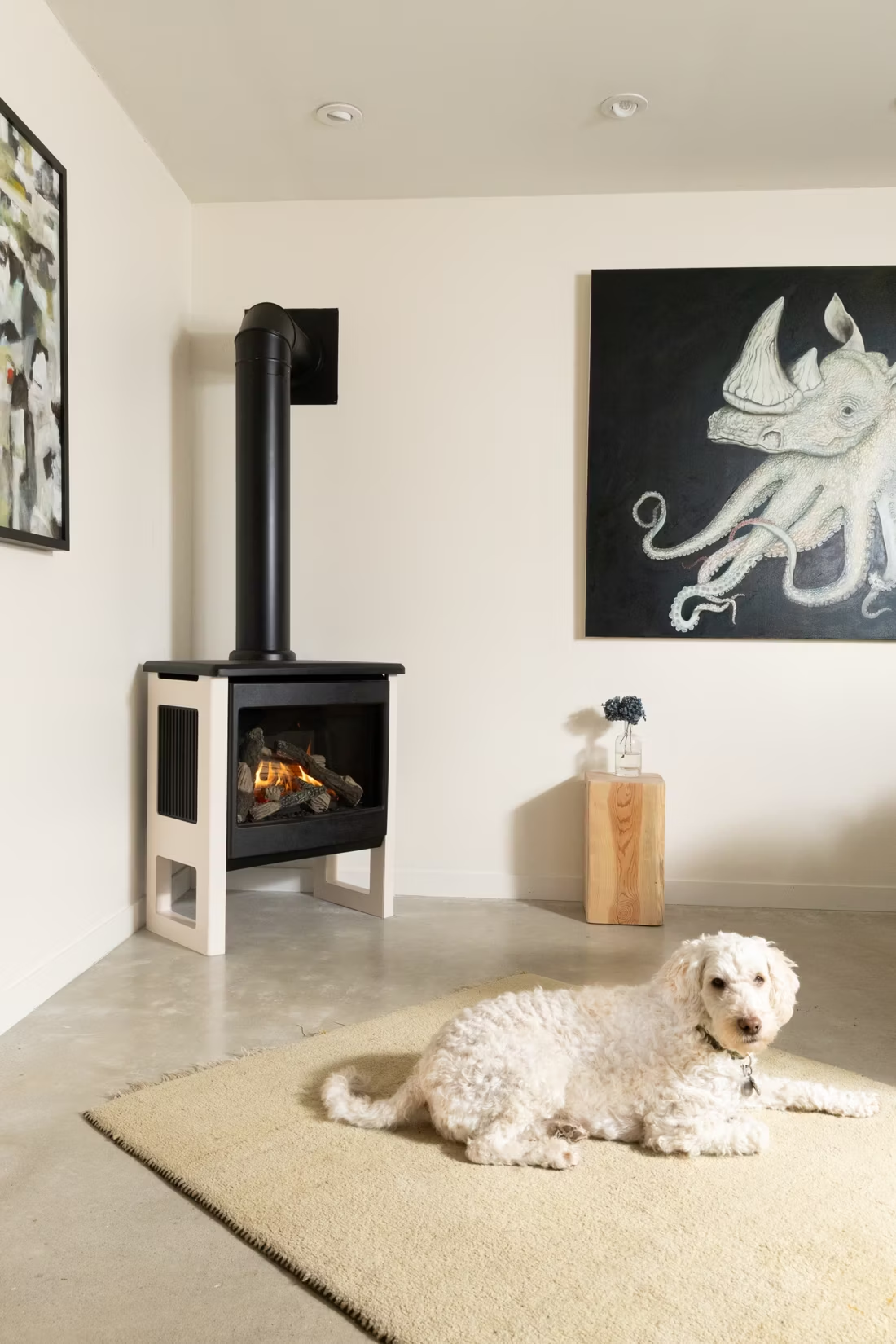
Four fuels. One honest answer for Ocean County.
Three steps. No salesperson until you're ready.
Tell us about your project
Your zip code, your situation, and the fuel you're leaning toward—or let the answers point you to one.
See what's actually available
The brands dealers within 100 miles genuinely carry—real options, never a catalog mirage.
Get your dealer & Project Guide
A trusted local dealer, plus the free Project Guide & Parts List that names every component of the job.
Frequently Asked Questions
Which fuel works best for a fireplace in Ocean County?
For most Ocean County homes, gas is the practical choice—natural gas fireplace inserts and direct-vent units work well in both mainland houses served by New Jersey Natural Gas and shore homes that can run a propane tank where gas lines don't reach, which is common on parts of Long Beach Island. Electric fireplaces are a strong second option, especially in the county's many 55+ communities (Leisure Village, Holiday City, Silver Ridge Park) where condo and HOA rules often restrict anything with an exterior vent or flue. Wood-burning fireplaces are uncommon countywide—barrier-island homes built on pilings under FEMA flood-zone rules generally aren't set up for masonry chimneys, and a lot of the mainland housing stock is newer construction or age-restricted communities that were never built with wood in mind. Pellet stoves are similarly rare here; the region doesn't have the wood-heat culture or rural acreage that supports them elsewhere in the state. If you're in an older mainland neighborhood in Toms River or Brick with an existing wood fireplace, a gas insert conversion is usually the easiest upgrade.
Do I need a permit to install a gas or electric fireplace in Ocean County?
Yes, in nearly every case. Gas fireplace and gas insert installations require a building permit under the New Jersey Uniform Construction Code plus a licensed gas fitter for the line connection—your municipality's building department (Toms River, Brick, Lakewood, Manchester, etc. each issue their own) handles the permit. On the barrier islands and other FEMA flood-zone properties, gas line work below the flood elevation may also need to meet elevation and flood-vent requirements, so it's worth confirming with the local building office before work starts. Electric fireplace installs usually skip the permit if it's a plug-in unit, but built-in electric fireplaces that require new wiring or a dedicated circuit need an electrical permit. Most local hearth retailers handle this paperwork as part of the installation.
Can I still install a wood-burning fireplace on Long Beach Island or another barrier-island community?
It's uncommon, and there are real practical obstacles. Homes on Long Beach Island, Seaside Park, and Seaside Heights are typically built on pilings to meet FEMA flood-zone requirements, and that construction style doesn't lend itself to a traditional masonry chimney and hearth. Homeowner's insurance in flood-zone shore communities can also be more expensive with a solid-fuel appliance in the house. A small number of older, pre-flood-code mainland homes in Toms River or Brick still have original wood-burning masonry fireplaces, and those can be kept in service or converted to a gas insert. But if you're building or renovating a shore home, gas or electric is almost always the more realistic option, and that's what most local retailers will steer you toward.
Can one local retailer handle both gas and electric fireplace installations?
Yes—most Ocean County hearth retailers carry both. Shore-area dealers serving LBI and the barrier islands typically stock direct-vent gas units suited to flood-zone construction alongside electric fireplaces for condos and HOA-restricted communities. Mainland retailers around Toms River and Brick tend to carry a broader mix, including gas inserts for older masonry fireplaces. Very few carry wood stoves or pellet stoves given how little local demand there is, so if that's what you're after, expect a smaller pool of dealers and possibly a longer drive.
How does fireplace service work for seasonal shore homes in Ocean County?
A meaningful share of Ocean County's barrier-island housing—LBI, Seaside Park, Bay Head—is seasonal or second-home use, which changes how service gets scheduled. Technicians serving the shore towns typically book gas fireplace inspections and startups in the spring before the summer rental season and again in early fall once the crowds clear and bridge traffic eases. If your home sits empty over winter, it's worth having the gas line and pilot checked before your first weekend back rather than assuming everything's fine after months unused. Mainland homes in year-round communities like Toms River, Manchester, and Berkeley Township are serviced on a more typical annual schedule.
What's the typical cost range for gas and electric fireplace installation in Ocean County?
Gas fireplace, insert, or stove: roughly $4,000–$10,000 depending on whether it's a straightforward insert into an existing masonry opening or a new direct-vent unit requiring fresh gas line and venting—homes on pilings or in flood zones sometimes run toward the higher end due to added venting and elevation considerations. Electric fireplace: $200–$2,500 for the unit itself, plus $300–$1,000 in labor for anything beyond a plug-in model, including most wall-mount and built-in installs common in 55+ communities. Wood and pellet installations are rare enough here that most retailers won't have standard local pricing—if you're set on one, expect a custom quote.
What is an in-home preview and do I need one?
It's a visit where a hearth professional measures your space, confirms the model you picked actually works in your home, and walks the specs—framing, gas line, venting, finish work—before anything is ordered. Some details you just can't know until you see the house. Never make a down payment without one; it's the single most-skipped step that burns buyers.
Does a fireplace add value to my home?
On average, a fireplace adds back to the home about the same amount you spent installing it. Add the monthly savings from heating the rooms you actually use instead of the whole house—often hundreds of dollars a year—and the value case is strong before you even count what a fire does for how your family uses the room.
Can I install a fireplace myself?
If you're putting a fire in your house on purpose, it's best to work with an expert. Unless you're genuinely experienced in framing, gas line, vent pipe, and the national code on clearances to combustibles, have a professional do it—and ideally the same company that sells you the fireplace, so warranty, service, and liability all live under one roof.
How much should I budget for a fireplace?
For an average home—covering the fireplace, the vent pipe, and basic installation—a budget between $3,900 and $5,500 gives you a lot of options across wood, gas, and pellet. By the time you add finish work, gas line, and electrical, the average complete installation lands between $5,000 and $12,000 all-in. In a remodel or new build, a good rule is to put about 2.5% of the total project cost toward the fireplace.
Stove and Fireplace Dealers in Ocean County
Listings include WhyFire partner dealers, dealers we have verified as authorized for the brands we recommend, and established local businesses that carry hearth products. Every listing shows which one it is. The ones marked Preferred run on WhyFire's software, so they can show you real pricing and book your appointment right here. No manufacturer pays for placement. How we verify dealers →
Carlin Chimney & Duct Service
Certified Craftsmen Inc
Fireplace Pros
Alpine Fireplaces
Central Jersey Masonry & Chimney Sweep
H2 LLC
Fireside Pros/Awning Design
Find your fireplace in Ocean County.
Get matched with a trusted local hearth retailer and receive a free Project Guide & Parts List—the exact parts, including the vent kit, and the dealer we recommend for your gas or electric fireplace project in Ocean County.
Find Your Fireplace →