
Find the Right Hearth for Every Sullivan County Winter.
Wood, gas, pellet, and electric fireplace resources for every town in Sullivan County—from the Connecticut River valley at Claremont and Charlestown up to Lake Sunapee and the hill towns of Washington and Acworth. Find the right unit and connect with a trusted local hearth retailer.
Every Project Starts From One of These Five Situations
Cold, hardwood country in western New Hampshire.
Sullivan County runs from the Connecticut River lowlands around Claremont and Charlestown up into the hills surrounding Lake Sunapee and Mount Sunapee, with Washington—the highest incorporated town in New Hampshire—anchoring the county's eastern edge. With winters comparable to Burlington, Vermont just across the river and an average winter low of 9°F, the county sits in climate zone 6A. Heating season typically runs from October through April, and the woodlot mix here—maple, birch, beech, and oak—is about as good as New England hardwood firewood gets, with high BTU output per cord that's kept generations of farmhouses and lake camps warm through long winters.
What you'll find on this hub: hearth retailers, service technicians, and fuel suppliers serving every community in the county—Newport (the county seat), Claremont, Charlestown, Cornish, Plainfield, Grantham, Sunapee, Croydon, Unity, Springfield, Goshen, Lempster, Acworth, and Washington. Pick your fuel below to drill into specifics—local dealers, installation costs, recommended units, and the resources that match your project. Whether you're heating a Connecticut River farmhouse or a camp on Lake Sunapee, this is the starting point.
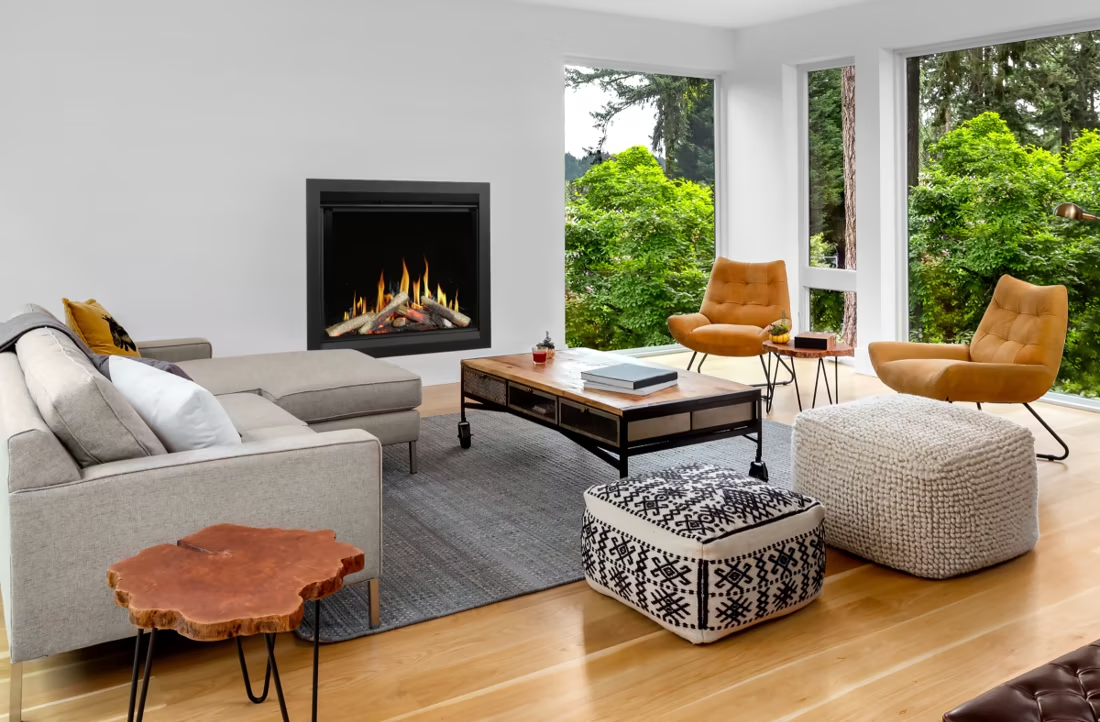
Four fuels. One honest answer for Sullivan County.
Three steps. No salesperson until you're ready.
Tell us about your project
Your zip code, your situation, and the fuel you're leaning toward—or let the answers point you to one.
See what's actually available
The brands dealers within 100 miles genuinely carry—real options, never a catalog mirage.
Get your dealer & Project Guide
A trusted local dealer, plus the free Project Guide & Parts List that names every component of the job.
Frequently Asked Questions
Which fuel works best in Sullivan County?
It depends on the home and the woodlot. Wood remains the dominant heating fuel in rural Sullivan County—the local mix of maple, birch, beech, and oak burns hot and long, and many homeowners cut their own firewood or buy it seasoned from a neighbor. Gas here is almost entirely propane rather than piped natural gas, since most of the county outside Claremont's core has limited natural gas infrastructure—propane fireplaces and inserts are a common convenience choice for river-valley homes. Pellet is a strong middle ground, helped by New England Wood Pellet's mill in nearby Jaffrey and steady regional supply from Lignetics and Maine Woods Pellet Co. Electric is best treated as supplemental heat—useful in bedrooms, camps, or apartments around Sunapee, but not a substitute for primary heat at 9°F average winter lows. Most Sullivan County homes end up running wood or pellet as the main heat source with gas or electric filling in elsewhere.
Do I need a permit to install a fireplace in Sullivan County?
In most cases, yes. New Hampshire's building code requires permits for new wood stoves, wood inserts, gas fireplaces, gas inserts, gas stoves, and pellet stoves, and each town in Sullivan County—Newport, Claremont, Charlestown, Sunapee, and the rest—issues its own permits through its individual building department rather than a single county office. Wood appliances need to meet current EPA emissions standards, and propane installations require a licensed gas fitter for the tank and line connection. Electric fireplaces generally don't need a permit unless the installation involves a built-in unit with new wiring or a dedicated circuit. Most local hearth retailers handle the permitting paperwork as part of the installation, so you typically don't have to navigate it town hall by town hall yourself.
Are there air quality restrictions on wood burning in Sullivan County?
No—Sullivan County doesn't have the winter inversion or wildfire-smoke issues that trigger burn advisories in parts of the West, and there are no non-attainment restrictions here. That said, an EPA-certified stove is still worth the investment: it burns roughly a third less wood than an old pre-EPA unit for the same heat output, produces far less creosote buildup in the chimney, and is safer over a long New England burn season that often stretches six months. If you're replacing an older stove, ask your installer whether it meets current EPA New Source Performance Standards—it affects both efficiency and resale disclosure.
Where can I get a firewood cutting permit near Sullivan County?
Sullivan County sits between two large tracts of public land where personal-use firewood permits are typically available: White Mountain National Forest to the northeast and the Green Mountain & Finger Lakes National Forest across the river in Vermont. Permit rules, seasonal windows, and per-load limits vary by ranger district, so it's worth calling ahead before you plan a cutting trip—some districts cap total volume per household per year. Plenty of Sullivan County homeowners also source wood locally through private woodlots and firewood dealers who sell maple, birch, beech, and oak already split and seasoned, which is often simpler than a forest permit if you don't already have the equipment to process your own cordwood.
How does service work in the smaller hill towns of Sullivan County?
Most chimney sweeps and hearth technicians serving Sullivan County are based out of Claremont or Newport and travel out to the outlying towns—Washington, Acworth, Lempster, Goshen, and Croydon—for service calls. Expect a modest travel fee for the more remote hill towns, and know that scheduling gets tight in fall as everyone tries to book their annual sweep or gas inspection before the heating season starts in October. Booking in August or September, rather than waiting for the first cold snap, is the easiest way to get on a technician's calendar before things fill up.
What's the typical cost range for fireplace installation across all fuel types in Sullivan County?
Costs vary by fuel and by how much venting or gas line work is involved. Wood stove or insert installation: roughly $4,000–$8,500 for a typical retrofit, more if a full masonry chimney needs relining. Propane fireplace, insert, or stove: roughly $4,000–$10,000 depending on whether a new propane line and tank setup are needed. Pellet stove or insert: roughly $4,000–$7,000 for a typical install. Electric fireplace: $200–$3,000 for the unit itself, plus $400–$1,200 in labor for anything beyond a simple plug-and-play placement. For the specifics tied to your fuel and town, the county + fuel pages above break down local retailer pricing in more detail.
Does a fireplace add value to my home?
On average, a fireplace adds back to the home about the same amount you spent installing it. Add the monthly savings from heating the rooms you actually use instead of the whole house—often hundreds of dollars a year—and the value case is strong before you even count what a fire does for how your family uses the room.
Can a fireplace actually lower my heating bill?
Yes—by creating a comfort zone. A furnace heats every square foot of the house just to warm the one room you're in; a gas fireplace on low burns roughly a sixth of the gas a typical furnace does. Set the furnace around 55–60 degrees as a baseline, then heat the rooms your family actually uses. Families who heat this way commonly save $20–$60 a month.
Can I install a fireplace myself?
If you're putting a fire in your house on purpose, it's best to work with an expert. Unless you're genuinely experienced in framing, gas line, vent pipe, and the national code on clearances to combustibles, have a professional do it—and ideally the same company that sells you the fireplace, so warranty, service, and liability all live under one roof.
How much should I budget for a fireplace?
For an average home—covering the fireplace, the vent pipe, and basic installation—a budget between $3,900 and $5,500 gives you a lot of options across wood, gas, and pellet. By the time you add finish work, gas line, and electrical, the average complete installation lands between $5,000 and $12,000 all-in. In a remodel or new build, a good rule is to put about 2.5% of the total project cost toward the fireplace.
Stove and Fireplace Dealers in Sullivan County
Listings include WhyFire partner dealers, dealers we have verified as authorized for the brands we recommend, and established local businesses that carry hearth products. Every listing shows which one it is. The ones marked Preferred run on WhyFire's software, so they can show you real pricing and book your appointment right here. No manufacturer pays for placement. How we verify dealers →
New England Outdoor Furnaces
Hb Energy
Find your fireplace in Sullivan County.
Pick your fuel below and I'll match you with a trusted local hearth retailer plus a free Project Guide & Parts List—sized venting, the right unit, and a plan for your specific home.
Find Your Fireplace →