
Steady heat for a damp Bay of Fundy winter.
At just 30 metres above the harbour, Saint John's marine climate brings damp cold rather than dry deep-freeze—winter lows average -13.3°C, and the fog rolling off the Bay of Fundy can make well-seasoned firewood harder to guarantee than inland. Pellet appliances sidestep that problem. We'll help you find a trusted local dealer who knows what's actually installable on your street.
Every Project Starts From One of These Five Situations
Consistent heat without wrestling damp cordwood.
New Brunswick has one of the deepest firewood cultures in Canada, and Saint John is no exception—sugar maple, yellow birch, red maple, and white spruce all grow within a short drive, and a household cutting permit through New Brunswick Natural Resources runs about $6.10 per cubic metre, roughly $85 for a full 14 cubic metre allotment. But Saint John's position on the Bay of Fundy means a marine climate that's damp and foggy through the shoulder seasons, which makes it genuinely harder to get firewood dry enough to burn clean before the first cold snap. Winter lows average -13.3°C, cold enough that undersized or wet-wood heat isn't a minor inconvenience.
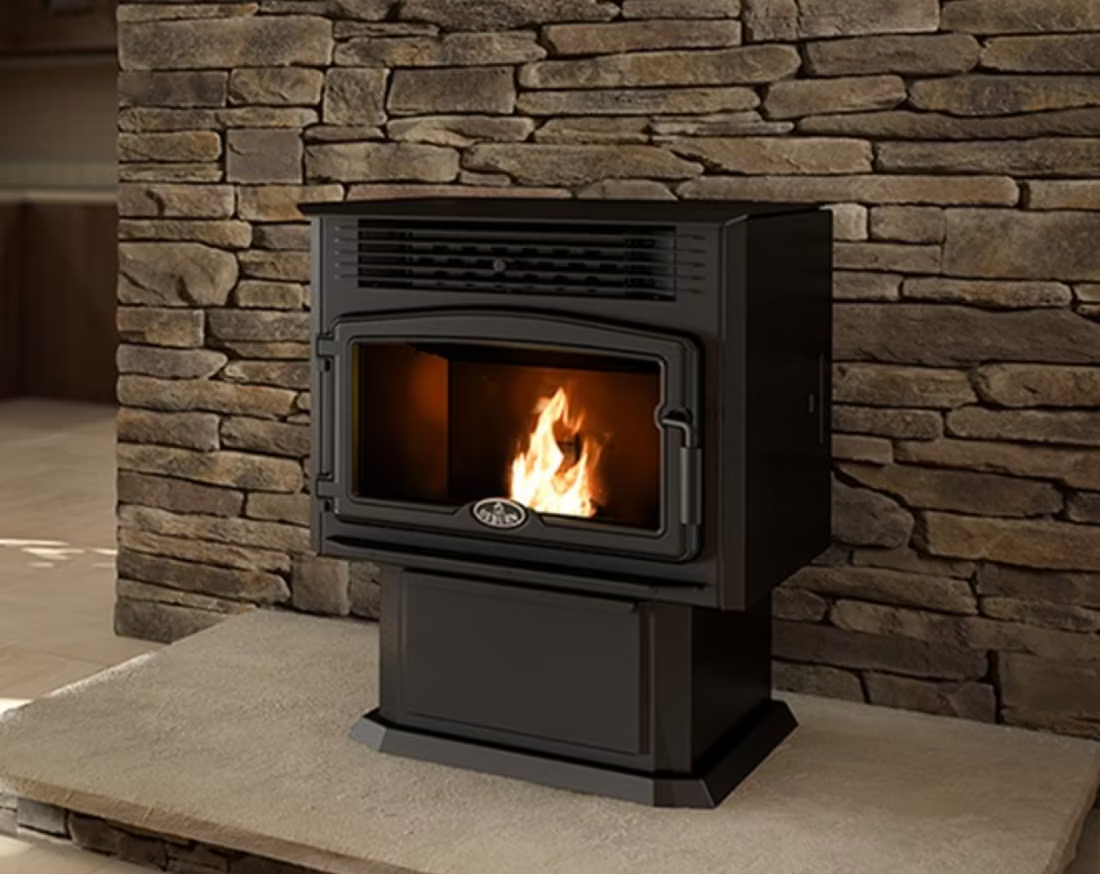
Pellets solve the moisture problem outright—bagged fuel from regional suppliers like Groupe Savoie, out of Saint-Quentin in northern New Brunswick, and Nova Scotia's Shaw Resources arrives kiln-dried and consistent, typically $400-$575 a ton. A pellet insert or freestanding stove installed here usually runs $6,000-$10,000, and because it's a solid-fuel appliance, CSA B365 governs the installation, and most insurers will ask for a WETT inspection before they'll write a policy on it, the same as they would for a wood stove. Saint John does have natural gas through Liberty Utilities (Gas NB) in parts of the city, and NB Power serves everyone at $0.146 a kilowatt-hour, but a lot of homeowners here like pellet heat specifically because it beats electric baseboard costs while skipping the wood-drying problem altogether.
Three steps. No salesperson until you're ready.
Tell us about your project
Your postal code, your situation, and the fuel you're leaning toward—or let the answers point you to one.
See what's actually available
The brands dealers within 100 miles genuinely carry—real options, never a catalog mirage.
Get your dealer & Project Guide
A trusted local dealer, plus the free Project Guide & Parts List that names every component of the job.
Frequently Asked Questions
How much does a pellet stove installation cost in Saint John?
Most installations run $6,000 to $10,000 CAD installed. A freestanding pellet stove venting through an exterior wall with PL-rated pipe sits toward the lower end, since it doesn't need a full chimney system. Converting an old masonry fireplace in one of the older homes around the Uptown peninsula into a pellet insert costs more, because the installer has to run a liner and adapt the existing flue. Either way, a municipal building department permit is required, and most local dealers include that in their quote.
What size pellet stove do I need for a Saint John home?
With winter lows averaging -13.3°C and a heating season that runs a solid five to six months in this part of the Fundy coast, most main living areas do well with a stove rated for 1,200 to 2,000 square feet. Older homes near the harbour with less insulation and higher ceilings often need to size up a step, while newer, tighter-built homes on the west side can run a smaller unit efficiently. A local dealer will size it against your actual floor plan rather than square footage alone.
Do I need a permit to install a pellet stove in Saint John?
Yes. Installations go through your municipal building department, and CSA B365 is the installation code that applies to pellet appliances the same way it applies to wood stoves. It's also worth getting a WETT inspection lined up even though pellet stoves burn cleaner than cordwood—most home insurers in New Brunswick ask for one before they'll cover a solid-fuel appliance, and a trusted local dealer will know exactly what your insurer expects.
Where do I buy pellets in the Saint John area?
Groupe Savoie, based in Saint-Quentin in northern New Brunswick, and Shaw Resources out of Nova Scotia are the two regional brands most local dealers carry, typically running $400 to $575 a ton depending on the season and how early you buy. Ordering before the fall rush is worth it here—Fundy fog and rain don't affect bagged pellets the way they'd affect a woodpile, but supply still tightens once the first real cold snap hits and everyone orders at once.
Will a pellet stove still work if the power goes out?
Not on its own. Pellet stoves need electricity to run the auger and blower, and Saint John sees its share of Nor'easters and Fundy windstorms that knock out power along the coast for hours or occasionally days. A battery backup unit, sized for your specific stove, keeps most models running through a typical outage. If you want heat that works with zero power at all, a wood stove is the better backup pairing—many households here run pellet as the daily-use appliance and keep a wood stove or fireplace insert for outages.
Pellet stove vs. wood stove—which makes more sense for a Saint John home?
Wood has deep roots here—an annual household cutting permit through New Brunswick Natural Resources allows up to 14 cubic metres for about $85, and sugar maple and yellow birch both burn hot and are easy to find. But this coast's damp, foggy shoulder seasons make it genuinely hard to season wood down to the moisture content a clean burn needs, and a lot of homeowners get tired of babysitting a woodpile that never quite dries. Pellets skip that problem, arrive ready to burn, and cost $400-$575 a ton delivered dry. The tradeoff is pellet stoves need power to run, so wood remains the better choice as a true outage backup.
Pellet vs. natural gas—what's the better fit in Saint John?
Liberty Utilities (Gas NB) serves parts of Saint John, so if your street already has a gas line, a gas fireplace is the more hands-off option with no fuel deliveries or ash to manage. Pellet appliances take more day-to-day attention—loading the hopper, emptying the ash pan—but they typically beat NB Power's $0.146 per kilowatt-hour electric rate on running cost, and they don't depend on a gas utility footprint that doesn't reach every neighbourhood. Homes outside the Liberty Utilities service area are often better candidates for pellet than for a gas conversion.
How much maintenance does a pellet stove need in Saint John?
Plan on emptying the ash pan every few days during steady winter use and a deeper clean of the burn pot weekly. Most manufacturers and local dealers recommend a full professional service once a year, ideally in September before the first real cold snap rather than mid-winter when technicians are booked. Given how damp the air gets off the Bay of Fundy, it's also worth checking your pellet storage for any moisture intrusion before each delivery—wet pellets swell and jam the auger.
Pellet insert or freestanding pellet stove—which fits my house?
A pellet insert slides into an existing masonry firebox and is the common retrofit in older Uptown Saint John homes that already have a working chimney chase. A freestanding pellet stove sits on a hearth pad and vents out through an exterior wall with PL-rated pipe, which suits newer homes on the west side or in nearby subdivisions that never had a fireplace built in. Inserts usually land toward the lower end of the $6,000-$10,000 install range since the chimney structure is already in place.
Why do fireplace quotes vary so much?
Because a fireplace is an iceberg—there's more behind the wall than in front of it. A low quote often covers only the unit; the full scope includes vent pipe, gas line or electrical, framing, and the tile or stone that has to come off and go back on. Make every bidder price the whole job. If a dealer can't speak to the full scope with confidence, that's your signal to keep looking.
Is it worth replacing an old fireplace that still sort of works?
Ask three questions: Is it ugly? Is it drafty? Does it actually work? Most old fireplaces fail at least two. Beyond looks, an old unit leaks air around the damper year-round and—if it's gas with a standing pilot—quietly burns a couple hundred dollars a year. A modern replacement seals the wall, heats the room, and changes how the whole space gets used.
What do I measure to size a fireplace insert?
Four numbers tell you what fits: the front width, the front height, the back width, and the overall depth of your existing fireplace opening. Grab a tape measure, jot those down, and snap a photo of the wall—those two things do more to move your project forward than anything else you can do today.
Are pellet stoves loud?
They make some noise—there are two fans running plus an auger motor that turns as it feeds pellets. But there's a real range: premium models are engineered quiet, and the best offer a whisper-quiet mode you can comfortably watch TV next to. If noise matters in your room, ask to hear a stove running before you buy—it's a five-minute test that saves years of annoyance.
Nearby Dealers
Hearth shops serving Saint John and the surrounding area. Every listing shows whether it is a WhyFire partner, a dealer we have verified as authorized for the brands we recommend, or a local business carrying hearth products. No manufacturer pays for placement. How we verify dealers →
Pellet Brands Stocked Around Saint John
Typical price runs $400-$575 per ton—buy early-season for the best rates. Manufacturers will point you to the nearest stocking dealer.
Groupe Savoie
Shaw Resources
Get your free Project Guide & Parts List for a Saint John pellet project.
Tell us about your home and whether you're near a Liberty Utilities gas line or off the grid for it, and we'll help you find a trusted local dealer and send a free Project Guide & Parts List—sized for a damp Fundy winter, with the vent kit and parts specified.
Find Your Fireplace →