
Keep Your Family Warm and Safe—No Matter What
Lakeland Ridges sits at 174 metres in the York region, where winter lows average -17°C and the cold settles in for months. We help homeowners here find a trusted local dealer who knows CSA B365 code, WETT inspections, and what actually vents safely on a Lakeland Ridges lot.
Every Project Starts From One of These Five Situations
A woodlot tradition, not a novelty.
Lakeland Ridges is deep in New Brunswick's forested interior, and the numbers explain why so many households here still split and stack their own heat. Winter lows average -17°C, similar to what Thunder Bay, Ontario sees most Januaries, and the heating season runs five months or longer. Sugar maple, yellow birch, red maple, and white spruce all grow on the woodlots surrounding town, giving burners a mix of dense, long-burning hardwood and faster-catching softwood for shoulder-season fires. New Brunswick has no province-wide burning restrictions, and this stretch of the York region has a genuinely deep firewood culture—wood heat isn't a backup plan, it's how a lot of these homes have always been warmed.
Access to fuel is part of the appeal. New Brunswick Natural Resources (DNRED) district offices issue an annual cutting permit for up to 14 cubic metres per household at $6.10 per cubic metre—a full allotment runs about $85, a fraction of what a winter's worth of split hardwood would cost delivered. The tradeoff is doing it by the book: any new wood appliance needs a permit through the municipal building department, has to meet the CSA B365 installation code, and most insurers in New Brunswick will ask for a WETT inspection before they'll write a policy on the appliance. A local dealer who installs here every week handles all three pieces as part of the job.
Firewood Cutting Permits Near Lakeland Ridges
New Brunswick Natural Resources (Dnred), District Offices
Three steps. No salesperson until you're ready.
Tell us about your project
Your postal code, your situation, and the fuel you're leaning toward—or let the answers point you to one.
See what's actually available
The brands dealers within 100 miles genuinely carry—real options, never a catalog mirage.
Get your dealer & Project Guide
A trusted local dealer, plus the free Project Guide & Parts List that names every component of the job.
Frequently Asked Questions
How much does a wood stove installation cost in Lakeland Ridges?
Most installations run $6,000 to $12,000 CAD. An insert going into an existing masonry chimney—common in older farmhouses scattered around the York region—lands toward the low end, since the flue and hearth structure are already there. A freestanding stove in a newer home without a chimney needs a full Class A chimney run through the roof, which pushes the project toward the top of that range. Either way, the installer needs to meet CSA B365 code, and most insurance companies will want a WETT inspection on file before they'll cover the appliance.
Where do I get a wood cutting permit near Lakeland Ridges?
New Brunswick Natural Resources (DNRED) district offices issue the permits. Each household can cut up to 14 cubic metres a year on Crown land at $6.10 per cubic metre, so a full allotment costs roughly $85—enough wood to supply most stoves for a full heating season if you're burning dense hardwood like sugar maple or yellow birch. Plenty of households around Lakeland Ridges also work private woodlots or arrange wood through neighbours, which is common in a region with this much forest cover.
What firewood species burn best in a Lakeland Ridges stove?
Sugar maple and yellow birch are the workhorses—dense, high-BTU hardwoods that hold coals overnight, which matters when the temperature outside sits at -17°C or lower. Red maple burns a little faster and lighter, useful for shoulder-season fires in October and April when you don't need an all-night burn. White spruce catches quickly and is common for kindling or a fast morning fire, but it burns through faster than the hardwoods and isn't what you want loaded up before bed on the coldest nights.
Do I need a permit to install a wood stove in Lakeland Ridges?
Yes. New installations need a permit through the municipal building department, and the appliance and its venting have to meet CSA B365, the installation code that applies across New Brunswick. Beyond the permit, most insurers here won't write or renew a homeowner's policy that includes a wood stove without a WETT inspection confirming the installation meets code—it has become a standard step for financing and insurance, not just a formality, so budget the inspection fee alongside the install itself.
What size wood stove do I need for a Lakeland Ridges home?
With average winter lows around -17°C and a heating season that runs well past five months, undersizing is the more common problem than oversizing. A small stove rated under 1,000 square feet is fine for a camp or a bunkie, but most main living areas here—especially older farmhouses with less insulation—do better with a medium to large stove rated for 1,500 to 2,500 square feet, so it can hold a bed of coals through a long overnight burn without constant reloading. A local dealer will size it against your actual floor plan and insulation rather than square footage alone.
What is a WETT inspection and why does Lakeland Ridges need one?
WETT stands for Wood Energy Technology Transfer, and it's the certification most Canadian insurers rely on to confirm a wood-burning installation meets code. In practice, if you're installing a new stove, buying a home with one already in place, or renewing a policy on a property that burns wood, expect your insurer in New Brunswick to ask for a current WETT inspection report. A local dealer who installs wood appliances regularly around the York region can usually arrange the inspection as part of the project, or point you to an inspector who knows the area.
Wood stove vs. pellet stove—which makes more sense here?
Wood keeps working without power, which is a real advantage given how often ice storms and windstorms take down lines served by NB Power in this part of the province, and with a DNRED cutting permit running about $85 for a full household allotment, the fuel cost is hard to beat. Pellet stoves burning regional brands like Groupe Savoie or Shaw Resources, at roughly $400 to $575 a ton, are cleaner and easier to load, but the auger and blower need electricity, so a pellet stove goes cold in the same outage a wood stove rides through. A lot of Lakeland Ridges households end up choosing wood for exactly that reliability, especially as a primary heat source rather than backup.
Is natural gas an option instead of wood in Lakeland Ridges?
Liberty Utilities operates the Gas NB network in this part of the province, but coverage is concentrated along specific corridors and doesn't reach every property, including a good number of homes around Lakeland Ridges. Where gas service is available, a direct-vent fireplace is a legitimate lower-maintenance alternative running $6,000 to $15,000 installed. Where it isn't, propane is the usual substitute for gas-style convenience, but given the forest cover and cutting permit access here, most homeowners in this area stick with wood as either the primary or the backup heat source.
How often should I sweep the chimney if wood is my main heat source?
Once a year at minimum, ideally in September before the first real cold snap rather than mid-winter when chimney sweeps in the York region are booked solid. Households burning wood as a primary heat source through a full New Brunswick winter—five-plus months of regular fires—often need a mid-season check too, especially if some of the wood in the stack wasn't fully seasoned. Sugar maple and yellow birch need a full year to season properly; burning them too green is the most common cause of heavy creosote buildup in this area.
Why do fireplace quotes vary so much?
Because a fireplace is an iceberg—there's more behind the wall than in front of it. A low quote often covers only the unit; the full scope includes vent pipe, gas line or electrical, framing, and the tile or stone that has to come off and go back on. Make every bidder price the whole job. If a dealer can't speak to the full scope with confidence, that's your signal to keep looking.
Louvered or clean face—which fireplace front is better?
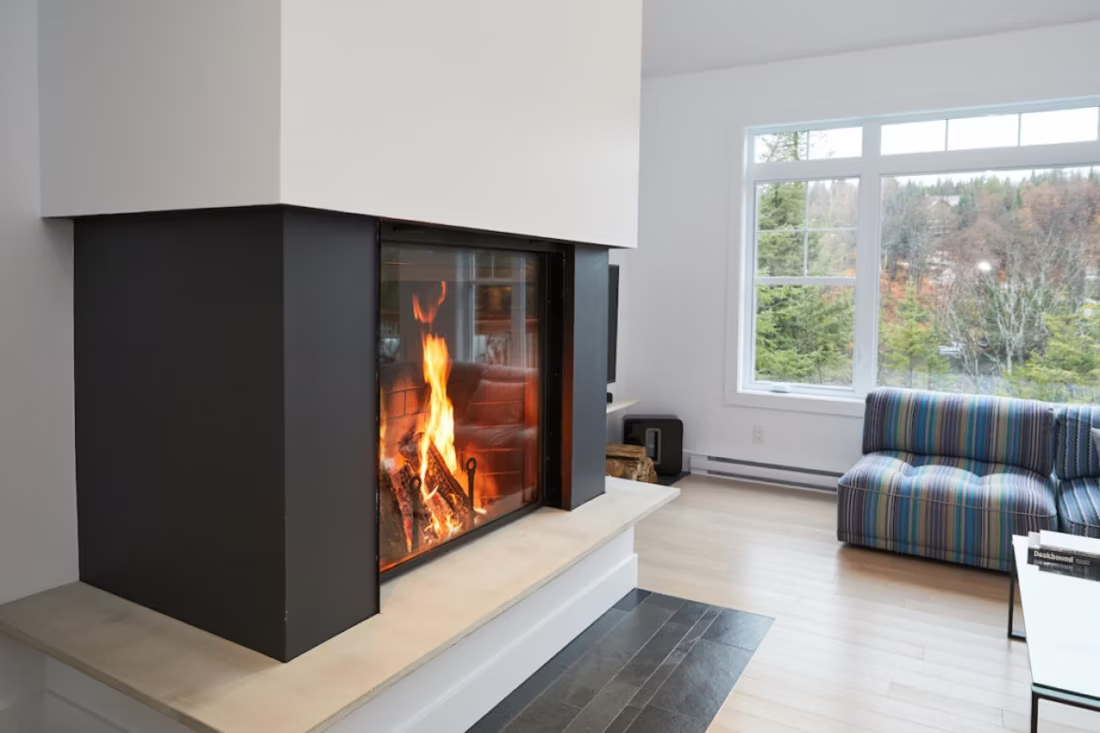
Louvered fronts have grill work above and below the glass for airflow, move heat a little better with a fan, and suit traditional mantels. Clean face designs drop the louvers entirely so finish work runs to the fire's edge—they fit both modern and traditional rooms. When we did our own home we chose clean face: a big viewing area beat a little extra airflow. It depends on your room, not on a rulebook.
Why won't my new wood stove get going like my old one?
New wood stoves are 70%+ efficient, so far less heat goes up the flue—which also means less draft to get a fire established. The rule: build a genuinely hot fire for about 45 minutes before you choke it down. Skip that and you get smoke in the room, creosote in the chimney, and a fire that never takes off. Most performance complaints trace straight back to this.
Is it worth replacing an old fireplace that still sort of works?
Ask three questions: Is it ugly? Is it drafty? Does it actually work? Most old fireplaces fail at least two. Beyond looks, an old unit leaks air around the damper year-round and—if it's gas with a standing pilot—quietly burns a couple hundred dollars a year. A modern replacement seals the wall, heats the room, and changes how the whole space gets used.
Nearby Dealers
Hearth shops serving Lakeland Ridges and the surrounding area. Every listing shows whether it is a WhyFire partner, a dealer we have verified as authorized for the brands we recommend, or a local business carrying hearth products. No manufacturer pays for placement. How we verify dealers →
Classic Stoves And Fireplaces
Get your free Project Guide & Parts List for a Lakeland Ridges wood project.
Tell us about your home and we'll help you find a trusted local dealer in the York region and send a free Project Guide & Parts List—sized for -17°C winters, with the vent kit and parts specified, and the WETT and CSA B365 details sorted before you buy.
Find Your Fireplace →