
Steady heat for Bas-Caraquet winters, without cutting a single cord.
At just 5 metres above the Baie des Chaleurs with winter lows averaging -16.6°C, Bas-Caraquet needs a heat source that runs reliably through a long, damp cold season. We'll help you find a trusted local dealer who knows the pellet supply chain and the permits here.
Every Project Starts From One of These Five Situations
A firewood culture that's making room for pellets.
Bas-Caraquet sits out on the Acadian Peninsula in the Gloucester region, low and exposed near the Baie des Chaleurs and the Gulf of St. Lawrence. The maritime setting doesn't soften winter much: average lows near -16.6°C and a heating season that stretches on comparably to what Québec City or Fredericton sees further inland, just with more wind and damp off the water. That's a real climate for a heat source, not a decorative one.
New Brunswick has one of the deepest firewood cultures in the country, and sugar maple, yellow birch, red maple, and white spruce are what most households in Gloucester split and stack, often under a Natural Resources (DNRED) household permit running about $6.10 per cubic metre, up to 14 cubic metres a year for roughly $85 total. Pellets appeal to the households who want that same wood heat without the felling, splitting, or hauling—a real consideration for an aging peninsula population and for smaller village lots without room to season cordwood. Groupe Savoie and Shaw Resources supply the regional pellet market at roughly $400-$575 a ton, and while Liberty Utilities (Gas NB) does run mains service in parts of the province, coverage out on the Acadian Peninsula is limited, which keeps pellet and wood as the two realistic heating fuels for a lot of Bas-Caraquet homes.
Three steps. No salesperson until you're ready.
Tell us about your project
Your postal code, your situation, and the fuel you're leaning toward—or let the answers point you to one.
See what's actually available
The brands dealers within 100 miles genuinely carry—real options, never a catalog mirage.
Get your dealer & Project Guide
A trusted local dealer, plus the free Project Guide & Parts List that names every component of the job.
Frequently Asked Questions
How much does a pellet stove installation cost in Bas-Caraquet?
Most pellet installs here run $6,000 to $10,000 CAD. A freestanding pellet stove venting through an exterior wall on a hearth pad sits toward the lower end, since it doesn't need an existing chimney. A pellet insert going into an older masonry fireplace—common in some of the village's older Acadian-style homes—costs a bit more once the liner and venting work is factored in. Either way, the municipal building department requires a permit, and the installation itself falls under the CSA B365 code, which a local dealer will already be building into their quote.
What size pellet stove do I need for a Bas-Caraquet home?
With winter lows regularly dropping to -16.6°C and colder during a hard cold snap off the Gulf, most Bas-Caraquet homes do better sizing up rather than down. A unit rated for 1,200 to 1,800 square feet handles a typical village bungalow used as a primary or near-primary heat source, while larger or older, less-insulated homes near the water may want a stove rated higher so it isn't running at full output around the clock. A local dealer will factor in your actual insulation and exposure to wind off the Baie des Chaleurs rather than square footage alone.
Do I need a permit to install a pellet stove in Bas-Caraquet?
Yes. New installations go through the municipal building department, and the work itself follows the CSA B365 installation code. On top of that, most home insurers in Gloucester ask for a WETT inspection before they'll cover a solid-fuel appliance, pellet units included—it's a routine step, not a red flag, and a dealer who installs regularly on the Acadian Peninsula will already know what your insurer expects and can arrange it as part of the job.
What's the difference between a pellet stove and a pellet insert?
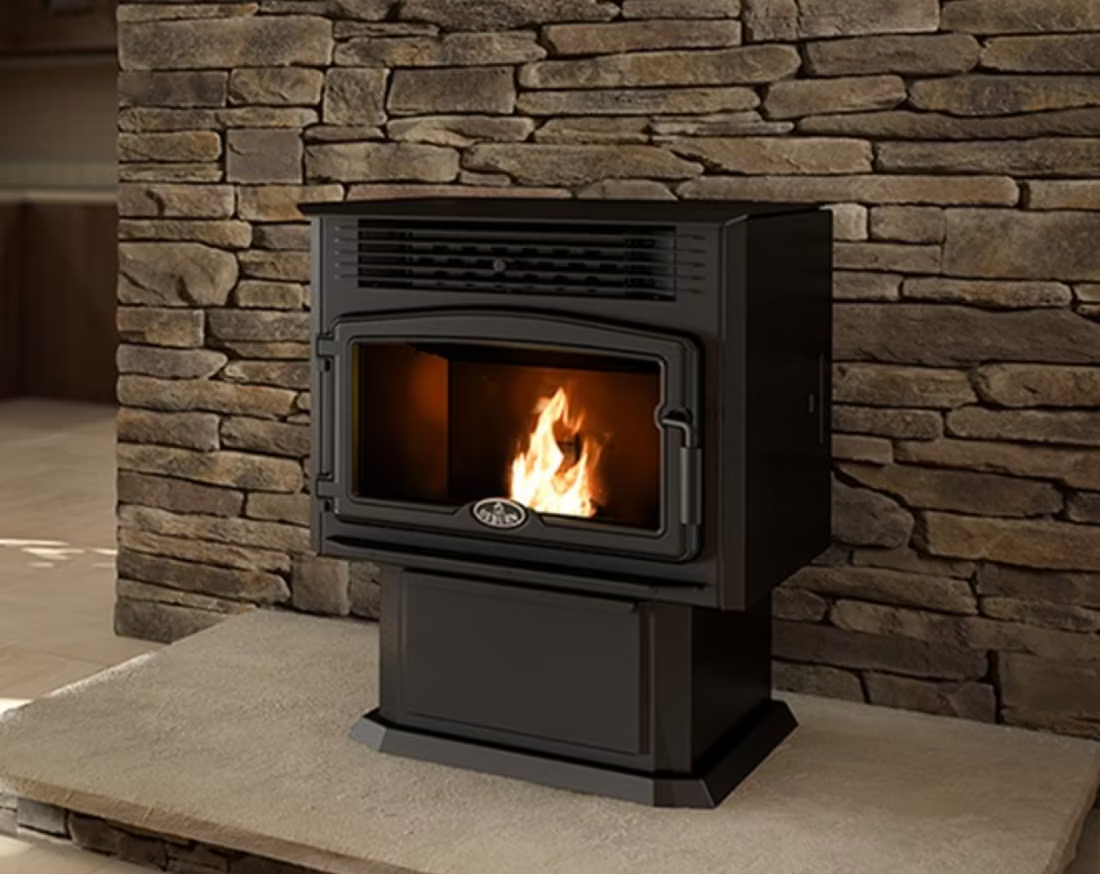
A pellet stove is freestanding on its own hearth pad and vents through a wall, which suits newer construction or a home without an existing fireplace. A pellet insert slides into an existing masonry firebox and reuses the chimney chase, which is the more common upgrade in Bas-Caraquet's older homes that were originally built around an open wood fireplace. Inserts usually land toward the lower half of the $6,000-$10,000 range since less new venting is needed.
Where do I buy pellets near Bas-Caraquet, and how much should I budget?
Groupe Savoie and Shaw Resources supply most of the pellet fuel sold through the region, typically running $400 to $575 a ton depending on the season and how early you buy. Ordering before the fall rush, when demand across Gloucester spikes ahead of the first cold snap, usually gets you better pricing and guaranteed delivery. A local dealer can also tell you how many tons a household your size typically burns through a full Acadian Peninsula winter, so you're not guessing at storage needs.
Pellet stove or wood stove—which makes more sense here?
Wood keeps a real cost advantage in Gloucester: a full household cutting permit through New Brunswick Natural Resources runs about $85 for up to 14 cubic metres, and sugar maple and yellow birch are both abundant and well-suited to a long burn. But wood means splitting, seasoning, and hauling, which is a real barrier for smaller village properties or households without a truck. Pellet stoves trade that labour for convenience and cleaner, more consistent output, with one tradeoff worth knowing—they need electricity for the auger and blower, so they won't run through a NB Power outage the way a wood stove will.
How much maintenance does a pellet stove need?
Plan on daily or every-few-days ash removal depending on how much you burn, a glass cleaning as needed, and a full professional service once a year—ideally in late summer or early fall before the first cold stretch off the Baie des Chaleurs. That annual service should include cleaning the hopper, auger, and exhaust venting. Skipping it is the most common reason a pellet stove starts smoking or jamming partway through a long Gloucester winter.
Will my pellet stove keep working if the power goes out?
Not without backup. Pellet stoves rely on electricity to run the auger that feeds fuel and the blower that pushes heat into the room, so a NB Power outage—not uncommon during a winter nor'easter off the Gulf of St. Lawrence—will shut a pellet unit down. Some households here pair a pellet stove with a small backup generator or an uninterruptible power supply for exactly this reason, and it's a fair question to raise with your dealer if outages are a real concern on your street.
Is natural gas or electric a better option than pellet in Bas-Caraquet?
Liberty Utilities (Gas NB) does operate mains service in parts of New Brunswick, but coverage out on the Acadian Peninsula is limited, so a lot of Bas-Caraquet addresses simply aren't on the gas network—worth confirming before you plan around it. Electric heat through NB Power, at roughly 14.6 cents a kWh, is available everywhere and costs little to install ($500-$1,600), but it doesn't offer the same steady, radiant output as a pellet appliance for a main living space. For most homes here without gas access, pellet ends up the more practical middle ground between wood's labour and electric's higher running cost.
Why do fireplace quotes vary so much?
Because a fireplace is an iceberg—there's more behind the wall than in front of it. A low quote often covers only the unit; the full scope includes vent pipe, gas line or electrical, framing, and the tile or stone that has to come off and go back on. Make every bidder price the whole job. If a dealer can't speak to the full scope with confidence, that's your signal to keep looking.
Is it worth replacing an old fireplace that still sort of works?
Ask three questions: Is it ugly? Is it drafty? Does it actually work? Most old fireplaces fail at least two. Beyond looks, an old unit leaks air around the damper year-round and—if it's gas with a standing pilot—quietly burns a couple hundred dollars a year. A modern replacement seals the wall, heats the room, and changes how the whole space gets used.
What should I look for in pellet stove design?
Three things separate the field: how easy the burn pot is to clean (trapdoor designs let the ash drop straight into the pan), how the auger moves pellets (top-mounted augers that pull instead of push jam less and wear slower), and diagnostics (self-diagnosing control boards tell you exactly which part needs attention instead of leaving you guessing). Heat output is table stakes—livability is in these details.
Do I need a permit to install a fireplace?
In most jurisdictions, yes—fireplace and stove installations involve venting, clearances, and often gas or electrical work that gets permitted and inspected. That's a feature, not a hassle: the inspection protects your family and your homeowner's insurance. A professional installer pulls the permit, installs to code, and stands behind the inspection. If someone suggests skipping it, keep looking.
Nearby Dealers
Hearth shops serving Bas-Caraquet and the surrounding area. Every listing shows whether it is a WhyFire partner, a dealer we have verified as authorized for the brands we recommend, or a local business carrying hearth products. No manufacturer pays for placement. How we verify dealers →
Pellet Brands Stocked Around Bas-Caraquet
Typical price runs $400-$575 per ton—buy early-season for the best rates. Manufacturers will point you to the nearest stocking dealer.
Groupe Savoie
Shaw Resources
Get your free Project Guide & Parts List for a Bas-Caraquet pellet project.
Tell us about your home and we'll help you find a trusted local dealer who knows the municipal permit process, the CSA B365 code, and what WETT inspection your insurer will want—plus a free Project Guide & Parts List with the vent kit and parts your project needs.
Find Your Fireplace →