
Find your fireplace across the Albert region.
Wood, gas, pellet, and electric fireplace resources for every community from Riverview and Hillsborough down through Alma and the Fundy coast. Tell us your fuel and we'll help you find a local dealer who actually installs it here—not a call centre three provinces away.
Every Project Starts From One of These Five Situations
Fundy-moderated winters and a heating season built around sugar maple and yellow birch.
The Albert region wraps around the upper Bay of Fundy, taking in Riverview and Hillsborough near Moncton, the tidal flats at Hopewell Cape, and the climb into Fundy National Park above Alma. Average winter lows hover near -13.1°C—milder than inland New Brunswick towns like Fredericton, closer to what a typical winter feels like in Halifax than the deep continental cold you'd get in Winnipeg or Edmonton. Still, this is climate zone 6A, and the heating season here runs a solid five to six months. The forests covering most of the region are dominated by sugar maple, yellow birch, red maple, and white spruce—species that split clean, season well, and have supported a genuine wood-heating culture here for generations. There's no province-wide burning restriction to navigate, which keeps wood heat a straightforward choice for households that want it.
Natural gas service reaches the Albert region, which puts gas fireplaces and inserts within reach for homes along the main utility corridors, while propane fills in for the rest of the area. Pellet stoves have solid regional backing too, with Groupe Savoie and Shaw Resources both supplying New Brunswick-milled pellets to local dealers. Whatever you burn, expect your municipal building department—Riverview, Hillsborough, Salisbury, and the rest each run their own—to require a permit under the CSA B365 installation code, and expect your insurer to ask for a WETT inspection if you're putting in a wood-burning appliance. This hub rolls up retailers, service technicians, and fuel suppliers across the whole region, from Riverview and Salisbury through Hillsborough, Alma, and Hopewell Cape. Pick a fuel below for local dealers, install costs, and unit recommendations specific to your town.
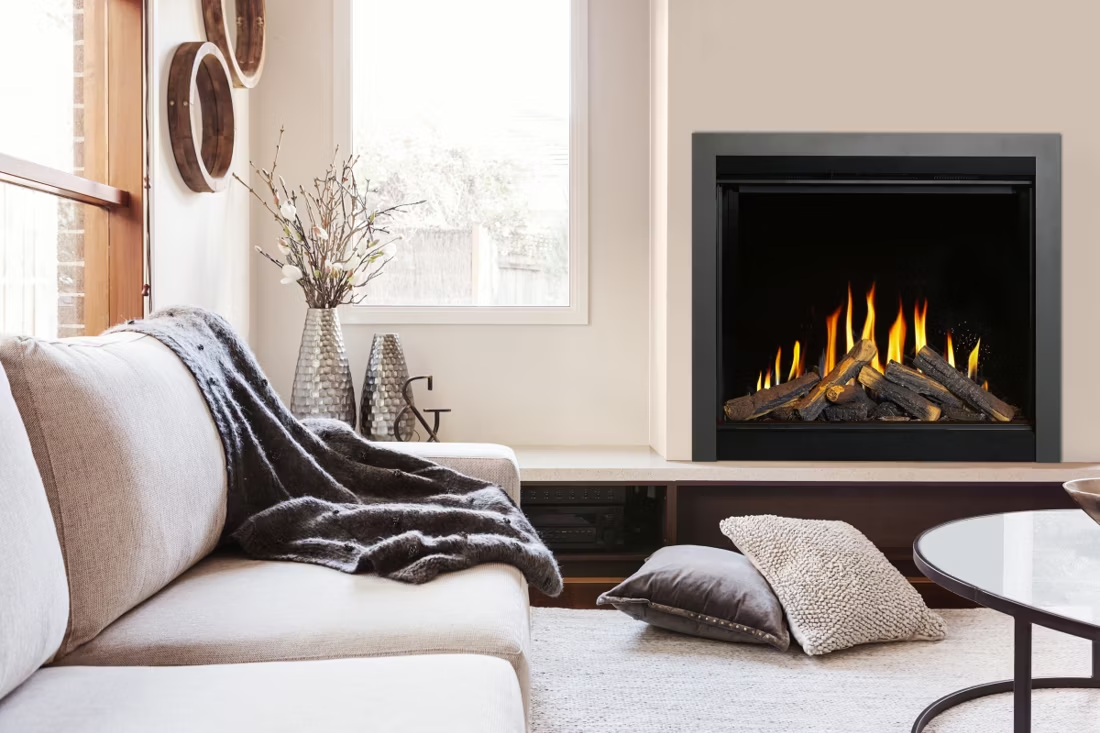
Four fuels. One honest answer for Albert.
Three steps. No salesperson until you're ready.
Tell us about your project
Your postal code, your situation, and the fuel you're leaning toward—or let the answers point you to one.
See what's actually available
The brands dealers within 100 miles genuinely carry—real options, never a catalog mirage.
Get your dealer & Project Guide
A trusted local dealer, plus the free Project Guide & Parts List that names every component of the job.
Frequently Asked Questions
Which fireplace fuel makes the most sense in the Albert region?
All four fuels are genuinely in play here, and the right call depends more on your street than your climate zone. Wood remains deeply rooted—sugar maple, yellow birch, and red maple all season well and burn hot, and with no province-wide burning restriction, plenty of households still treat wood as primary heat through a five-to-six-month season. Gas is a solid option where the regional utility reaches, mainly the Riverview-Moncton corridor; further out toward Alma or Hopewell Cape, propane usually fills that role instead. Pellet stoves get real support from New Brunswick suppliers like Groupe Savoie and Shaw Resources, and they suit anyone who wants wood-stove heat without the splitting and stacking. Electric fireplaces are supplemental almost everywhere—useful for a bedroom, a basement, or ambiance in a home already heated by wood or gas, but not sized to carry a winter on their own.
Do I need a permit for a wood stove or insert in the Albert region?
Yes. Installation goes through your municipal building department—Riverview, Hillsborough, Salisbury, and the smaller communities each handle their own permitting—and the work has to meet the CSA B365 installation code. On top of the building permit, most insurers in New Brunswick will ask for a WETT inspection before they'll cover a wood-burning appliance, especially on an older home or a used stove being installed in a new spot. Gas installations need a licensed gas fitter and a separate gas permit. Most of the retailers we help homeowners find handle this paperwork as part of the install, so it's rarely something you're chasing down on your own.
Is natural gas actually available for a fireplace here, or is it mostly propane?
It depends on where in the region you are. Natural gas service does reach parts of the Albert region, concentrated around Riverview and the corridor toward Moncton, and homes on those lines can run a gas fireplace or insert off the mains. Once you're out toward Hillsborough's rural edges, Salisbury, Alma, or the Fundy National Park side of things, propane is the more realistic option and most gas-fireplace installs there run on a tank rather than a line. Either way, a local dealer can tell you in a few minutes whether your address sits on a gas line or needs a propane setup—it's the first thing they check before recommending a unit.
What does the local firewood species mix look like, and does it affect stove choice?
The region's forests run heavy to sugar maple, yellow birch, and red maple, with white spruce mixed in—an excellent firewood lineup, since the hardwoods split clean and burn long while the spruce catches quickly for shoulder-season fires. Most households source wood locally, either through a firewood dealer or by cutting on crown land through a New Brunswick Natural Resources district office. Because there's no province-wide burning restriction here, unlike areas with winter air-quality curtailments, choosing wood as a primary heat source is a straightforward decision rather than something you need to plan around seasonal burn bans.
Can one retailer handle more than one fuel type?
Most Albert-region hearth retailers carry two or three fuel types rather than specializing narrowly, which fits how a lot of local households actually heat—wood or pellet as the workhorse, with a gas or electric unit somewhere else in the house for convenience. A multi-fuel dealer lets you compare a working wood stove, a gas insert, and a pellet unit side by side and talk through what genuinely fits your address, whether that's a gas line in Riverview or a propane tank out near Alma. We'll help you find the retailer whose lineup and service area actually fit your project.
What does installation typically cost in the Albert region?
Costs shift with fuel type and how much venting or gas-line work is involved. Wood stove and insert installs typically run $4,000–$8,500 CAD, more if a full chimney rebuild is part of the job. Gas fireplaces and inserts usually land between $4,500–$10,000, depending on whether you're extending a gas line or converting an existing hearth to propane. Pellet stove and insert installs generally run $4,000–$7,000. Electric fireplaces are the outlier—$400–$2,500 for the unit, plus a few hundred dollars in labour for anything beyond a simple plug-in placement. The region and fuel pages above break these numbers down further with local retailer pricing.
How many BTUs do I need in a fireplace?
Wrong question—and the industry's favorite way to confuse you. More BTUs isn't better if the fireplace cooks you out of the room you spent thousands to enjoy. Think in terms you can verify: how many square feet the unit heats, whether it's primary or backup heat, and whether you want it running overnight. Those three answers size a fireplace correctly every time.
Will we actually use a fireplace once we have one?
In my own home, the room with the fireplace has never been the same—it became the social hub. Game nights, holidays, date nights after the kids are down: the fire is where the house gathers. There's a reason people in this industry joke that we're really in the romance and entertainment business. You won't wonder whether you'll use it; you'll wonder how the room worked before.
Why is my open fireplace making my house colder?
Open fireplaces suck—literally. As the fire burns, it consumes air your furnace already paid to heat and pulls it out through the chimney, so the house is actually colder after the fire goes out than before you lit it. An insert fixes this: it seals the chimney, puts fixed glass across the front, and turns that hole in your house into a real heat source.
Wood, gas, pellet, or electric—how do I choose?
Match the fuel to your life, not the other way around. Wood: lowest fuel cost and total power-outage independence, but you're hauling and stacking. Gas: press a button, set a thermostat, no maintenance to speak of. Pellet: wood economics with automatic feeding, in exchange for weekly cleaning and a need for electricity. Electric: plugs in anywhere with honest supplemental heat. Nobody regrets the fuel that fits how they actually live.
Stove and Fireplace Dealers in Albert
Listings include WhyFire partner dealers, dealers we have verified as authorized for the brands we recommend, and established local businesses that carry hearth products. Every listing shows which one it is. The ones marked Preferred run on WhyFire's software, so they can show you real pricing and book your appointment right here. No manufacturer pays for placement. How we verify dealers →
Find a trusted dealer serving the Albert region.
Pick your fuel below and we'll put together a free Project Guide & Parts List—the right unit, the vent kit it needs, and the local dealer we recommend for your project.
Find Your Fireplace →