
Built for Nevada's High-Desert Cold.
Wood, gas, pellet, and electric fireplace resources for Ely, McGill, Ruth, Lund, Baker, and the ranches and rural communities spread across White Pine County. Find the right unit and connect with a trusted local hearth retailer.
Every Project Starts From One of These Five Situations
Great Basin winters run long in White Pine County, Nevada.
White Pine County sits in Nevada's Great Basin, with Ely anchoring the county at roughly 6,400 feet and Great Basin National Park rising to nearly 13,000 feet near Baker. With average winter lows around 12°F, the heating season here runs comparably to Bozeman, Montana—long, dry, and cold enough that a single fuel source rarely gets a home through the winter alone. With only about 5,400 residents spread across nearly 9,000 square miles, homes here are often miles apart along US-50 and US-93, and the wood on hand is pinyon, juniper, and sagebrush—lower-BTU species than oak or hickory, which means more volume per cord but fuel that's often cut locally on Humboldt-Toiyabe National Forest and BLM land under personal-use permits.
What you'll find on this hub: hearth retailers, service technicians, and fuel suppliers serving the whole county—from Ely and McGill down through Ruth and Lund, out to Baker near the national park, and the ranch communities along Highway 50 sometimes called the loneliest road in America. Pick your fuel below to drill into specifics—local dealers, installation costs, recommended units, and the resources that fit your project, whether you're heating a home in Ely or a cabin near the Snake Range.
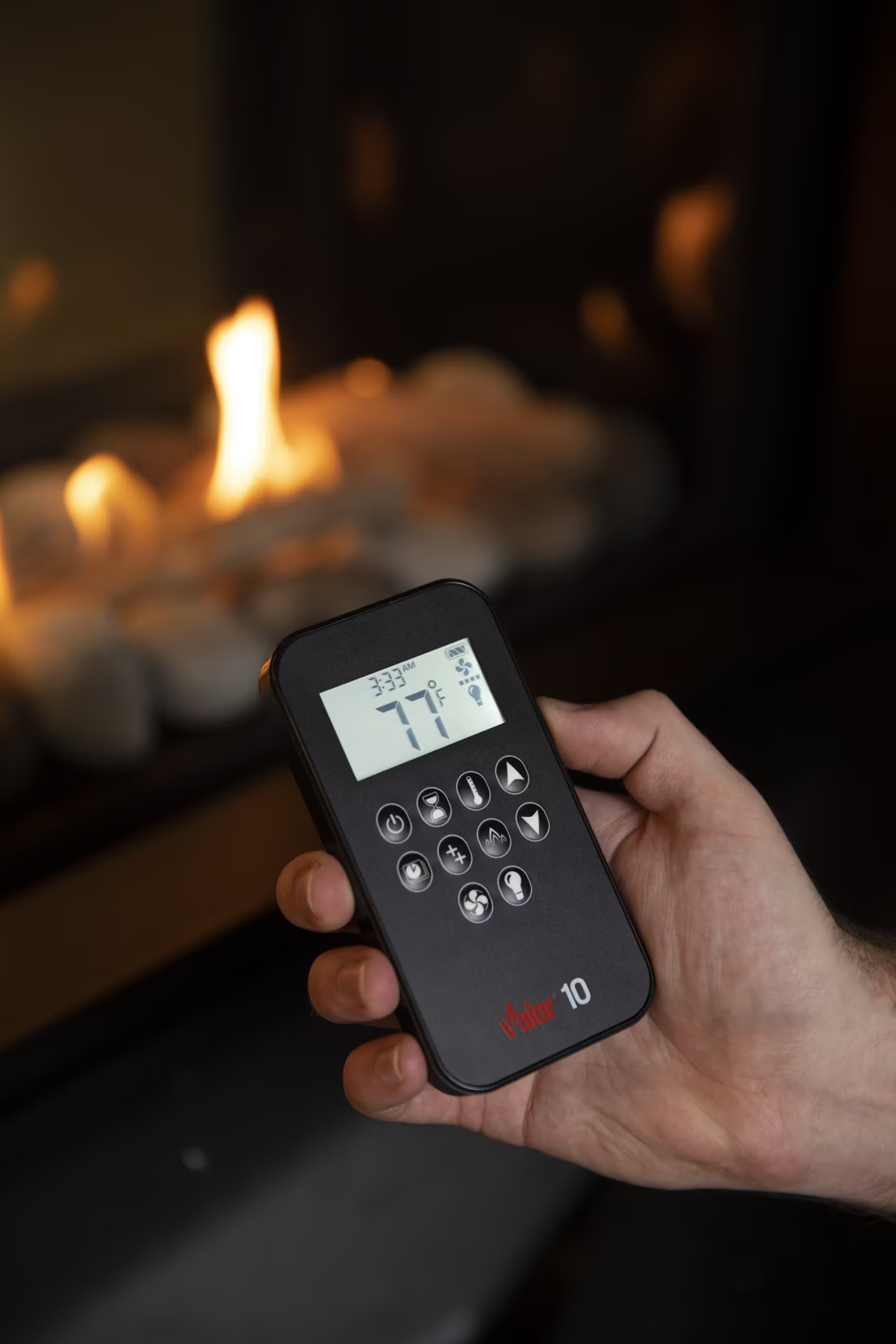
Four fuels. One honest answer for White Pine County.
Wood
See what's available near White Pine County.
Find your wood stove →Gas
See what's available near White Pine County.
Find your gas fireplace →Pellet
See what's available near White Pine County.
Find your pellet stove →Electric
See what's available near White Pine County.
Find your electric fireplace →Three steps. No salesperson until you're ready.
Tell us about your project
Your zip code, your situation, and the fuel you're leaning toward—or let the answers point you to one.
See what's actually available
The brands dealers within 100 miles genuinely carry—real options, never a catalog mirage.
Get your dealer & Project Guide
A trusted local dealer, plus the free Project Guide & Parts List that names every component of the job.
Frequently Asked Questions
Which fuel works best in White Pine County?
It depends on where you live and what backs it up in a power outage. Wood is a practical primary heat source across the county—pinyon, juniper, and sagebrush are what's locally available, often cut under personal-use permits on Humboldt-Toiyabe National Forest or BLM land, though these species burn faster and hotter than oak or hickory, so plan on a larger woodpile. Gas is mostly propane out here, since piped natural gas service is limited to parts of Ely—propane gives you push-button heat without the woodpile labor. Pellet is a solid middle ground, with Bear Mountain, Lignetics, and Forest Energy all distributed in the region, though rural households should plan pellet deliveries or stockpiling ahead of winter given the distances involved. Electric works well as a supplemental heater for a bedroom or bonus room, but with winter lows averaging 12°F, it's rarely a home's only heat source. Many White Pine County homes run wood or propane as primary heat with a pellet or electric unit for secondary rooms.
Do I need a permit to install a fireplace in White Pine County?
In most cases, yes. New wood stoves, wood inserts, gas fireplaces, gas inserts, gas stoves, and pellet stoves typically require a building permit through the White Pine County building department, and wood-burning appliances need to meet current EPA emissions standards. Propane installations also require separate tank and gas-line permitting, and any hardwired electric fireplace install (built-ins with new circuits) needs an electrical permit—plug-in electric units generally don't. Most local hearth retailers handle the permitting paperwork as part of the installation, so homeowners rarely have to navigate the county process alone.
Are there air quality restrictions on wood burning in White Pine County?
Not in the way you'd see in a smoke-inversion basin. White Pine County's main air quality concern is wildfire smoke, which tends to affect the region in summer and early fall from fires burning across the Great Basin and eastern Nevada, rather than winter wood-burning curtailment days. That means there's no routine winter burn-ban program tied to wood stove use here. That said, choosing an EPA-certified wood stove still burns pinyon and juniper more cleanly and efficiently than an old uncertified unit, which matters for indoor air quality and firewood consumption alike, especially given how quickly softer desert woods burn through.
Can one local hearth retailer handle all four fuel types?
In a county this size, that matters more than it would in a bigger market—driving to Elko or across the Utah line for a second opinion isn't a quick trip. The Ely-area dealers that carry wood, gas, pellet, and electric side by side are worth prioritizing if you're still deciding between fuels, since they can show you working displays and talk through trade-offs for your specific home and elevation. Smaller or single-fuel suppliers still play an important role for firewood, propane, or pellet delivery, but for a full installation comparison, a multi-fuel retailer covering the whole county saves a lot of driving.
How does service work in rural parts of White Pine County?
Most technicians are based in Ely and travel out along US-50 and US-93 to reach McGill, Ruth, Lund, and Baker near Great Basin National Park—some of these routes run 60 miles or more one way. Expect a modest travel fee for calls outside the Ely city limits, and plan on scheduling annual chimney sweeps or gas inspections in late summer or early fall, before winter travel and demand pick up. For homes near Baker or along the more remote stretches of the county, it's worth keeping basic backup supplies on hand—extra propane, dry pinyon or juniper, spare batteries for gas ignition systems—in case a service window runs into weather delays.
What's the typical cost range for fireplace installation across all fuel types in White Pine County?
Ranges vary by fuel and by how far a crew has to travel. Wood stove or insert installation typically runs $4,500 to $9,500, with costs climbing for new masonry chimney work in remote locations. Gas fireplace, insert, or stove installation runs roughly $4,500 to $10,500, depending on propane tank setup and venting; conversions where propane service already exists land toward the lower end. Pellet stove or insert installs generally fall between $4,500 and $7,500. Electric fireplaces run $200 to $3,000 for the unit itself, with $400 to $1,200 in labor for anything beyond a plug-and-play install. Homes farther from Ely, especially near Baker or Lund, may see modest travel charges added to any of these figures—ask your local dealer for a breakdown specific to your address.
Does a fireplace add value to my home?
On average, a fireplace adds back to the home about the same amount you spent installing it. Add the monthly savings from heating the rooms you actually use instead of the whole house—often hundreds of dollars a year—and the value case is strong before you even count what a fire does for how your family uses the room.
Wood, gas, pellet, or electric—how do I choose?
Match the fuel to your life, not the other way around. Wood: lowest fuel cost and total power-outage independence, but you're hauling and stacking. Gas: press a button, set a thermostat, no maintenance to speak of. Pellet: wood economics with automatic feeding, in exchange for weekly cleaning and a need for electricity. Electric: plugs in anywhere with honest supplemental heat. Nobody regrets the fuel that fits how they actually live.
How much should I budget for a fireplace?
For an average home—covering the fireplace, the vent pipe, and basic installation—a budget between $3,900 and $5,500 gives you a lot of options across wood, gas, and pellet. By the time you add finish work, gas line, and electrical, the average complete installation lands between $5,000 and $12,000 all-in. In a remodel or new build, a good rule is to put about 2.5% of the total project cost toward the fireplace.
Can I install a fireplace myself?
If you're putting a fire in your house on purpose, it's best to work with an expert. Unless you're genuinely experienced in framing, gas line, vent pipe, and the national code on clearances to combustibles, have a professional do it—and ideally the same company that sells you the fireplace, so warranty, service, and liability all live under one roof.
Stove and Fireplace Dealers in White Pine County
Listings include WhyFire partner dealers, dealers we have verified as authorized for the brands we recommend, and established local businesses that carry hearth products. Every listing shows which one it is. The ones marked Preferred run on WhyFire's software, so they can show you real pricing and book your appointment right here. No manufacturer pays for placement. How we verify dealers →
Bath Lumber
Find your fireplace in White Pine County.
Tell us about your home and we'll match you with a trusted local dealer and send a free Project Guide & Parts List—the exact parts, vent kit, and recommended installer for your fuel and your address in White Pine County.
Find Your Fireplace →