
Find the right hearth for Mineral County's high desert winters.
Wood, gas, pellet, and electric fireplace resources for Hawthorne, Mina, Luning, Schurz, and the rest of Mineral County. We match you with a trusted local dealer and hand you a free Project Guide & Parts List for your specific home.
Every Project Starts From One of These Five Situations
High desert heating in Mineral County, Nevada.
Mineral County sits in the Walker Lake basin of west-central Nevada, with Hawthorne at roughly 4,300 feet and colder pockets up toward the Wassuk Range. With a long, chilly heating season and a winter low average of 26°F, the climate here is real high-desert cold—noticeably milder than deep-freeze towns like International Falls, Minnesota or Fargo, North Dakota, but still enough sustained chill from November through March to make heating equipment a serious purchase, not an afterthought. Pinyon and juniper are the local firewood staples, both resinous woods that burn hot and fast but demand more frequent chimney cleaning than cleaner-burning species—a detail any wood-burning household here should build into their maintenance schedule. Sagebrush wood is also common as kindling and supplemental fuel given how much of it grows across the basin floor.
This hub covers what's actually available and installable across Mineral County—Hawthorne, the county seat near Walker Lake; Mina and Luning along Highway 95; and Schurz to the north. With a county population under 4,200, the retailer and technician network here is thin by design—some dealers are based locally in Hawthorne, others travel in from Yerington, Fallon, or Reno to handle installs and service calls. Pick your fuel below to see local dealers, typical installed costs, and the resources specific to your project. We don't sell or ship anything ourselves—we match you with a trusted local dealer and send you a free Project Guide & Parts List so you walk into that conversation already informed.
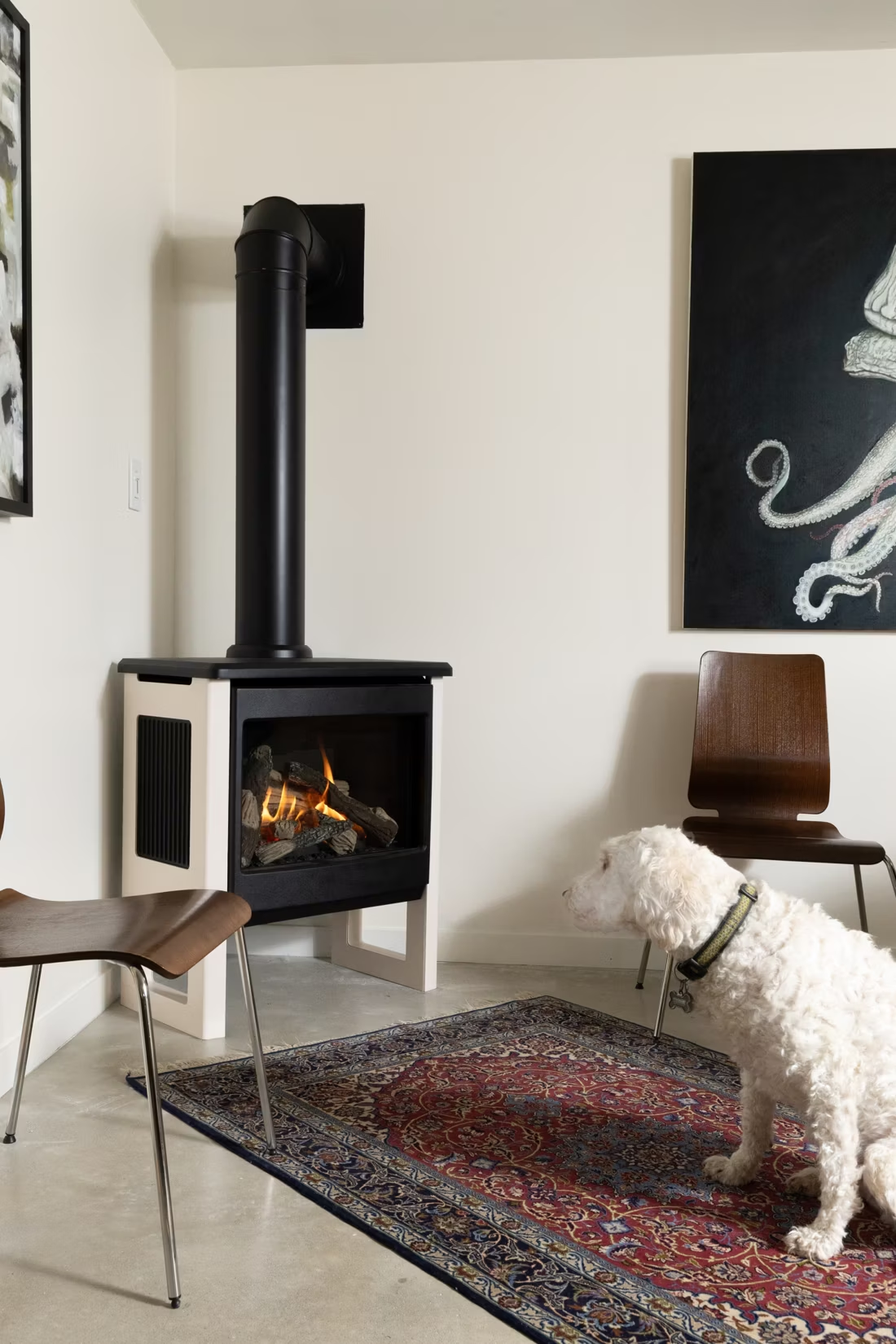
Four fuels. One honest answer for Mineral County.
Three steps. No salesperson until you're ready.
Tell us about your project
Your zip code, your situation, and the fuel you're leaning toward—or let the answers point you to one.
See what's actually available
The brands dealers within 100 miles genuinely carry—real options, never a catalog mirage.
Get your dealer & Project Guide
A trusted local dealer, plus the free Project Guide & Parts List that names every component of the job.
Frequently Asked Questions
Which fuel works best in Mineral County?
It depends on the home and how remote it is. Wood remains a strong choice in Mineral County—pinyon and juniper are the traditional local fuels, both burn hot and are widely available on the surrounding public land, though they run creosote-heavy and call for more frequent sweeping. Gas here almost always means propane rather than piped natural gas, since the county doesn't have municipal gas infrastructure—propane fireplaces and inserts give instant, thermostat-controlled heat without the wood-handling labor. Pellet stoves are a solid middle ground; Bear Mountain, Lignetics, and Forest Energy bags are all stocked regionally, and pellet heat is easier to store and manage than cordwood in a county this rural. Electric fireplaces work well as supplemental heat in bedrooms or smaller rooms, but with a long, chilly heating season and winter lows averaging 26°F, most households still want a wood, propane, or pellet unit carrying the primary heat load.
Do I need a permit to install a fireplace in Mineral County?
In most cases, yes. New wood stoves, wood inserts, propane fireplace installs involving new gas line work, and pellet stove installs typically require a building permit through the county building department, and wood-burning appliances need to meet current EPA emissions standards to be permitted for new installation. Propane line work also generally requires a licensed gas-fitter separate from the stove installer. Electric fireplace installs usually skip the permit process unless you're hardwiring a built-in unit into a new circuit. Because Mineral County is so rural, most local dealers who handle the install also handle the permit paperwork—worth confirming that's included in your quote before you sign anything.
Does wildfire smoke affect wood burning rules in Mineral County?
Mineral County doesn't sit in a winter inversion bowl the way some Nevada and Oregon basin towns do, so there's no mandatory curtailment period restricting wood burning on cold winter nights. The air quality concern here is seasonal—wildfire smoke from summer and early fall fire activity across the Great Basin, which can affect visibility and air quality for days at a time regardless of what's happening in anyone's fireplace. It's still worth choosing an EPA-certified, cleaner-burning stove for your own household's indoor air quality and to be a good neighbor during smoke-heavy stretches, and it's worth thinking about defensible space around any outdoor wood storage given how much sagebrush and dry grass surrounds most properties in the basin.
Can one local hearth retailer handle all four fuel types in Mineral County?
With a county population under 4,200, don't expect a big multi-fuel showroom on every corner. Some retailers based in or near Hawthorne carry a mix of wood and propane appliances, and pellet stoves are commonly stocked given the regional Bear Mountain and Lignetics supply chain. For a wider side-by-side comparison across wood, gas, pellet, and electric—with working display units of each—you may need to look to dealers in Yerington, Fallon, or Reno who travel into Mineral County for installs. Either way, we match you with whichever dealer, local or regional, actually carries and can install what fits your home.
How does fireplace service work in such a rural county?
Most technicians serving Mineral County travel in from Yerington, Fallon, or Reno to reach Hawthorne, Mina, Luning, and Schurz, so expect a modest travel fee on top of the service call—often in the $50–$100 range depending on distance. Scheduling early in the fall, before the first real cold snap, gets you on the calendar more easily than trying to book a mid-winter emergency visit. If you're burning pinyon or juniper, plan on annual chimney sweeping rather than skipping a year—the resin content in both species builds creosote faster than it does with cleaner hardwoods.
What's the typical cost range for fireplace installation across fuel types in Mineral County?
Wood stove or insert installs typically run $4,000–$8,500 depending on venting and whether a masonry chimney needs relining. Propane fireplace, insert, or stove installs run roughly $4,000–$10,000, with the top of that range reflecting new propane line runs for homes without existing service. Pellet stove or insert installs generally land at $4,000–$7,000. Electric fireplaces are the most affordable entry point—$200–$3,000 for the unit itself, plus $400–$1,200 in labor for anything beyond a simple plug-and-play placement. Because Mineral County is remote, factor in a possible travel charge from the installing dealer on top of these ranges—see the fuel-specific pages above for more detail.
How much should I budget for a fireplace?
For an average home—covering the fireplace, the vent pipe, and basic installation—a budget between $3,900 and $5,500 gives you a lot of options across wood, gas, and pellet. By the time you add finish work, gas line, and electrical, the average complete installation lands between $5,000 and $12,000 all-in. In a remodel or new build, a good rule is to put about 2.5% of the total project cost toward the fireplace.
Does a fireplace add value to my home?
On average, a fireplace adds back to the home about the same amount you spent installing it. Add the monthly savings from heating the rooms you actually use instead of the whole house—often hundreds of dollars a year—and the value case is strong before you even count what a fire does for how your family uses the room.
Wood, gas, pellet, or electric—how do I choose?
Match the fuel to your life, not the other way around. Wood: lowest fuel cost and total power-outage independence, but you're hauling and stacking. Gas: press a button, set a thermostat, no maintenance to speak of. Pellet: wood economics with automatic feeding, in exchange for weekly cleaning and a need for electricity. Electric: plugs in anywhere with honest supplemental heat. Nobody regrets the fuel that fits how they actually live.
What is an in-home preview and do I need one?
It's a visit where a hearth professional measures your space, confirms the model you picked actually works in your home, and walks the specs—framing, gas line, venting, finish work—before anything is ordered. Some details you just can't know until you see the house. Never make a down payment without one; it's the single most-skipped step that burns buyers.
Stove and Fireplace Dealers in Mineral County
Listings include WhyFire partner dealers, dealers we have verified as authorized for the brands we recommend, and established local businesses that carry hearth products. Every listing shows which one it is. The ones marked Preferred run on WhyFire's software, so they can show you real pricing and book your appointment right here. No manufacturer pays for placement. How we verify dealers →
Area – Mammoth Lakes
Louies Home Center
Big R
Louie's Home Center- Dayton
Big R - Fernley
Woodstove Dist Inc
Find your fireplace in Mineral County.
Pick your fuel below to see local dealers, typical installed costs, and get matched with a trusted local retailer plus a free Project Guide & Parts List for your project.
Find Your Fireplace →