
Heat that holds up through Lander County's high desert winters.
Wood, gas, pellet, and electric fireplace resources for Austin, Battle Mountain, and the ranches and mining communities scattered across Lander County's Toiyabe Range country. Find the right unit for your elevation and connect with a trusted local dealer.
Every Project Starts From One of These Five Situations
A wide, wind-swept county built on wood and self-reliance.
Lander County spreads across roughly 5,500 square miles of central Nevada, from the Reese River Valley up into the Toiyabe Range above Austin, which sits near 6,600 feet. With a heating season nearly on par with Helena, Montana and average winter lows near 22°F, the county's heating load runs comparable to Helena, Montana—a real, sustained heating season from October through April rather than a handful of cold snaps. Wood heat has deep roots here: pinyon and juniper cut under BLM and Forest Service woodcutting permits, plus sagebrush for quick kindling, have warmed ranch houses and Austin's historic homes for generations. Summer wildfire smoke is the main air quality issue locally—advisories affect visibility and outdoor burning more than winter wood stove use.
With a population under 4,500 spread across a county the size of Connecticut, Lander County doesn't support a dense hearth retail network—most homeowners in Battle Mountain, Austin, or Kingston end up working with dealers based here or in nearby Elko or Winnemucca who travel the corridor for installs and service. This hub rolls up what's available across all four fuels: retailers, technicians, and fuel suppliers serving the whole county. Pick your fuel below for installation costs, recommended units, and the local dealer who actually covers your address.
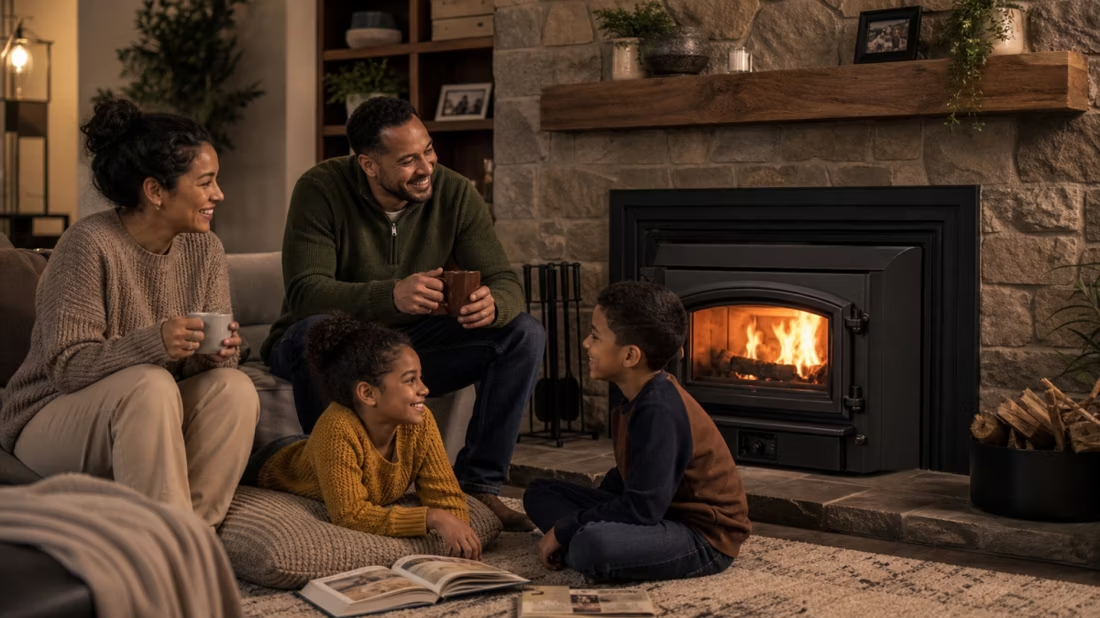
Four fuels. One honest answer for Lander County.
Three steps. No salesperson until you're ready.
Tell us about your project
Your zip code, your situation, and the fuel you're leaning toward—or let the answers point you to one.
See what's actually available
The brands dealers within 100 miles genuinely carry—real options, never a catalog mirage.
Get your dealer & Project Guide
A trusted local dealer, plus the free Project Guide & Parts List that names every component of the job.
Frequently Asked Questions
Which fuel works best in Lander County?
It depends on where you are and what you're heating. Wood remains the backbone fuel for many Lander County homes—pinyon and juniper cut under BLM or Forest Service permits keep costs low, and a cast-iron or catalytic stove can carry a Battle Mountain or Austin home through a January cold snap without relying on the grid. Gas here typically means propane rather than a piped utility, since natural gas infrastructure is limited across the county—propane fireplaces and inserts offer instant heat without woodpile labor, which matters on working ranches. Pellet stoves are a solid middle ground; Bear Mountain, Lignetics, and Forest Energy bags reach the county through regional suppliers, though delivery lead times matter more here than in a bigger market. Electric fireplaces, on NV Energy's grid, work well as supplemental heat in bedrooms or additions but aren't built to carry a whole house through a long, Helena-caliber winter on their own. Most Lander County homes lean on wood or propane as primary heat, with electric filling in the gaps.
Do I need a permit to install a fireplace in Lander County?
Generally yes for any solid-fuel or gas appliance. New wood stoves and inserts installed in Lander County need to meet current EPA 2020 NSPS emissions standards, and building permits are handled through the county's planning and building department for both incorporated and unincorporated areas. If you're planning to cut your own pinyon or juniper on public land rather than buying it split, you'll also need a separate BLM or Forest Service woodcutting permit—those are issued locally and typically capped by cord. Propane fireplace and insert installs require the gas connection work to be done or inspected by a licensed gas-fitter. Electric fireplaces usually skip the permit process unless you're hardwiring a built-in unit into a new circuit. Most local dealers who work this county regularly handle the permit paperwork as part of the installation.
Are there air quality restrictions on wood burning in Lander County?
Not in the way you'd see in a basin-and-inversion county—Lander County's main air quality concern is wildfire smoke rather than winter temperature inversions. Summer and early fall smoke from regional fires can trigger advisories affecting outdoor activity and visibility, but there's no routine winter wood-burning curtailment program tied to daily air quality here. That said, any new wood stove or insert install still needs to meet EPA 2020 NSPS emissions standards, and choosing well-seasoned pinyon or juniper over green wood makes a real difference in smoke output and chimney buildup, especially at Austin's elevation where thinner air affects draft.
Can one local hearth retailer handle all four fuel types in Lander County?
Some can, but with a county this size, coverage often means a dealer driving in from Elko or Winnemucca rather than a Battle Mountain storefront stocking everything. A handful of regional retailers carry wood, propane, pellet, and electric units and will quote installation for Battle Mountain, Austin, or outlying ranches as part of their normal service area—those are worth checking first if you want to compare fuels side by side. Smaller local operations may focus on one or two fuels, most commonly wood stoves and propane. If you're not sure which fits your situation, Find My Fireplace can match you with whichever trusted dealer actually covers your specific address and carries the fuel you're leaning toward.
How does service work for a home this far from a retail hub?
Most technicians who service Lander County are based in Elko, Winnemucca, or occasionally Reno, and build routes through Battle Mountain and Austin rather than keeping a local office. Expect a trip charge for the drive, and expect fewer available appointment windows than you'd get in a larger market—booking annual chimney sweeping or gas inspection in late summer or early fall, before the cold sets in, is the way to avoid a midwinter wait. If you're on a remote ranch, it's worth asking your dealer about stocking basic spare parts (igniters, gaskets, batteries for IPI gas units) on-site, since a return trip for a small part can mean another week's wait.
What's the typical cost range for fireplace installation across all fuel types in Lander County?
Costs run close to regional Nevada norms but often carry a modest travel premium built in for rural delivery and installation. Wood stove or insert: roughly $4,000–$8,500 for a typical install, more if a full chimney or hearth pad rebuild is needed at elevation. Propane fireplace, insert, or stove: roughly $4,000–$10,000, with tank setup and line run adding cost for homes without existing propane service. Pellet stove or insert: roughly $4,000–$7,000, plus factoring in delivery lead times for Bear Mountain, Lignetics, or Forest Energy pellets. Electric fireplace: $200–$3,000 for the unit itself, with $400–$1,200 in labor for anything beyond a plug-and-play install. The county + fuel pages above break these down further with specifics tied to actual local dealer pricing.
How much should I budget for a fireplace?
For an average home—covering the fireplace, the vent pipe, and basic installation—a budget between $3,900 and $5,500 gives you a lot of options across wood, gas, and pellet. By the time you add finish work, gas line, and electrical, the average complete installation lands between $5,000 and $12,000 all-in. In a remodel or new build, a good rule is to put about 2.5% of the total project cost toward the fireplace.
I know I want a fireplace—where do I actually start?
Do two things today: snap a photo of the wall or fireplace you want to transform, and take a tape measure to the space—width, height, depth. Those two artifacts answer most of a hearth professional's first questions. Then settle fuel (wood, gas, pellet, or electric) and set a realistic budget: $3,900–$5,500 covers fireplace, vent, and basic install for most homes.
Should the dealer who sells my fireplace also install it?
Ideally, yes. A fireplace project involves vent pipe, gas line, electrical, and often tile or stone. Hire three or four separate trades and you own the liability and the game of telephone between them. One company selling and installing means one accountable party, start to finish—ask about factory training, on-time completion records, and what happens if an inspection fails.
Can a fireplace actually lower my heating bill?
Yes—by creating a comfort zone. A furnace heats every square foot of the house just to warm the one room you're in; a gas fireplace on low burns roughly a sixth of the gas a typical furnace does. Set the furnace around 55–60 degrees as a baseline, then heat the rooms your family actually uses. Families who heat this way commonly save $20–$60 a month.
Stove and Fireplace Dealers in Lander County
Listings include WhyFire partner dealers, dealers we have verified as authorized for the brands we recommend, and established local businesses that carry hearth products. Every listing shows which one it is. The ones marked Preferred run on WhyFire's software, so they can show you real pricing and book your appointment right here. No manufacturer pays for placement. How we verify dealers →
Big R - Winnemucca
Firebox Stove & Fireplace
Big R - Lovelock
Get matched with a Lander County hearth dealer.
Tell us your fuel and your town—Austin, Battle Mountain, or somewhere between—and we'll match you with a trusted local dealer and send a free Project Guide & Parts List: the exact parts, vent kit included, and the dealer best positioned to install it near you.
Find Your Fireplace →