
Heating help for every corner of Morrill County.
Wood, gas, pellet, and electric fireplace resources for Bridgeport, Bayard, Broadwater, and the farms and ranches between them. Find the right unit for your home and connect with a trusted local hearth retailer.
Every Project Starts From One of These Five Situations
Panhandle winters call for a real heating plan.
Morrill County sits in Nebraska's panhandle along the North Platte River, a wide-open stretch of farm and ranch country with just under 3,000 residents spread across roughly 1,400 square miles. Winters here run cold and dry—average lows near 16°F, a long, hard heating season that stretches deep into spring, and wind that cuts through a poorly sealed house faster than the thermometer suggests. That's a heating load in the same range as Bismarck, ND, and it's why so many county homes lean on a wood or pellet stove as backup heat, not just ambiance, when a blizzard knocks out power on the open plains.
Oak, hickory, and cottonwood are the wood species most commonly burned locally—cottonwood especially, since it grows right along the North Platte riverbanks and is often available to landowners at low cost. What you'll find on this hub: hearth retailers, service technicians, and fuel suppliers serving Bridgeport, Bayard, Broadwater, and the unincorporated communities across the county. Pick your fuel below for local dealers, installation costs, and recommended units—this page is the starting point for any Morrill County heating project.
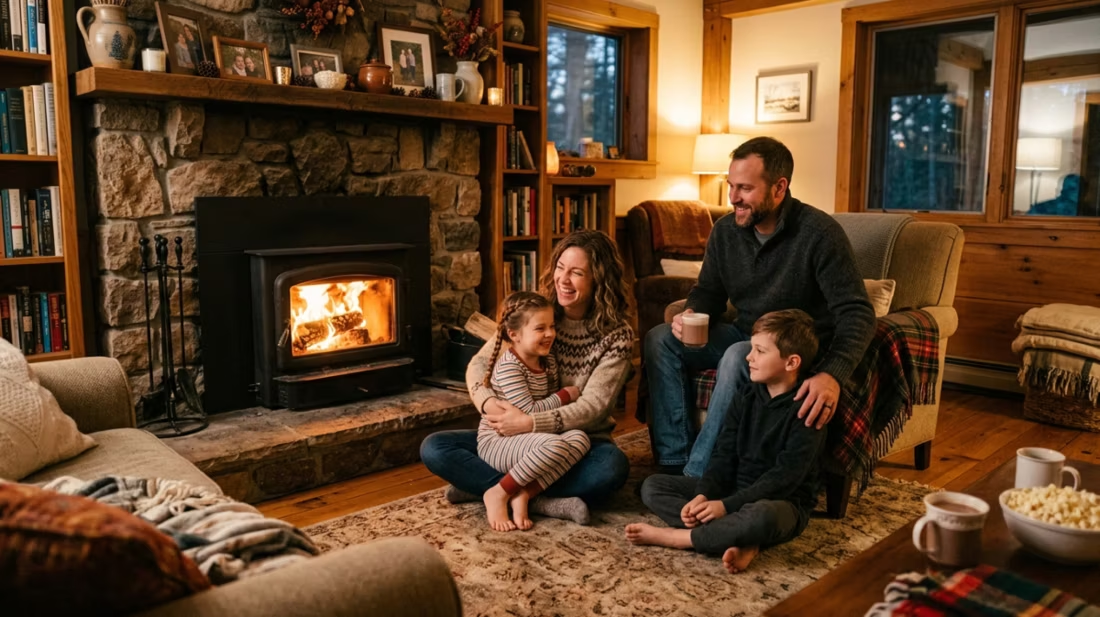
Four fuels. One honest answer for Morrill County.
Three steps. No salesperson until you're ready.
Tell us about your project
Your zip code, your situation, and the fuel you're leaning toward—or let the answers point you to one.
See what's actually available
The brands dealers within 100 miles genuinely carry—real options, never a catalog mirage.
Get your dealer & Project Guide
A trusted local dealer, plus the free Project Guide & Parts List that names every component of the job.
Frequently Asked Questions
Which fuel works best for a Morrill County home?
It depends on the home and how much you're relying on it during outages. Wood is a strong fit here—cottonwood along the North Platte and oak or hickory from farther afield keep fuel costs manageable, and a wood stove keeps working when a panhandle windstorm takes down power lines. Gas is the convenience option for homes with propane service (common in this rural county, since natural gas mains are limited outside the towns)—instant heat with none of the wood-splitting labor. Pellet stoves are a solid middle ground, with Lignetics product available regionally, though propane delivery timing matters if you're relying on pellets as backup and can't get to town easily in a storm. Electric fireplaces work well as supplemental heat in a bedroom or living room but shouldn't be your only heat source given how far lows drop most winters. Many Morrill County households run wood or pellet as a real backup heater alongside a propane or gas primary system.
Do I need a permit to install a fireplace in Morrill County?
Requirements depend on where in the county you're building. Within Bridgeport or Bayard city limits, permits for wood stoves, gas fireplaces, gas inserts, and pellet stoves typically go through the local city office. Outside incorporated towns, unincorporated Morrill County has more limited building code enforcement than an urban Nebraska county, but gas line work still requires a licensed installer and, in most cases, LP gas supplier sign-off for tank placement and connection. Wood stove installations should still meet current clearance and venting codes even where inspection is minimal—that's for your safety and your insurance, not just the paperwork. Most local hearth retailers who service the area can tell you exactly what applies to your specific address and handle the permitting where required.
Are there air quality or burn restrictions in Morrill County?
No—Morrill County doesn't have the winter inversion or non-attainment issues that trigger burn bans in some western basin communities. The open, windy panhandle terrain doesn't trap smoke the way a bowl-shaped valley does. That means wood burning here is a matter of good stove practice—seasoned wood, a properly sized catalytic or non-cat unit, and regular chimney cleaning—rather than a regulatory concern. It's still worth choosing an EPA-certified stove for efficiency's sake: with a long, hard heating season that stretches deep into spring, an inefficient older stove will cost you real money in wasted cottonwood and oak.
Can one local hearth retailer handle all four fuel types?
In a county this size, most of the retailers who reach Morrill County are based in Scottsbluff or Alliance and carry a broad mix—wood, gas, and pellet are common across the board, with electric fireplaces increasingly stocked as a lower-cost accessory line. Fewer dealers specialize in just one fuel out here, simply because the customer base is spread thin across a rural service area and it doesn't pencil out to carry a single-fuel showroom. If you're cross-shopping fuels for a Bridgeport or Bayard home, a multi-fuel dealer can usually walk you through working displays and talk through what actually makes sense for your propane access, wood supply, and budget.
How does service work for rural properties outside Bridgeport and Bayard?
Most technicians serving Morrill County are based in Scottsbluff or Alliance and drive out for scheduled service, so a travel fee—often $50–$100—is standard for chimney sweeps, gas inspections, or pellet stove cleanings at outlying ranch properties. Fall scheduling (September–October) is far easier to book than a January emergency call during a cold snap. Given how far county lows drop and how exposed rural properties are during outages, it's worth keeping a spare stovepipe thermometer and extra pellets or split wood on hand, and scheduling your annual service before the first hard freeze rather than after.
What's the typical installation cost range across fuel types in Morrill County?
Costs track fairly closely with regional Nebraska panhandle pricing. Wood stove or insert installation: roughly $4,000–$8,500 for a typical install, higher if new chimney chase construction is involved. Gas fireplace, insert, or stove: about $4,000–$10,000 depending on whether it's a propane tank hookup versus an existing gas line conversion. Pellet stove or insert: roughly $4,000–$7,000 for most installs. Electric fireplace: $200–$3,000 for the unit itself, plus $400–$1,000 in labor for anything beyond a simple plug-in placement. Rural delivery and travel fees can push the low end up slightly compared to in-town installs—see the county + fuel pages above for more detail tied to local retailer pricing.
What is an in-home preview and do I need one?
It's a visit where a hearth professional measures your space, confirms the model you picked actually works in your home, and walks the specs—framing, gas line, venting, finish work—before anything is ordered. Some details you just can't know until you see the house. Never make a down payment without one; it's the single most-skipped step that burns buyers.
Can a fireplace actually lower my heating bill?
Yes—by creating a comfort zone. A furnace heats every square foot of the house just to warm the one room you're in; a gas fireplace on low burns roughly a sixth of the gas a typical furnace does. Set the furnace around 55–60 degrees as a baseline, then heat the rooms your family actually uses. Families who heat this way commonly save $20–$60 a month.
Does a fireplace add value to my home?
On average, a fireplace adds back to the home about the same amount you spent installing it. Add the monthly savings from heating the rooms you actually use instead of the whole house—often hundreds of dollars a year—and the value case is strong before you even count what a fire does for how your family uses the room.
Should the dealer who sells my fireplace also install it?
Ideally, yes. A fireplace project involves vent pipe, gas line, electrical, and often tile or stone. Hire three or four separate trades and you own the liability and the game of telephone between them. One company selling and installing means one accountable party, start to finish—ask about factory training, on-time completion records, and what happens if an inspection fails.
Stove and Fireplace Dealers in Morrill County
Listings include WhyFire partner dealers, dealers we have verified as authorized for the brands we recommend, and established local businesses that carry hearth products. Every listing shows which one it is. The ones marked Preferred run on WhyFire's software, so they can show you real pricing and book your appointment right here. No manufacturer pays for placement. How we verify dealers →
Johnson Cashway Building And Design Center
Carr Trumbull Lumber
Find your fireplace in Morrill County.
Pick your fuel below and we'll match you with a trusted local dealer and send a free Project Guide & Parts List—the exact parts, including the vent kit, and the dealer recommended for your Morrill County project.
Find Your Fireplace →