
Fireplace heat that fits Lincoln's Plains winters.
Fireplace resources for Lincoln and every town in Lancaster County—from Waverly to Hickman to Bennet. Get matched with a trusted local dealer who can size the right unit for your home.
Every Project Starts From One of These Five Situations
Gas and electric heat for Nebraska's capital county.
Lancaster County sits in the rolling farmland of southeastern Nebraska, anchored by Lincoln—the state capital and home to more than 302,000 of the county's residents. Winters here are genuinely cold: average lows near 14°F and 5,856 heating degree days put Lancaster County well past the Deep South's mild season, though it's nowhere near the punishing totals a city like Fargo, ND racks up every winter. Despite the cold, wood and pellet heating are uncommon here. Most Lincoln-area homes sit on municipal or suburban lots without the cordwood storage or acreage that make wood heat practical, and there's no significant local pellet-appliance retail market even though regional producers like Lignetics and Indeck Energy Services operate nearby—their pellets mostly move into industrial and agricultural markets rather than home stoves. Gas and electric fireplaces are the standard choice across the county, backed by reliable infrastructure: Black Hills Energy serves natural gas to most of the Lincoln metro, and Lincoln Electric System (LES) powers the rest.
This hub covers hearth retailers, service technicians, and fuel suppliers across Lancaster County—Lincoln at the center, plus the smaller communities that ring it: Waverly, Hickman, Raymond, Bennet, Malcolm, and Denton among them. Pick a fuel below to see local dealers, typical installation costs, and the units that make sense for a Nebraska winter. If you're considering wood or pellet despite the county's climate profile, we'll be upfront about what's realistically available and who can service it—this is a small, specialty market here, not the mainstream option it is farther west or north.
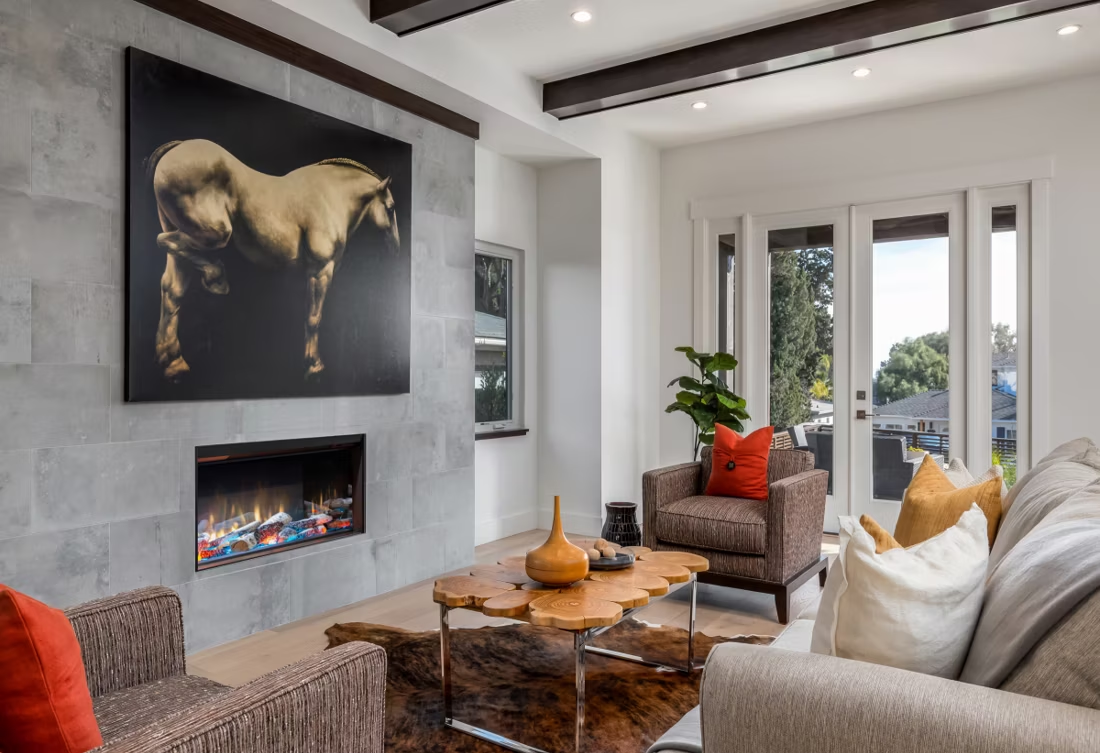
Four fuels. One honest answer for Lancaster County.
Three steps. No salesperson until you're ready.
Tell us about your project
Your zip code, your situation, and the fuel you're leaning toward—or let the answers point you to one.
See what's actually available
The brands dealers within 100 miles genuinely carry—real options, never a catalog mirage.
Get your dealer & Project Guide
A trusted local dealer, plus the free Project Guide & Parts List that names every component of the job.
Frequently Asked Questions
Which fuel makes the most sense in Lancaster County?
For the vast majority of homes in and around Lincoln, it comes down to gas or electric. Gas fireplaces and inserts are the go-to for primary supplemental heat—Black Hills Energy's natural gas network covers most of the metro, so conversions and new installs are usually straightforward. Electric fireplaces are the low-commitment option: no venting, no gas line, works in any room served by Lincoln Electric System (LES), and it's the default for condos, apartments, and secondary rooms. Wood is uncommon despite Lancaster County's genuinely cold winters—14°F average lows and nearly 5,900 heating degree days would support a wood stove climate-wise, but most homes here sit on lots too small for a woodpile, and local oak, hickory, and cottonwood cordwood is really only practical for the acreages and rural properties outside Lincoln's city limits. Pellet stoves are rarer still; despite pellet manufacturers like Lignetics and Indeck Energy Services operating in the region, there's little local retail infrastructure for home pellet appliances.
Do I need a permit to install a fireplace in Lancaster County?
Yes, in most cases. Gas fireplace, insert, and stove installations require a building permit plus a separate gas line permit, and the gas connection itself needs to be done by a licensed gas-fitter—this applies whether you're inside Lincoln city limits (permits through the City of Lincoln Building & Safety Department) or in unincorporated Lancaster County (through the county building department). Electric fireplaces typically don't require a permit for plug-in units, but built-ins that involve hardwiring or a new circuit need an electrical permit and a licensed electrician. If you're one of the smaller number of homeowners installing a wood or pellet appliance on a rural property, that also requires a building permit and, for wood, a chimney or venting inspection. Most local dealers handle the permitting paperwork as part of the installation.
Are there any air quality or burn restrictions on fireplaces in Lancaster County?
No—Lancaster County doesn't have the winter inversion or non-attainment issues that trigger burn bans in places like the Klamath Basin or California's Central Valley. There are no mandatory or voluntary curtailment periods here. That said, wood burning is still uncommon in practice, mostly because of lot size and lack of local cordwood infrastructure in the Lincoln metro rather than any regulatory restriction. If you're on an acreage outside the city and want to burn oak or hickory, there's nothing stopping you beyond standard building and chimney code requirements.
Can one local hearth retailer handle both gas and electric fireplaces?
Yes—most hearth retailers serving Lancaster County carry both gas and electric lines, since those are the two fuels that see real day-to-day demand in the Lincoln market. A smaller subset of dealers also keep a wood or pellet line for rural customers, but expect a more limited selection and possibly a special-order lead time compared to gas or electric, which are typically in-stock or quick-turn items. If you're comparing gas versus electric for a specific room, a multi-fuel dealer can usually show you working displays of both and walk through venting requirements, running costs, and installation timelines side by side.
How does installation and service work for homes outside Lincoln?
Most retailers and service techs are based in Lincoln and travel out to the surrounding towns—Waverly, Hickman, Raymond, Bennet, Malcolm—as part of their regular service area, usually without a significant travel surcharge given the compact geography of the county. Gas line work in these outlying communities depends on whether Black Hills Energy has run service to the property; homes without natural gas typically go with a propane tank and a gas fireplace rated for propane, or with electric. Scheduling in fall (September–October) tends to move faster than mid-winter service calls, particularly for gas igniter or valve issues that spike in demand during the first hard cold snap.
What does fireplace installation typically cost across fuel types in Lancaster County?
Gas fireplace, insert, or stove: roughly $4,000–$10,000 depending on whether existing gas line service is already run to the room—conversions using existing gas lines land on the lower end, while new gas line runs and venting push costs higher. Electric fireplace: $200–$3,000 for the unit itself, plus $400–$1,200 in labor for anything beyond a simple plug-in wall unit, such as a built-in with new wiring. Wood or pellet installations are less common and tend to run higher relative to the norm elsewhere, often $5,500–$10,000+, because there are fewer local installers and less competitive parts availability for venting and chimney components. For fuel-specific detail, see the county + fuel pages above.
What is an in-home preview and do I need one?
It's a visit where a hearth professional measures your space, confirms the model you picked actually works in your home, and walks the specs—framing, gas line, venting, finish work—before anything is ordered. Some details you just can't know until you see the house. Never make a down payment without one; it's the single most-skipped step that burns buyers.
Can a fireplace actually lower my heating bill?
Yes—by creating a comfort zone. A furnace heats every square foot of the house just to warm the one room you're in; a gas fireplace on low burns roughly a sixth of the gas a typical furnace does. Set the furnace around 55–60 degrees as a baseline, then heat the rooms your family actually uses. Families who heat this way commonly save $20–$60 a month.
Does a fireplace add value to my home?
On average, a fireplace adds back to the home about the same amount you spent installing it. Add the monthly savings from heating the rooms you actually use instead of the whole house—often hundreds of dollars a year—and the value case is strong before you even count what a fire does for how your family uses the room.
How much should I budget for a fireplace?
For an average home—covering the fireplace, the vent pipe, and basic installation—a budget between $3,900 and $5,500 gives you a lot of options across wood, gas, and pellet. By the time you add finish work, gas line, and electrical, the average complete installation lands between $5,000 and $12,000 all-in. In a remodel or new build, a good rule is to put about 2.5% of the total project cost toward the fireplace.
Stove and Fireplace Dealers in Lancaster County
Listings include WhyFire partner dealers, dealers we have verified as authorized for the brands we recommend, and established local businesses that carry hearth products. Every listing shows which one it is. The ones marked Preferred run on WhyFire's software, so they can show you real pricing and book your appointment right here. No manufacturer pays for placement. How we verify dealers →
Capital Patio/flame Shop
Fireplace Stone & Patio - Lincoln
Table Rock Stone & Fireplace
Robidoux Inc
Edward's Stone Inc
Get matched with a Lincoln-area hearth dealer.
Tell us about your project and we'll send a free Project Guide & Parts List—the right unit, the exact parts including the vent kit, and a trusted local dealer who can install it in Lancaster County.
Find Your Fireplace →