
Find the right fireplace for Kimball County's high plains winters.
Wood, gas, pellet, and electric fireplace resources for Kimball, Bushnell, Dix, and the surrounding ranch and farm country. Find the right unit and connect with a trusted local hearth retailer.
Every Project Starts From One of These Five Situations
Panhandle heating at 4,700 feet.
Kimball County sits at the far western edge of the Nebraska Panhandle, at elevations above 4,700 feet where wind off the plains makes the cold feel sharper than the thermometer suggests. With roughly 7,100 heating degree days and average winter lows around 13°F, this county runs a heating season comparable to Bismarck, ND—long, dry, and wind-driven rather than snow-heavy. Oak, hickory, and cottonwood are the wood species most commonly burned locally, split from farm shelterbelts and river-bottom timber rather than public forest permits, since there's no national forest land in the county.
With a population under 3,000 spread across the county seat of Kimball and small communities like Bushnell and Dix, hearth retailers and service technicians here tend to cover wide territory—often driving from Kimball or nearby Cheyenne County to reach outlying ranches. This hub rolls up wood, gas, pellet, and electric resources for the whole county: local dealers, typical installation costs, and the fuel-specific pages that go deeper on what fits your home, whether it's a farmhouse on the plains or a house in town near Highway 30.
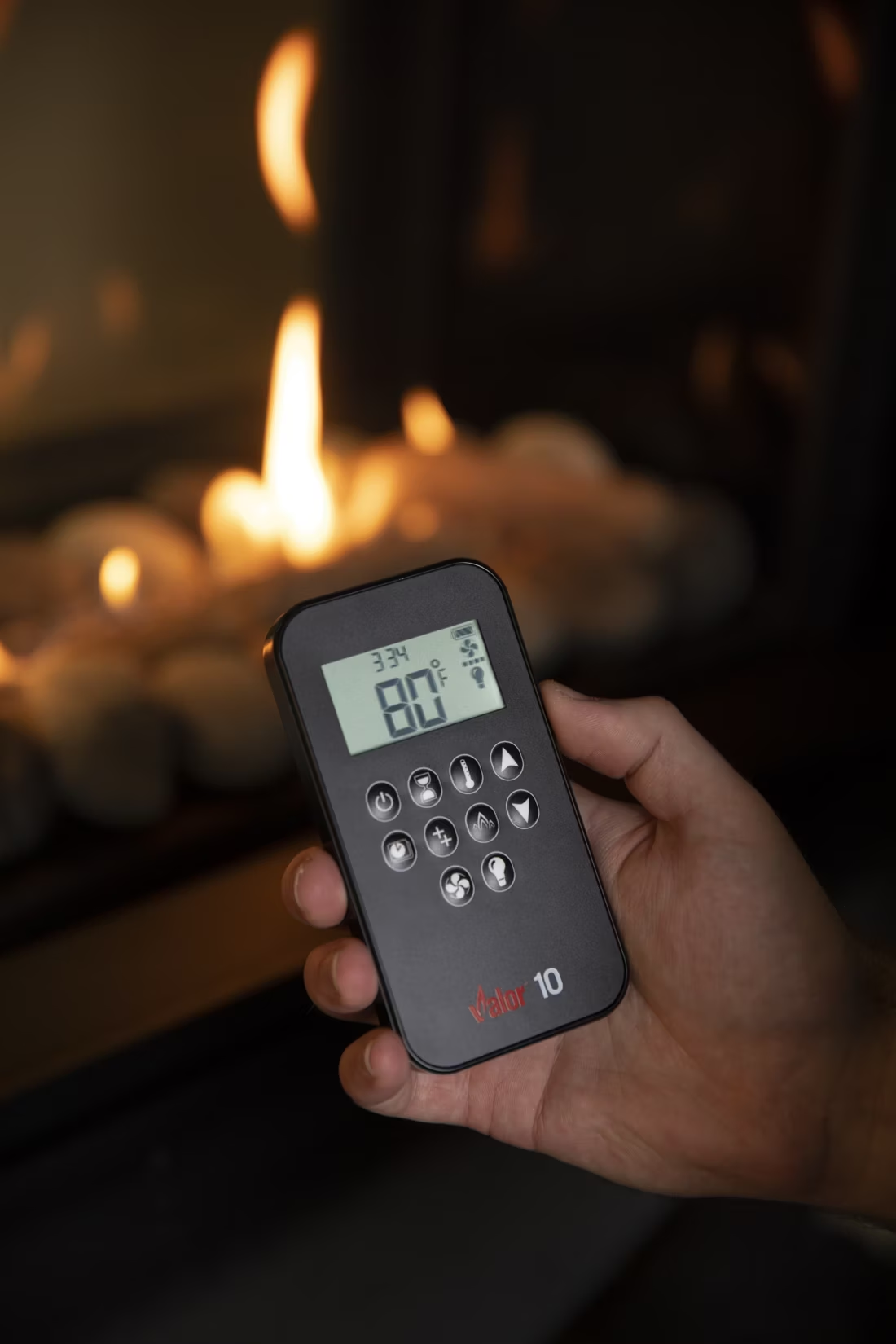
Four fuels. One honest answer for Kimball County.
Three steps. No salesperson until you're ready.
Tell us about your project
Your zip code, your situation, and the fuel you're leaning toward—or let the answers point you to one.
See what's actually available
The brands dealers within 100 miles genuinely carry—real options, never a catalog mirage.
Get your dealer & Project Guide
A trusted local dealer, plus the free Project Guide & Parts List that names every component of the job.
Frequently Asked Questions
Which fuel works best in Kimball County?
It depends on your home and how you use it. Wood remains a strong choice for rural Kimball County homes—oak and hickory from shelterbelt cutting burn long and hot, and a wood stove keeps a farmhouse warm through the wind-driven cold even if the power goes out, which matters on the exposed plains here. Gas is the convenience pick where propane service is available (most of the county relies on propane rather than piped natural gas)—reliable heat with no wood-splitting labor. Pellet stoves are a middle-ground option; Lignetics pellets are commonly stocked at regional farm supply stores, making fuel sourcing straightforward even this far from a major pellet mill. Electric fireplaces work well as supplemental heat for bedrooms or offices but won't carry a home through a 7,100-HDD winter on their own. Many households here pair wood or propane as primary heat with electric as a secondary-room accent.
Do I need a permit to install a fireplace in Kimball County?
Generally yes for wood, gas, and pellet installations. Kimball County requires building permits for new wood stoves, wood inserts, gas fireplaces and inserts, and pellet stoves, issued through the county building office in Kimball for unincorporated areas and through the city for in-town installs. Gas work also requires a licensed installer for the propane line connection, since most of the county runs on tank propane rather than piped gas. Electric fireplaces usually don't require a permit unless the installation involves a new hardwired circuit. Most hearth retailers serving the county handle the permitting paperwork as part of the installation quote, so it's rarely something a homeowner has to manage alone.
Are there air quality restrictions on wood burning in Kimball County?
No. Kimball County has no designated air quality non-attainment status and no winter burn bans or curtailment periods like counties in inversion-prone basins out west. That said, EPA 2020 NSPS emissions standards still apply to any new wood stove or insert sold and installed, regardless of local air quality status—so a new unit will be a certified, cleaner-burning stove even without a local mandate driving that requirement.
Can one local hearth retailer handle all four fuel types?
In a county this size, it's common for a single retailer to carry multiple fuel types rather than specialize narrowly, since the customer base doesn't support several single-fuel shops. Expect most Kimball-area dealers to carry wood and gas as their core lines, with pellet stoves as a secondary offering and electric fireplaces available as a smaller, lower-cost category. If a local retailer doesn't stock a particular fuel type, dealers in Sidney or across the Wyoming line in Cheyenne often fill that gap for Kimball County customers willing to drive 30-45 minutes.
How does service work in rural areas of Kimball County?
Most technicians serving Kimball County travel from Kimball itself or from Sidney, about 30 miles east on I-80, to reach outlying ranches near Bushnell and Dix. Given the distances involved, expect a modest trip charge for rural calls and plan to schedule chimney sweeps or gas inspections in late summer or early fall—before the first cold fronts roll off the plains—rather than waiting for a winter emergency call. Because wind and blowing snow can close county roads for a day or two at a time, homeowners relying on wood heat as backup often keep it as their primary system precisely so weather delays don't leave them without heat.
What's the typical cost range for fireplace installation across all fuel types in Kimball County?
Costs run in line with rural Panhandle norms, sometimes with an added line-item for travel given the distances dealers cover. Wood stove or insert installation: roughly $4,000-$8,500 for typical installs, higher for new chimney construction. Gas fireplace, insert, or stove: roughly $4,000-$10,000, with propane line work factored in for homes without existing gas service. Pellet stove or insert: roughly $4,000-$7,000. Electric fireplace: $200-$3,000 for the unit itself, plus $400-$1,000 in labor for anything beyond a plug-and-play install. See the county + fuel pages above for cost detail tied to specific local retailer pricing.
Wood, gas, pellet, or electric—how do I choose?
Match the fuel to your life, not the other way around. Wood: lowest fuel cost and total power-outage independence, but you're hauling and stacking. Gas: press a button, set a thermostat, no maintenance to speak of. Pellet: wood economics with automatic feeding, in exchange for weekly cleaning and a need for electricity. Electric: plugs in anywhere with honest supplemental heat. Nobody regrets the fuel that fits how they actually live.
Can a fireplace actually lower my heating bill?
Yes—by creating a comfort zone. A furnace heats every square foot of the house just to warm the one room you're in; a gas fireplace on low burns roughly a sixth of the gas a typical furnace does. Set the furnace around 55–60 degrees as a baseline, then heat the rooms your family actually uses. Families who heat this way commonly save $20–$60 a month.
Should the dealer who sells my fireplace also install it?
Ideally, yes. A fireplace project involves vent pipe, gas line, electrical, and often tile or stone. Hire three or four separate trades and you own the liability and the game of telephone between them. One company selling and installing means one accountable party, start to finish—ask about factory training, on-time completion records, and what happens if an inspection fails.
Can I install a fireplace myself?
If you're putting a fire in your house on purpose, it's best to work with an expert. Unless you're genuinely experienced in framing, gas line, vent pipe, and the national code on clearances to combustibles, have a professional do it—and ideally the same company that sells you the fireplace, so warranty, service, and liability all live under one roof.
Stove and Fireplace Dealers in Kimball County
Listings include WhyFire partner dealers, dealers we have verified as authorized for the brands we recommend, and established local businesses that carry hearth products. Every listing shows which one it is. The ones marked Preferred run on WhyFire's software, so they can show you real pricing and book your appointment right here. No manufacturer pays for placement. How we verify dealers →
Johnson Cashway Building And Design Center
Carr Trumbull Lumber
Get your Kimball County fireplace project mapped out.
Pick your fuel below and I'll match you with a trusted local dealer, plus a free Project Guide & Parts List—the exact parts, including the vent kit, for your home.
Find Your Fireplace →