
Heat Your Home Through Every Great Plains Winter.
Wood, gas, pellet, and electric fireplace resources for Ogallala, Brule, Paxton, Keystone, and the ranches and lake cabins around Lake McConaughy. Find the right unit for your Keith County home and connect with a trusted local hearth retailer.
Every Project Starts From One of These Five Situations
Wind, wide-open plains, and long winters in Keith County, Nebraska.
Keith County sits in Nebraska's High Plains, anchored by Ogallala and the 22-mile stretch of Lake McConaughy—locally called 'Big Mac'—that draws boaters and walleye anglers all summer and sits mostly quiet through winter. With about 6,055 residents spread across wide ranch country, the county falls in climate zone 5A, averaging 6,202 heating degree days and winter lows around 15°F. That's not the sustained deep-freeze of Fargo or Bismarck, but it's still real cold-climate territory—enough that a stove needs to hold a fire through a windy, single-digit overnight without much trouble. Oak, hickory, and cottonwood grow along the North Platte River bottoms and the lakeshore draws, and self-cut or ranch-sourced firewood is common practice here.
This hub covers hearth retailers, service technicians, and fuel suppliers for every corner of Keith County—Ogallala and its surrounding rural addresses, Brule and Paxton to the east and west, Keystone near the lake's north shore, and the seasonal cabins scattered around Lake McConaughy that often rely on pellet or electric units for weekend heat. Pick your fuel below for installation costs, recommended units, and dealer options that match your project, whether you're heating a year-round ranch house or a lake place that only sees use half the year.
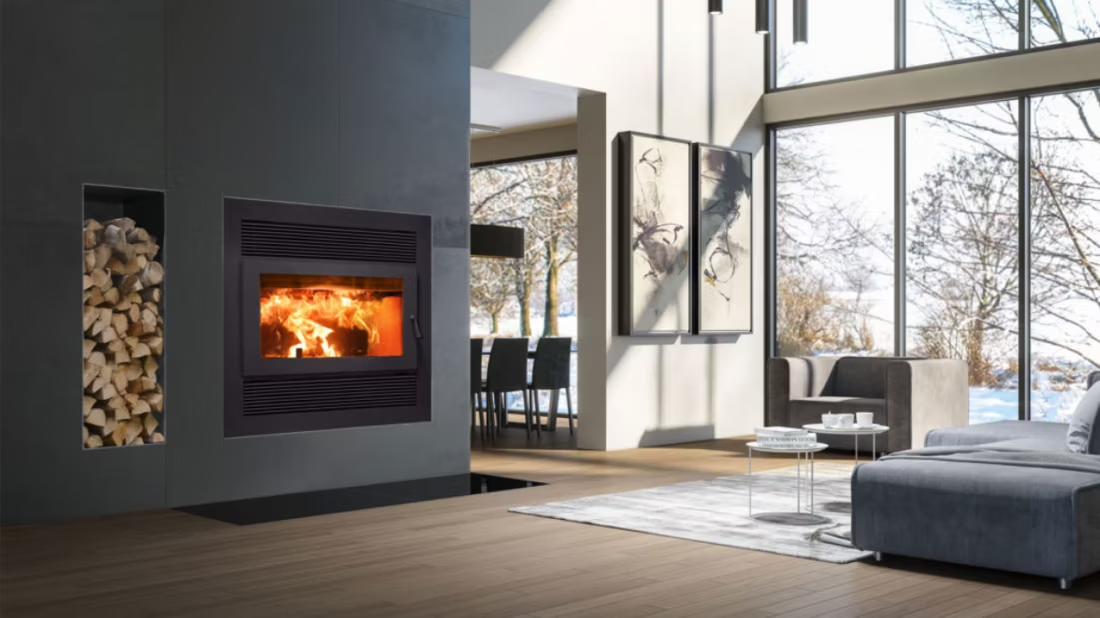
Four fuels. One honest answer for Keith County.
Three steps. No salesperson until you're ready.
Tell us about your project
Your zip code, your situation, and the fuel you're leaning toward—or let the answers point you to one.
See what's actually available
The brands dealers within 100 miles genuinely carry—real options, never a catalog mirage.
Get your dealer & Project Guide
A trusted local dealer, plus the free Project Guide & Parts List that names every component of the job.
Frequently Asked Questions
Which fuel works best in Keith County?
It depends on how you use the home. Wood is a natural fit for full-time ranch houses—oak, hickory, and cottonwood are locally available, and a lot of Keith County households already cut or source their own firewood, so a wood stove or insert keeps heating costs down and works during the wind-driven power outages that occasionally hit this part of the plains. Gas is the convenience option, especially for in-town Ogallala homes with utility gas service or rural properties running on propane—no wood-splitting, no hauling. Pellet stoves are a solid middle ground, particularly for lake cabins around McConaughy that see intermittent use; Lignetics and Indeck Energy Services pellets are both regionally available, so fuel supply isn't a concern. Electric fireplaces work well as supplemental heat in bedrooms, additions, or cabins where running a chimney doesn't make sense. Most full-time Keith County homes lean wood or gas as primary heat, with pellet and electric filling in for secondary rooms or seasonal properties.
Do I need a permit to install a fireplace in Keith County?
In most cases yes. New wood stoves, wood inserts, gas fireplaces, gas inserts, gas stoves, and pellet stoves typically require a building permit, and gas installations also need a licensed gas-fitter for the line work. For a home within Ogallala city limits, the permit goes through the city; for rural addresses out toward Brule, Paxton, or the lake, it routes through the county. Electric fireplaces usually skip the permit process unless the install involves a new dedicated circuit or built-in framing. Most local dealers who install regularly in Keith County handle the permit paperwork as part of the job, so you're not chasing it down yourself.
Are there air quality restrictions on wood burning in Keith County?
No—Keith County has no air quality non-attainment designation and no winter burn-ban program. The open, wind-swept geography of the High Plains doesn't trap wood smoke the way a mountain basin or river valley can, so there's no equivalent to the inversion-driven advisories you'd see in a place like the Klamath Basin. That said, any new wood stove or insert installed today still needs to meet current EPA emissions standards, which most modern units do by default—it's just not an air-quality-driven local restriction, it's the baseline manufacturing standard.
Can one local hearth retailer handle all four fuel types?
In a county this size, it's common for a single dealer—often based in Ogallala or making regular trips from North Platte—to carry three or four fuel types rather than specializing narrowly, simply because the customer base isn't large enough to support fuel-specific showrooms. That's usually good news if you're comparing wood against pellet, or gas against electric, since one visit can show you working displays across fuel types. If you're near the lake and shopping for a cabin unit specifically, ask which dealers regularly service seasonal properties—not every retailer is set up for the on-and-off usage pattern of a weekend place.
How does service work in rural Keith County?
Most technicians serving Keith County are based in or near Ogallala and drive out to ranch addresses along Highway 30, the Brule and Paxton areas, and the lake communities around McConaughy. Expect a modest trip fee for the more remote calls, and plan on scheduling annual service in late summer or early fall—before duck season and before the first cold front pulls everyone's attention to actually running their stove. For lake cabins that sit empty part of the year, a pre-season check is especially worth it, since pellet stoves and gas units that sat unused for months can develop issues that only show up once you try to fire them back up.
What's the typical cost range for fireplace installation across all fuel types in Keith County?
Wood stove or insert installation runs roughly $4,000–$8,500 for a typical job, more if new chimney work is needed for new construction. Gas fireplace, insert, or stove installation runs about $4,000–$9,000, with the range depending heavily on whether a new gas line has to be run or an existing hookup can be used. Pellet stove or insert installs typically land around $4,000–$6,500. Electric fireplaces are the least expensive path—units generally run $200–$2,500, with labor adding $300–$1,000 for anything beyond a simple plug-in setup. See the county-plus-fuel pages above for cost detail tied to specific local dealer pricing.
Can I install a fireplace myself?
If you're putting a fire in your house on purpose, it's best to work with an expert. Unless you're genuinely experienced in framing, gas line, vent pipe, and the national code on clearances to combustibles, have a professional do it—and ideally the same company that sells you the fireplace, so warranty, service, and liability all live under one roof.
What is an in-home preview and do I need one?
It's a visit where a hearth professional measures your space, confirms the model you picked actually works in your home, and walks the specs—framing, gas line, venting, finish work—before anything is ordered. Some details you just can't know until you see the house. Never make a down payment without one; it's the single most-skipped step that burns buyers.
Can a fireplace actually lower my heating bill?
Yes—by creating a comfort zone. A furnace heats every square foot of the house just to warm the one room you're in; a gas fireplace on low burns roughly a sixth of the gas a typical furnace does. Set the furnace around 55–60 degrees as a baseline, then heat the rooms your family actually uses. Families who heat this way commonly save $20–$60 a month.
How much should I budget for a fireplace?
For an average home—covering the fireplace, the vent pipe, and basic installation—a budget between $3,900 and $5,500 gives you a lot of options across wood, gas, and pellet. By the time you add finish work, gas line, and electrical, the average complete installation lands between $5,000 and $12,000 all-in. In a remodel or new build, a good rule is to put about 2.5% of the total project cost toward the fireplace.
Stove and Fireplace Dealers in Keith County
Listings include WhyFire partner dealers, dealers we have verified as authorized for the brands we recommend, and established local businesses that carry hearth products. Every listing shows which one it is. The ones marked Preferred run on WhyFire's software, so they can show you real pricing and book your appointment right here. No manufacturer pays for placement. How we verify dealers →
Hearth & Tile Creations - Platte Construction, Inc
Lusk Heating & Ac
Find your fireplace in Keith County.
Pick your fuel below and I'll match you with a trusted local dealer and send over a free Project Guide & Parts List—the exact parts, vent kit included, and the dealer I'd recommend for your Keith County home.hidden_fix_placeholder
Find Your Fireplace →