
Find the right heat source for a Johnson County winter.
Wood, gas, pellet, and electric fireplace resources for Tecumseh and every farm and small town across Johnson County. Find the right unit and get matched with a trusted local hearth retailer.
Every Project Starts From One of These Five Situations
Rolling prairie heating in southeast Nebraska.
Johnson County sits in the rolling farmland of southeast Nebraska, with roughly 6,053 heating degree days a year and winter lows that average 13°F—a climate profile not far off from Fargo, ND, though without the same lake-effect snow load. Zone 5A winters here mean sustained cold stretches from December through February, and with a county population under 3,500 spread across small towns and farmsteads, a lot of homes still lean on wood heat cut from the oak, hickory, and cottonwood stands along Turkey Creek and the Nemaha drainage. There's no formal air quality non-attainment designation here, so wood burning isn't restricted the way it can be in tighter urban basins—a practical advantage for rural heating.
What you'll find on this hub: hearth retailers, service technicians, and fuel suppliers serving every community in the county—from Tecumseh, the county seat, out to Sterling, Cook, Elk Creek, Crab Orchard, and Vesta. Pick your fuel below to drill into specifics—local dealers, installation costs, recommended units, and the resources that match your project. Whether you're heating a farmhouse outside Tecumseh or a smaller in-town home in Sterling, this is the starting point.
Four fuels. One honest answer for Johnson County.
Three steps. No salesperson until you're ready.
Tell us about your project
Your zip code, your situation, and the fuel you're leaning toward—or let the answers point you to one.
See what's actually available
The brands dealers within 100 miles genuinely carry—real options, never a catalog mirage.
Get your dealer & Project Guide
A trusted local dealer, plus the free Project Guide & Parts List that names every component of the job.
Frequently Asked Questions
Which fuel works best in Johnson County?
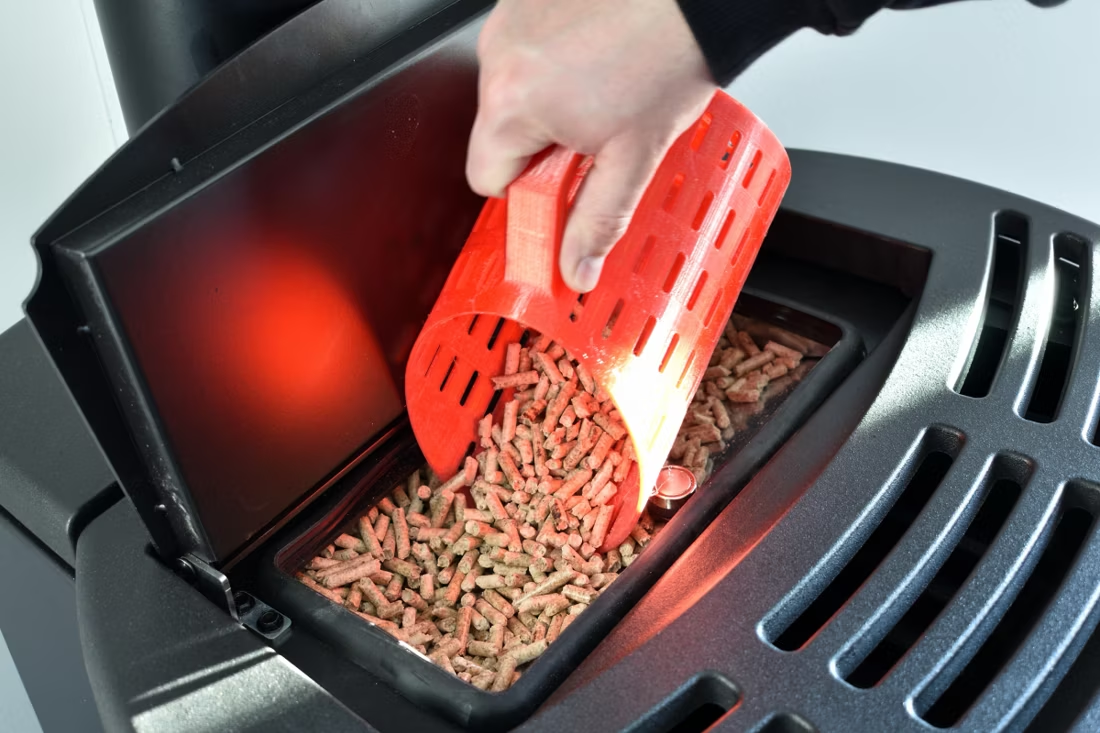
It depends on your home and how it's heated already. Wood remains a strong choice for the county's many farmhouses—oak and hickory from local timber stands burn long and hot, and with no air-quality restrictions in place, there's nothing stopping a wood stove from being a primary heat source. Propane is the practical convenience fuel here since natural gas mains don't reach most of the county outside Tecumseh—propane fireplaces and inserts give instant heat without hauling wood. Pellet stoves are a solid middle option, especially with Lignetics distribution in the region keeping fuel reasonably accessible. Electric fireplaces work fine for supplemental heat in a bedroom or den but won't carry a home through a January cold snap at 13°F average lows. Many Johnson County households run wood or propane as primary heat with a pellet or electric unit in a secondary room.
Do I need a permit to install a fireplace in Johnson County?
In most cases, yes, though requirements are lighter here than in larger jurisdictions. New wood stoves, wood inserts, gas fireplaces, gas inserts, and pellet stoves typically require a building permit through the local municipality—in Tecumseh, that's the city office; outside city limits, check with the Johnson County zoning office since much of the county is unincorporated. Propane installations also need the line run and connected by a licensed propane technician, often coordinated by whichever local supplier delivers your tank. Electric fireplaces generally don't need a permit unless you're hardwiring a built-in unit into a new circuit. Most hearth retailers serving the county handle the permitting paperwork as part of the installation, so it's worth asking upfront.
Are there air quality restrictions on wood burning in Johnson County?
No. Johnson County has no non-attainment designation and no winter burn advisories like the inversion-prone basins you'll find out west. That means wood stoves and fireplaces can run as a primary heat source without the voluntary or mandatory curtailment periods some Rocky Mountain and Pacific Northwest counties impose. It's still worth installing an EPA-certified stove for efficiency and lower creosote buildup—you'll get more heat per cord of oak or hickory and cut down on chimney fires—but there's no regulatory barrier to wood heat here.
Can one local hearth retailer handle all four fuel types?
In a county this size, most dealers focus on two or three fuels rather than carrying all four with full showroom displays. A retailer out of Tecumseh or Beatrice might carry wood and pellet stoves as their core business, with propane fireplaces available through special order, while a Lincoln-based dealer with a broader radius is more likely to show wood, gas, and electric side by side. Electric fireplaces are often carried as an add-on line rather than a showroom focus. If you want to compare fuels in person, expect to drive to a larger dealer in Beatrice or Lincoln—smaller local shops are excellent for wood and pellet expertise but may not stock every fuel type.
How does service work in rural parts of Johnson County?
Most technicians serving Johnson County are based in Tecumseh, Beatrice, or Lincoln and drive out on a route basis to farmsteads around Sterling, Cook, Elk Creek, Crab Orchard, and Vesta. Given the distances between towns, expect a modest trip fee for rural calls and plan for a bit more lead time than you'd get in a denser county. Fall (September–October) is the easiest window to book annual chimney sweeping or gas system checks before the cold sets in around December. If you're heating a remote farmhouse with wood as the primary source, it's worth scheduling sweeps every year given the volume of oak and hickory burned through a full 6,000+ HDD season.
What's the typical cost range for fireplace installation across all fuel types in Johnson County?
Wood stove or insert installation: roughly $4,000–$8,500 for a typical retrofit, higher for new chimney construction on an older farmhouse. Propane fireplace, insert, or stove: $4,000–$9,500, with cost driven largely by how far the gas line has to run from the tank. Pellet stove or insert: $4,000–$7,000 for a standard install. Electric fireplace: $200–$2,800 for the unit itself, plus $300–$1,000 in labor for anything beyond a simple plug-in unit. Rural installs sometimes run slightly higher than these ranges due to travel time built into the labor quote. See the county + fuel pages above for retailer-specific pricing.
What is an in-home preview and do I need one?
It's a visit where a hearth professional measures your space, confirms the model you picked actually works in your home, and walks the specs—framing, gas line, venting, finish work—before anything is ordered. Some details you just can't know until you see the house. Never make a down payment without one; it's the single most-skipped step that burns buyers.
Does a fireplace add value to my home?
On average, a fireplace adds back to the home about the same amount you spent installing it. Add the monthly savings from heating the rooms you actually use instead of the whole house—often hundreds of dollars a year—and the value case is strong before you even count what a fire does for how your family uses the room.
Can a fireplace actually lower my heating bill?
Yes—by creating a comfort zone. A furnace heats every square foot of the house just to warm the one room you're in; a gas fireplace on low burns roughly a sixth of the gas a typical furnace does. Set the furnace around 55–60 degrees as a baseline, then heat the rooms your family actually uses. Families who heat this way commonly save $20–$60 a month.
Can I install a fireplace myself?
If you're putting a fire in your house on purpose, it's best to work with an expert. Unless you're genuinely experienced in framing, gas line, vent pipe, and the national code on clearances to combustibles, have a professional do it—and ideally the same company that sells you the fireplace, so warranty, service, and liability all live under one roof.
Stove and Fireplace Dealers in Johnson County
Listings include WhyFire partner dealers, dealers we have verified as authorized for the brands we recommend, and established local businesses that carry hearth products. Every listing shows which one it is. The ones marked Preferred run on WhyFire's software, so they can show you real pricing and book your appointment right here. No manufacturer pays for placement. How we verify dealers →
Edward's Stone Inc
Fireplace Stone & Patio - Lincoln
Capital Patio/flame Shop
Table Rock Stone & Fireplace
Edelman's Home Center
Get matched with a Johnson County hearth dealer.
Pick your fuel below and we'll put together a free Project Guide & Parts List—the exact parts for your project, including the vent kit, plus our recommended local dealer to install it.
Find Your Fireplace →