
Find the Right Fireplace for Your Gage County Home.
Wood, gas, pellet, and electric fireplace resources for every town in Gage County—from Beatrice out to Wymore, Blue Springs, and the farm towns along Highway 136. Find the right unit and connect with a trusted local hearth retailer.
Every Project Starts From One of These Five Situations
Southeast Nebraska Heating, Four Fuels, One Hub.
Gage County sits in the rolling farmland of southeast Nebraska, anchored by Beatrice along the Big Blue River. Winters here are a solid Midwestern cold—average lows around 14°F, with a heating season about as demanding as a full six-month stretch of steady cold, putting the climate in the same range as Madison, Wisconsin. That's enough cold to make heating a real household decision, not an afterthought. Acreages and farmsteads throughout the county have easy access to oak, hickory, and cottonwood—the standing timber along the Blue River bottomland has kept wood stoves a practical, low-cost heat source for generations, especially on properties with their own woodlots.
What you'll find on this hub: hearth retailers, service technicians, and fuel suppliers covering every community in the county—Beatrice, Wymore, Adams, Blue Springs, Cortland, Clatonia, Filley, Liberty, Odell, Pickrell, and Virginia. Pick your fuel below to drill into local dealers, installation costs, and the resources that match your project—whether you're heating a farmhouse outside Wymore or a home in town on Black Hills Energy gas service in Beatrice.
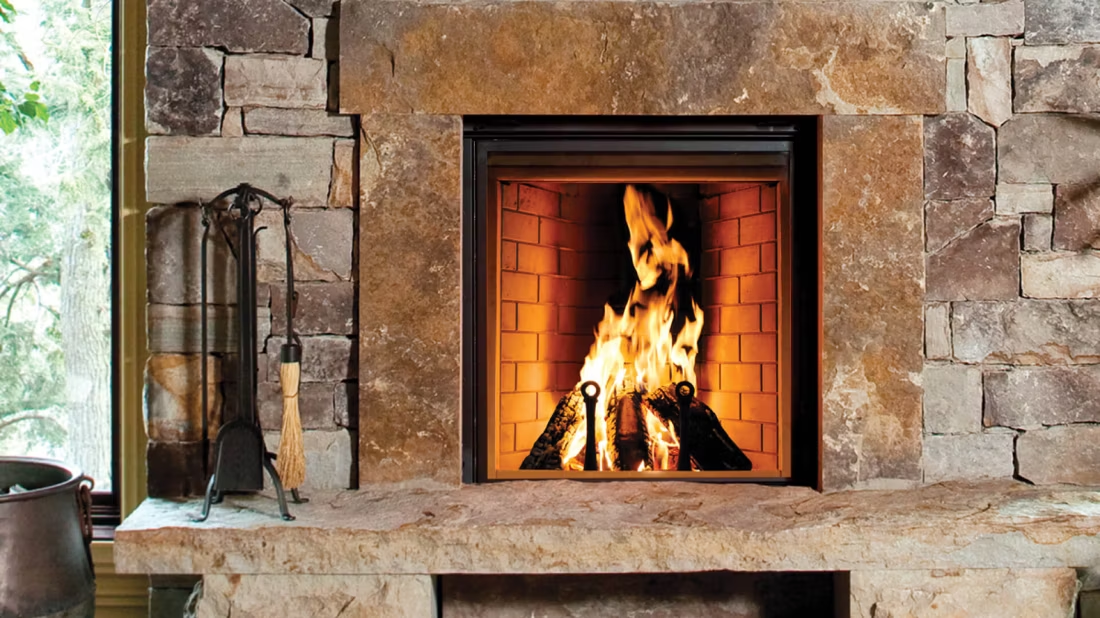
Four fuels. One honest answer for Gage County.
Three steps. No salesperson until you're ready.
Tell us about your project
Your zip code, your situation, and the fuel you're leaning toward—or let the answers point you to one.
See what's actually available
The brands dealers within 100 miles genuinely carry—real options, never a catalog mirage.
Get your dealer & Project Guide
A trusted local dealer, plus the free Project Guide & Parts List that names every component of the job.
Frequently Asked Questions
Which fuel works best in Gage County?
It depends on the property and the household. Wood remains a strong option for the many acreages and farmsteads in the county—oak and hickory from local woodlots burn hot and long, and cottonwood is plentiful if less dense. A cast-iron or steel wood stove can carry a farmhouse through a 14°F January night without leaning on the furnace. Gas is the convenience pick for in-town Beatrice homes on Black Hills Energy service, or propane for rural properties—instant heat with none of the wood-hauling. Pellet stoves are a solid middle ground; Lignetics and Indeck Energy Services product is available through regional dealers, and pellet units give wood-style ambiance without a woodpile to manage. Electric fireplaces work well as supplemental heat in bedrooms or additions but aren't sized for whole-home heating given how long and cold winters run here. Most Gage County households end up pairing a primary wood or gas unit with electric or pellet in a secondary space.
Do I need a permit to install a fireplace in Gage County?
In most cases, yes. New wood stoves, wood inserts, gas fireplaces, gas inserts, and pellet stoves typically require a building permit—inside Beatrice city limits, that runs through the city building department; in unincorporated parts of the county, it goes through Gage County Planning & Zoning. Wood-burning appliances need to meet current EPA New Source Performance Standards, and gas installations require a licensed gas-fitter along with a separate gas line permit if you're extending Black Hills Energy service to a new location. Electric fireplaces generally skip the permit process unless the install involves new wiring or a dedicated circuit. Most local retailers handle the paperwork as part of the installation, so it's rarely something the homeowner has to navigate alone.
Are there air quality restrictions on wood burning in Gage County?
No—Gage County doesn't have the winter inversion issues or non-attainment designations that trigger burn advisories in some Western counties, and there's no local wood-burning curtailment program to check before lighting a fire. The one standard that does apply is federal: any new wood stove sold and installed needs to meet EPA New Source Performance Standards for emissions, which most reputable dealers stock by default. Beyond that, wood heat in Gage County is governed more by common sense than regulation—seasoned oak or hickory, a properly sized flue, and annual sweeping keep things running clean.
Can one local hearth retailer handle all four fuel types?
Several Gage County dealers carry three or four fuel types, which is useful if you're comparing options before committing. A Beatrice-area retailer carrying wood, gas, and pellet is a common setup, since those three cover the bulk of local demand; electric lines are often a smaller add-on rather than a focus. If a retailer specializes heavily in one fuel—say, a wood-and-hardware store versus a full-line hearth showroom—it's worth asking directly what they install versus what they just sell, since installation quality (venting, clearances, permit handling) matters as much as the unit itself.
How does service work in the rural parts of Gage County?
Most chimney sweeps and gas techs are based in or around Beatrice and drive out to Wymore, Adams, Blue Springs, Cortland, and the more remote farm roads for service calls. Expect a modest travel charge for the outlying stops, and expect fall booking (September–October) to fill up faster than mid-winter, since that's when most people schedule their annual sweep or gas inspection before the cold sets in. If you're on an acreage relying on wood as a primary heat source, it's worth getting on a tech's schedule early—a chimney fire from a missed cleaning is a bigger problem out on a rural route than in town.
What's the typical cost range for fireplace installation across all fuel types in Gage County?
Ranges vary by fuel and by how much existing infrastructure you have. Wood stove or insert installation: roughly $3,500–$8,000 for a typical job, more if new chimney work is needed. Gas fireplace, insert, or stove: roughly $4,000–$9,500, with cost depending heavily on whether gas line extension is required for Black Hills Energy service or propane. Pellet stove or insert: roughly $4,000–$6,500 for a standard install. Electric fireplace: $200–$2,500 for the unit itself, plus $300–$1,000 in labor unless it's a simple plug-and-play wall unit. See the county + fuel pages above for cost detail tied to specific local retailers.
Can I install a fireplace myself?
If you're putting a fire in your house on purpose, it's best to work with an expert. Unless you're genuinely experienced in framing, gas line, vent pipe, and the national code on clearances to combustibles, have a professional do it—and ideally the same company that sells you the fireplace, so warranty, service, and liability all live under one roof.
Does a fireplace add value to my home?
On average, a fireplace adds back to the home about the same amount you spent installing it. Add the monthly savings from heating the rooms you actually use instead of the whole house—often hundreds of dollars a year—and the value case is strong before you even count what a fire does for how your family uses the room.
How much should I budget for a fireplace?
For an average home—covering the fireplace, the vent pipe, and basic installation—a budget between $3,900 and $5,500 gives you a lot of options across wood, gas, and pellet. By the time you add finish work, gas line, and electrical, the average complete installation lands between $5,000 and $12,000 all-in. In a remodel or new build, a good rule is to put about 2.5% of the total project cost toward the fireplace.
Wood, gas, pellet, or electric—how do I choose?
Match the fuel to your life, not the other way around. Wood: lowest fuel cost and total power-outage independence, but you're hauling and stacking. Gas: press a button, set a thermostat, no maintenance to speak of. Pellet: wood economics with automatic feeding, in exchange for weekly cleaning and a need for electricity. Electric: plugs in anywhere with honest supplemental heat. Nobody regrets the fuel that fits how they actually live.
Stove and Fireplace Dealers in Gage County
Listings include WhyFire partner dealers, dealers we have verified as authorized for the brands we recommend, and established local businesses that carry hearth products. Every listing shows which one it is. The ones marked Preferred run on WhyFire's software, so they can show you real pricing and book your appointment right here. No manufacturer pays for placement. How we verify dealers →
Edward's Stone Inc
Table Rock Stone & Fireplace
Fireplace Stone & Patio - Lincoln
Capital Patio/flame Shop
Robidoux Inc
Find your fireplace in Gage County.
Pick your fuel below and we'll match you with a trusted local dealer—plus a free Project Guide & Parts List with the exact parts, including the vent kit, for your Gage County installation.
Find Your Fireplace →