
Find your fireplace in Franklin County.
Wood, gas, pellet, and electric fireplace resources for every town in Franklin County—from the county seat of Franklin to Bloomington, Campbell, Hildreth, Naponee, and Riverton. Find the right unit and connect with a trusted local hearth dealer.
Every Project Starts From One of These Five Situations
Heating a small rural county on Nebraska's high plains.
Franklin County sits along the Republican River in south-central Nebraska, home to about 2,000 people spread across farm ground, shelterbelts, and a handful of small towns. Winters here run cold and windy in the same way they do farther north in Bismarck, ND—open plains, few windbreaks beyond the tree lines farmers planted decades ago, and stretches where the wind chill does more damage than the thermometer reading. Firewood is close at hand: oak and hickory from the river bottoms, cottonwood from shelterbelt thinning and windfall, most of it cut and split by the people who burn it.
Because Franklin County is so lightly populated, most hearth retailers and service technicians are based in nearby Hastings, Kearney, or Holdrege and drive in for consultations, installs, and service calls. What you'll find on this hub: dealers and technicians who cover Franklin County, fuel suppliers serving the area. Pick your fuel below for local dealer recommendations, installation costs, and unit options that fit a rural Nebraska home.
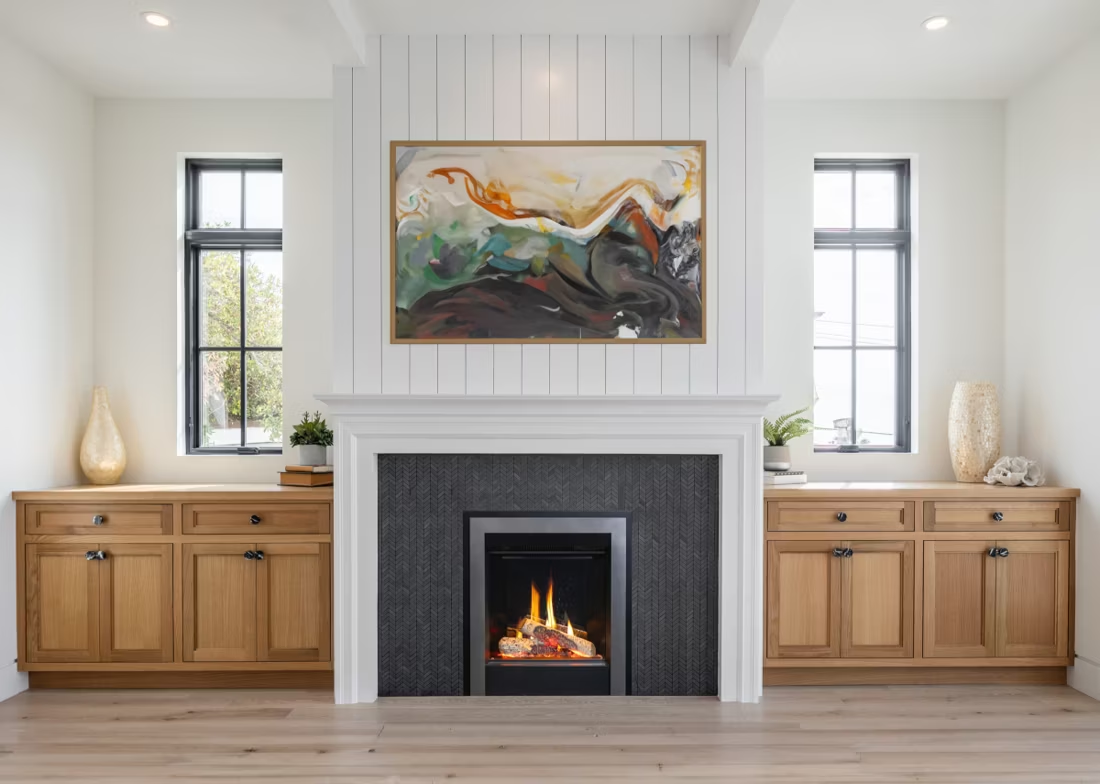
Four fuels. One honest answer for Franklin County.
Three steps. No salesperson until you're ready.
Tell us about your project
Your zip code, your situation, and the fuel you're leaning toward—or let the answers point you to one.
See what's actually available
The brands dealers within 100 miles genuinely carry—real options, never a catalog mirage.
Get your dealer & Project Guide
A trusted local dealer, plus the free Project Guide & Parts List that names every component of the job.
Frequently Asked Questions
Which fuel makes sense for a rural Franklin County home?
It comes down to what's already at your property and how far you are from town. Wood is the traditional choice for farms with access to river-bottom oak and hickory or shelterbelt cottonwood—a woodstove or insert also keeps a house warm if the power goes out during a winter storm, which matters on the open plains. Propane is the practical gas option for most rural Franklin County homes, since natural gas mains generally stop at the edge of town; propane fireplaces and inserts give you push-button heat without hauling wood. Pellet stoves are a middle path—cleaner and more automated than wood, with Lignetics and Indeck Energy Services pellets both distributed through the region—but they do need reliable electricity to run the auger and blower, so they're a harder sell during outages than wood. Electric fireplaces work well as supplemental heat in a bedroom or den but shouldn't be your only heat source through a Nebraska winter. Most farms end up with wood or propane as the primary and something electric for ambiance in a secondary room.
Do I need a building permit to install a fireplace in Franklin County?
It depends on whether you're inside city limits. Franklin County itself does not enforce a county-wide building code for rural, unincorporated property, so a wood stove, insert, or gas fireplace installed on a farm outside town typically doesn't require a county permit—though your propane supplier will still need to inspect and connect the gas line to code. Inside Franklin, Bloomington, Campbell, Hildreth, Naponee, or Riverton, check with that town's clerk's office, since some of the incorporated towns require a permit for new wood-burning appliances or gas line work even though the county doesn't. Either way, any wood stove sold and installed today should meet current EPA New Source Performance Standards, and most dealers handle any required permitting as part of the installation.
Are there any air quality or burn restrictions in Franklin County?
No. Franklin County has no wood-burning bans, curtailment days, or non-attainment designations—this is open farm country, not a river-valley inversion zone like you'd find in parts of the Rockies. That means wood stoves and fireplaces can be used at your discretion through the winter without the kind of yellow/red burn-advisory system some western counties use. The only practical limits are the ones you set yourself: creosote buildup from unseasoned cottonwood, or an older uncertified stove that isn't burning as cleanly as a current EPA-certified model.
Can one dealer handle wood, gas, pellet, and electric in a county this small?
Given Franklin County's population of roughly 2,000, there isn't a hearth retailer physically located inside the county—dealers in Hastings, Kearney, and Holdrege cover this territory instead, and most of the larger ones do carry all four fuel types so you can compare options in one showroom visit. Smaller propane suppliers serving the area may sell and service gas appliances only, without carrying wood or pellet stoves. If you want to see wood, gas, pellet, and electric units side by side, plan on a drive to one of the regional trade centers; if you already know your fuel, a route technician or propane dealer local to the area may be able to handle installation and service without the trip.
How does service and delivery work in a rural county like this?
Expect a travel charge built into most service calls and fuel deliveries, since technicians and suppliers are covering farm routes rather than a dense town. Chimney sweeps and gas technicians based in Hastings or Kearney typically batch Franklin County stops together, so scheduling early in the fall—before the first cold snap—gets you a faster appointment than calling mid-winter when everyone's furnace or stove has trouble at once. Propane delivery for rural tanks is usually scheduled on a route basis too; if you're heating primarily with propane, keeping your tank topped up before the coldest stretch of winter avoids being caught waiting behind other customers on the same route.
What does fireplace installation typically cost in Franklin County?
Costs run close to regional Nebraska pricing, plus a modest travel charge for rural properties. Wood stove or insert: roughly $4,000–$8,500 installed, depending on whether existing chimney or hearth work can be reused. Propane fireplace, insert, or stove: roughly $4,000–$9,000, with cost driven mainly by whether a new tank or gas line is needed versus tying into existing propane service. Pellet stove or insert: roughly $4,000–$7,000 for a typical install. Electric fireplace: $200–$3,000 for the unit itself, with $300–$1,000 in labor unless it's a simple plug-in unit. Because most installers are traveling from Hastings, Kearney, or Holdrege, ask about trip charges up front—they're usually built into the quote rather than itemized separately.
How much should I budget for a fireplace?
For an average home—covering the fireplace, the vent pipe, and basic installation—a budget between $3,900 and $5,500 gives you a lot of options across wood, gas, and pellet. By the time you add finish work, gas line, and electrical, the average complete installation lands between $5,000 and $12,000 all-in. In a remodel or new build, a good rule is to put about 2.5% of the total project cost toward the fireplace.
I know I want a fireplace—where do I actually start?
Do two things today: snap a photo of the wall or fireplace you want to transform, and take a tape measure to the space—width, height, depth. Those two artifacts answer most of a hearth professional's first questions. Then settle fuel (wood, gas, pellet, or electric) and set a realistic budget: $3,900–$5,500 covers fireplace, vent, and basic install for most homes.
Wood, gas, pellet, or electric—how do I choose?
Match the fuel to your life, not the other way around. Wood: lowest fuel cost and total power-outage independence, but you're hauling and stacking. Gas: press a button, set a thermostat, no maintenance to speak of. Pellet: wood economics with automatic feeding, in exchange for weekly cleaning and a need for electricity. Electric: plugs in anywhere with honest supplemental heat. Nobody regrets the fuel that fits how they actually live.
Should the dealer who sells my fireplace also install it?
Ideally, yes. A fireplace project involves vent pipe, gas line, electrical, and often tile or stone. Hire three or four separate trades and you own the liability and the game of telephone between them. One company selling and installing means one accountable party, start to finish—ask about factory training, on-time completion records, and what happens if an inspection fails.
Stove and Fireplace Dealers in Franklin County
Listings include WhyFire partner dealers, dealers we have verified as authorized for the brands we recommend, and established local businesses that carry hearth products. Every listing shows which one it is. The ones marked Preferred run on WhyFire's software, so they can show you real pricing and book your appointment right here. No manufacturer pays for placement. How we verify dealers →
Builders Warehouse Inc
Fireplace Stone And Patio - Kearney
Find your fireplace project in Franklin County.
Tell us your fuel and your town, and we'll match you with a trusted local dealer and send a free Project Guide & Parts List—the exact components, including the vent kit, and the pro who can install it.
Find Your Fireplace →