
Find the right fireplace for Deuel County's high plains winters.
Wood, gas, pellet, and electric fireplace resources for every home in Deuel County—from Chappell to Big Springs and the farms in between. Find the right unit and get matched with a local hearth dealer who can actually install it.
Every Project Starts From One of These Five Situations
Small-town heating on Nebraska's high plains.
Deuel County sits in the Nebraska Panhandle along the South Platte River and the I-80 corridor, with the county seat at Chappell and the town of Big Springs a few miles east. It's climate zone 5A country—long, windy winters with the kind of hard cold snaps you'd see in Bismarck, North Dakota, minus the lake-effect snow. With a population under 1,400, this is farm and ranch country, and heating choices have always followed the land: cottonwood cut from the river bottoms, oak and hickory hauled in from wood dealers, propane tanks feeding stoves and furnaces on the outlying acreages. There's no listed air-quality non-attainment issue here—the open plains and steady wind keep wood smoke from settling the way it does in mountain basins, so burn restrictions are largely a non-issue for indoor heating appliances.
Because Deuel County is small, most of what you'll find here—hearth retailers, chimney sweeps, gas technicians, fuel suppliers—actually operates out of nearby hub towns like Sidney or Ogallala and drives in to serve Chappell and Big Springs on a route basis. Pick your fuel below to see local dealer coverage, typical installation costs, and the units that make sense for a Panhandle farmhouse or a fixed-up place in town.
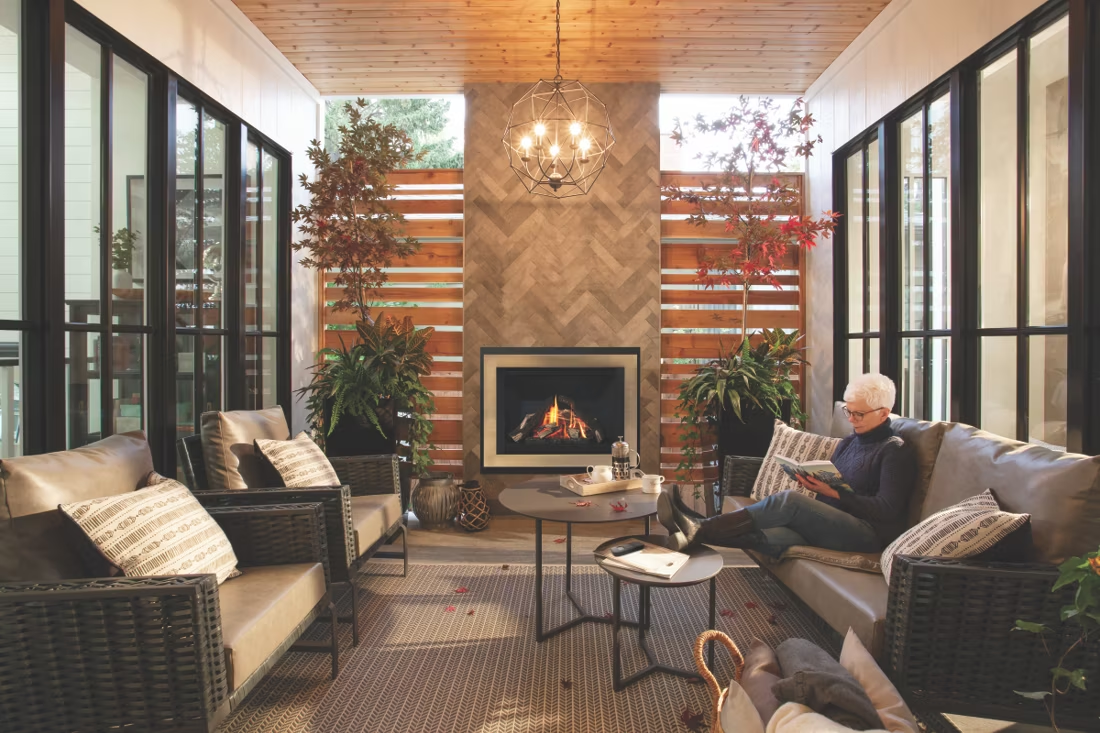
Four fuels. One honest answer for Deuel County.
Three steps. No salesperson until you're ready.
Tell us about your project
Your zip code, your situation, and the fuel you're leaning toward—or let the answers point you to one.
See what's actually available
The brands dealers within 100 miles genuinely carry—real options, never a catalog mirage.
Get your dealer & Project Guide
A trusted local dealer, plus the free Project Guide & Parts List that names every component of the job.
Frequently Asked Questions
Which fuel works best in Deuel County?
There's no wrong answer here, but the choice usually comes down to how remote your place is. Wood is a strong option if you're out on acreage—cottonwood from the river bottoms is plentiful and cheap, and oak or hickory burns hotter and longer for overnight heat during hard cold spells. Propane is the default convenience fuel for most rural Deuel County homes, since piped natural gas isn't the norm out here—a propane fireplace or insert gives instant heat without the wood-hauling. Pellet stoves are a solid middle ground, and Lignetics pellets are available through regional suppliers, so fuel access isn't the obstacle it can be in more isolated counties. Electric fireplaces work well as a supplemental heat source in a bedroom or living room, but given how cold Panhandle winters get, they're rarely anyone's only heat source. Most households here end up running two fuels—wood or propane as primary, electric as backup or ambiance.
Do I need a permit to install a fireplace in Deuel County?
In most cases, yes—new wood stoves, wood inserts, gas appliances, and pellet stoves typically require a building permit through the Deuel County building office, and any new gas line work should go through a licensed propane or gas fitter. Electric fireplaces are usually exempt unless you're doing a built-in installation that requires new wiring or a dedicated circuit. Because Deuel County is small and rural, the permitting process tends to be more straightforward than in a larger jurisdiction, but it's still required—and most hearth retailers who serve the county will handle the paperwork for you as part of the installation.
Are there air quality or burn restrictions in Deuel County?
No—Deuel County isn't listed as a non-attainment area, and there's no history of winter inversion trapping smoke the way it does in mountain basins or river valleys. The open, windy Panhandle terrain generally disperses wood smoke quickly, so indoor wood stoves and fireplaces don't face the seasonal burn curtailments you'd see in places like the Klamath Basin. The one thing to watch for locally is outdoor burn bans during dry, high-wind stretches—those are about grass fires and debris burning, not indoor hearth appliances, so they typically don't affect your stove or fireplace.
Can one local hearth retailer handle all four fuel types?
Given how small Deuel County's population is, you're more likely to find a single multi-fuel dealer based in Sidney or Ogallala than several specialty shops. Most retailers who make the drive out to Chappell or Big Springs carry wood, gas/propane, and pellet lines, since that covers the bulk of rural demand; electric fireplaces are often a secondary line they'll order in rather than stock on a showroom floor. If you're cross-shopping fuels, ask the dealer directly what they can actually get installed near you—availability matters more than catalog size out here.
How does hearth service work in a county this small?
Expect your chimney sweep or gas technician to be based outside Deuel County—most cover a multi-county route that includes Sidney (Cheyenne County) and Ogallala (Keith County) alongside Chappell and Big Springs. That usually means a modest trip fee added to the service call, and scheduling is easier in the late summer and early fall than during a January cold snap when everyone's furnace or stove is getting worked hard. If you're on outlying acreage, it's worth booking your annual service early and keeping a backup heat source—wood alongside propane, or vice versa—in case a hard winter storm delays a technician's route.
What's the typical cost range for fireplace installation across all fuel types in Deuel County?
Costs run similar to other small rural Nebraska counties, though travel fees from Sidney or Ogallala-based crews can add a bit to the total. Wood stove or insert installation: roughly $4,000–$8,500 depending on chimney work. Gas or propane fireplace, insert, or stove: roughly $4,000–$10,000, with cost driven mostly by whether a new gas line or tank hookup is needed. Pellet stove or insert: roughly $4,000–$7,000 installed. Electric fireplace: $200–$3,000 for the unit itself, plus $400–$1,000 in labor for anything beyond a plug-and-play install. For the details tied to your specific fuel, see the county + fuel pages above.
Does a fireplace add value to my home?
On average, a fireplace adds back to the home about the same amount you spent installing it. Add the monthly savings from heating the rooms you actually use instead of the whole house—often hundreds of dollars a year—and the value case is strong before you even count what a fire does for how your family uses the room.
Wood, gas, pellet, or electric—how do I choose?
Match the fuel to your life, not the other way around. Wood: lowest fuel cost and total power-outage independence, but you're hauling and stacking. Gas: press a button, set a thermostat, no maintenance to speak of. Pellet: wood economics with automatic feeding, in exchange for weekly cleaning and a need for electricity. Electric: plugs in anywhere with honest supplemental heat. Nobody regrets the fuel that fits how they actually live.
Should the dealer who sells my fireplace also install it?
Ideally, yes. A fireplace project involves vent pipe, gas line, electrical, and often tile or stone. Hire three or four separate trades and you own the liability and the game of telephone between them. One company selling and installing means one accountable party, start to finish—ask about factory training, on-time completion records, and what happens if an inspection fails.
How much should I budget for a fireplace?
For an average home—covering the fireplace, the vent pipe, and basic installation—a budget between $3,900 and $5,500 gives you a lot of options across wood, gas, and pellet. By the time you add finish work, gas line, and electrical, the average complete installation lands between $5,000 and $12,000 all-in. In a remodel or new build, a good rule is to put about 2.5% of the total project cost toward the fireplace.
Stove and Fireplace Dealers in Deuel County
Listings include WhyFire partner dealers, dealers we have verified as authorized for the brands we recommend, and established local businesses that carry hearth products. Every listing shows which one it is. The ones marked Preferred run on WhyFire's software, so they can show you real pricing and book your appointment right here. No manufacturer pays for placement. How we verify dealers →
Air Concepts
Hearth & Tile Creations - Platte Construction, Inc
Lusk Heating & Ac
Johnson Cashway Building And Design Center
Carr Trumbull Lumber
Get matched with a Deuel County hearth dealer.
Pick your fuel below and I'll match you with a trusted local dealer serving Chappell, Big Springs, and the surrounding farmland—plus a free Project Guide & Parts List with the exact parts, vent kit, and dealer recommendation for your project.
Find Your Fireplace →