
Heat your home across the Nebraska Sandhills, from Valentine to the Niobrara Valley.
Wood, gas, pellet, and electric fireplace resources for Valentine and the ranches, river towns, and Sandhills communities that make up Cherry County. Find the right unit and connect with a local dealer who actually covers this territory.
Every Project Starts From One of These Five Situations
Nebraska's largest county keeps its ranches warm.
Cherry County spans nearly 6,000 square miles of grass-stabilized dunes and cattle ranches—the largest county in Nebraska, and home to fewer than 3,100 people. Winters run cold and long: average lows near 11°F, with a winter heating load not far off what Bismarck, North Dakota deals with most winters. Oak, hickory, and cottonwood grow along the Niobrara Valley and the county's scattered river bottoms, and wood heat has been a practical, low-cost backup on isolated ranches for generations—especially when a Sandhills blizzard takes down power lines for days at a time. With no piped natural gas reaching most of the county, propane fills the role natural gas plays elsewhere, and Cherry-Todd Electric Cooperative serves the electric side.
What you'll find on this hub: hearth retailers, service technicians, and fuel suppliers covering the whole county—Valentine as the population and service center, plus Cody, Kilgore, Merriman, Wood Lake, Nenzel, Sparks, and Crookston out across the ranch country. Given how few dealers actually operate here, most travel long distances to reach rural customers. Pick your fuel below for local dealers, installed costs, and unit recommendations specific to Cherry County's climate and building rules.
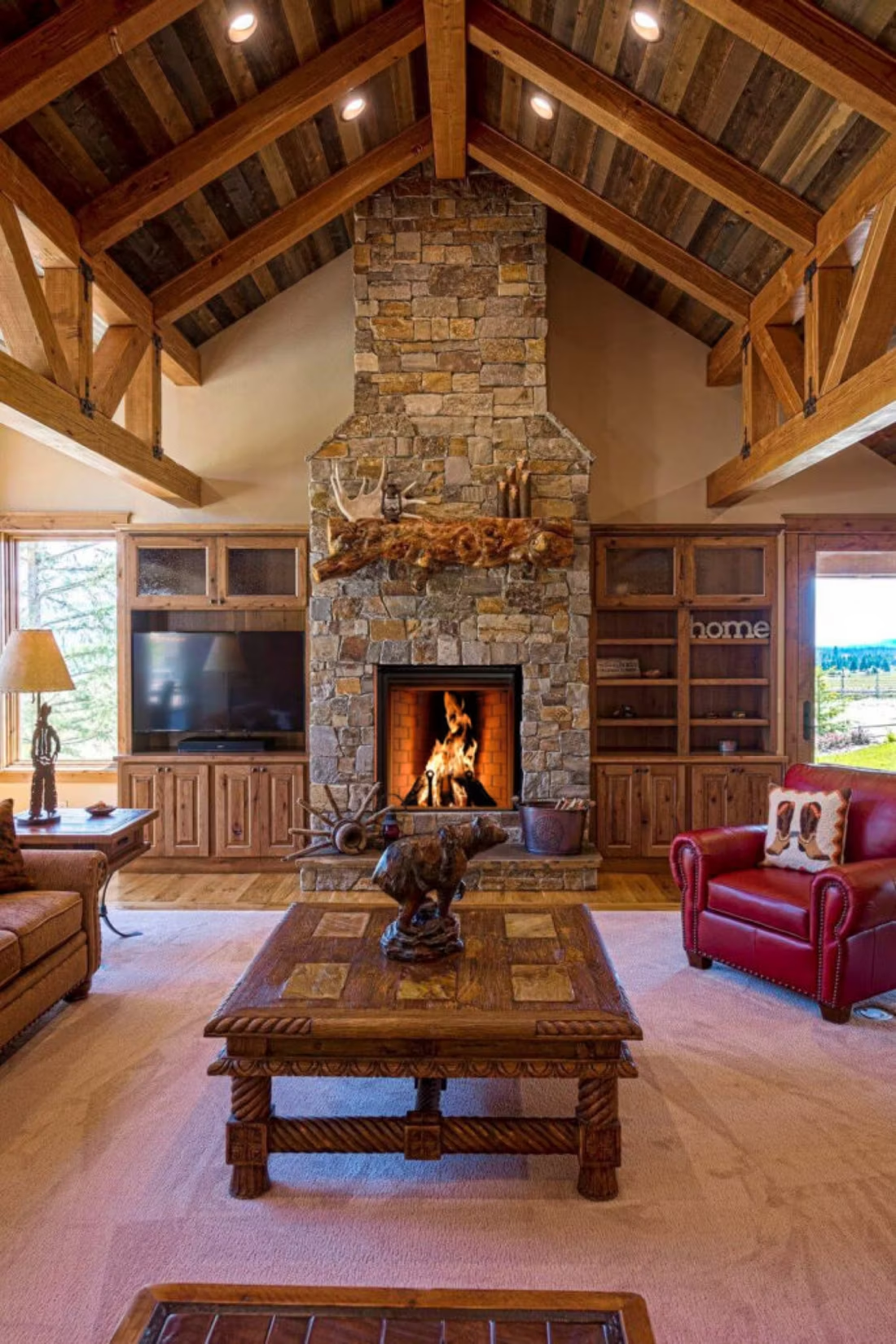
Four fuels. One honest answer for Cherry County.
Three steps. No salesperson until you're ready.
Tell us about your project
Your zip code, your situation, and the fuel you're leaning toward—or let the answers point you to one.
See what's actually available
The brands dealers within 100 miles genuinely carry—real options, never a catalog mirage.
Get your dealer & Project Guide
A trusted local dealer, plus the free Project Guide & Parts List that names every component of the job.
Frequently Asked Questions
Which fuel works best in Cherry County?
It depends on how remote your place is and what you're willing to manage. Wood is the practical backup fuel on most Sandhills ranches—oak, hickory, and cottonwood are available locally, and a wood stove keeps working when a blizzard takes the power lines down for a few days, which happens most winters. Gas here almost always means propane, since piped natural gas doesn't reach most of the county; it's the low-maintenance choice for in-town homes in Valentine and ranch houses that keep a propane tank on-site. Pellet works well if you want wood-style heat without cutting and hauling your own firewood—Lignetics and Indeck Energy Services pellets are the regional options, though you're generally ordering by the pallet rather than picking up a few bags locally. Electric is supplemental—good for a spare bedroom or a cabin along the Niobrara, but not something to rely on through a Sandhills cold snap given how far Cherry-Todd Electric Cooperative's lines run and how exposed they are to ice and wind.
Do I need a permit to install a fireplace in Cherry County?
Generally yes, for anything involving new venting, gas line work, or a structural chimney. Within Valentine, permits run through the city; out in unincorporated Cherry County—which is most of the county's land area—building permits go through the county. Wood stoves and inserts need to meet current EPA emissions standards to qualify for a new-install permit. Propane installations need a licensed gas-fitter for the line and tank connection work, separate from the appliance permit itself. Electric fireplaces are usually exempt unless you're hardwiring a built-in unit into a new circuit. Because dealers here often cover 60-plus miles of territory, most handle the permitting paperwork themselves rather than leaving it to the homeowner—worth confirming that up front given how far a return trip can be.
Are there air quality restrictions on wood burning in Cherry County?
No—Cherry County doesn't have the winter inversions or non-attainment status that trigger burn advisories in places like the Klamath Basin or Denver's Front Range. Open Sandhills country ventilates well. The bigger local concern isn't smoke, it's fire risk from the dry grassland surrounding most structures: a spark arrestor on the chimney cap is a smart addition given how quickly a grass fire can move across the Sandhills in a dry, windy fall. Keep the flue swept and clearances correct, and there's nothing regulatory standing in the way of wood heat here.
Can one local hearth retailer handle all four fuel types in Cherry County?
Given the population, it's more common to find one dealer covering wood, propane, and pellet, with electric fireplaces available as a smaller side line or special order. Because Valentine is the only real town-sized service hub in a county the size of Connecticut, the dealer based there—or the traveling dealer coming in from North Platte or Rapid City—often ends up being the only realistic option within a couple hours' drive. If you're cross-shopping fuels, ask directly what's in stock versus what's a special order; lead times matter more out here than the fuel choice itself.
How does service work for ranches and remote areas in Cherry County?
Expect to build in travel time and possibly a trip fee. Technicians based in Valentine commonly drive 45 minutes to an hour-plus to reach places like Kilgore, Merriman, or the ranches north toward the Niobrara. Scheduling annual chimney sweeps or propane appliance inspections before the first hard freeze in September or October is smart—a mid-January emergency call, especially after a blizzard closes county roads, can mean a multi-day wait. Many ranch households also keep a backup fuel source on hand—a wood stove as insurance against a propane delivery delay or a multi-day power outage—given how isolated some properties are.
What's the typical cost range for fireplace installation across all fuel types in Cherry County?
Costs run somewhat higher here than in denser markets, mainly due to travel and freight rather than the equipment itself. Wood stove or insert installation: roughly $4,500–$9,500, more if a full masonry chimney needs to be built new. Propane fireplace, insert, or stove: roughly $4,500–$11,000 depending on whether a tank and line already exist on the property. Pellet stove or insert: roughly $4,800–$8,000, with pellet freight (Lignetics or Indeck product) factored into ongoing fuel cost rather than the install itself. Electric fireplace: $200–$3,000 for the unit, plus $400–$1,200 in labor for anything beyond a plug-and-play install. Ask any dealer whether their quote includes the trip out—it often does, but it's worth confirming given the distances involved.
Can I install a fireplace myself?
If you're putting a fire in your house on purpose, it's best to work with an expert. Unless you're genuinely experienced in framing, gas line, vent pipe, and the national code on clearances to combustibles, have a professional do it—and ideally the same company that sells you the fireplace, so warranty, service, and liability all live under one roof.
Does a fireplace add value to my home?
On average, a fireplace adds back to the home about the same amount you spent installing it. Add the monthly savings from heating the rooms you actually use instead of the whole house—often hundreds of dollars a year—and the value case is strong before you even count what a fire does for how your family uses the room.
Wood, gas, pellet, or electric—how do I choose?
Match the fuel to your life, not the other way around. Wood: lowest fuel cost and total power-outage independence, but you're hauling and stacking. Gas: press a button, set a thermostat, no maintenance to speak of. Pellet: wood economics with automatic feeding, in exchange for weekly cleaning and a need for electricity. Electric: plugs in anywhere with honest supplemental heat. Nobody regrets the fuel that fits how they actually live.
Should the dealer who sells my fireplace also install it?
Ideally, yes. A fireplace project involves vent pipe, gas line, electrical, and often tile or stone. Hire three or four separate trades and you own the liability and the game of telephone between them. One company selling and installing means one accountable party, start to finish—ask about factory training, on-time completion records, and what happens if an inspection fails.
Find your fireplace in Cherry County, Nebraska.
Pick your fuel below to see installed costs, recommended units, and get matched with a local dealer who actually covers your part of the Sandhills—plus a free Project Guide & Parts List for your specific home.
Find Your Fireplace →