
Heat that holds up through Boyd County's coldest nights.
Wood, gas, pellet, and electric fireplace resources for Boyd County's small towns and farmsteads—from Butte and Spencer to Naper, Anoka, Bristow, and Lynch. Get matched with a trusted local dealer who actually serves this stretch of the Missouri River valley.
Every Project Starts From One of These Five Situations
Cold-climate heating in Nebraska's Missouri River county.
Boyd County sits in Nebraska's climate zone 5A along the Missouri and Niobrara Rivers on the South Dakota line—winters here run long and hard, with the kind of sustained cold you'd see in Fargo or Bismarck rather than farther south in the state. With just over 1,100 residents spread across river-bottom farmland and small towns, Boyd County has a real wood-heat tradition: oak, hickory, and cottonwood grown along the river bottoms and farm shelterbelts have kept homes warm here for generations, and a lot of households still split and stack their own.
This hub covers every fuel and every community in the county—Butte (the county seat), Spencer, Naper, Anoka, Bristow, and Lynch, plus the farms and acreages in between. Because the county is so sparsely populated, most hearth retailers and service techs are based in nearby regional hubs like O'Neill or across the river in Yankton, South Dakota, and they travel in for installs and service calls. Pick a fuel below to see local dealers, typical costs, and what actually gets installed out here.
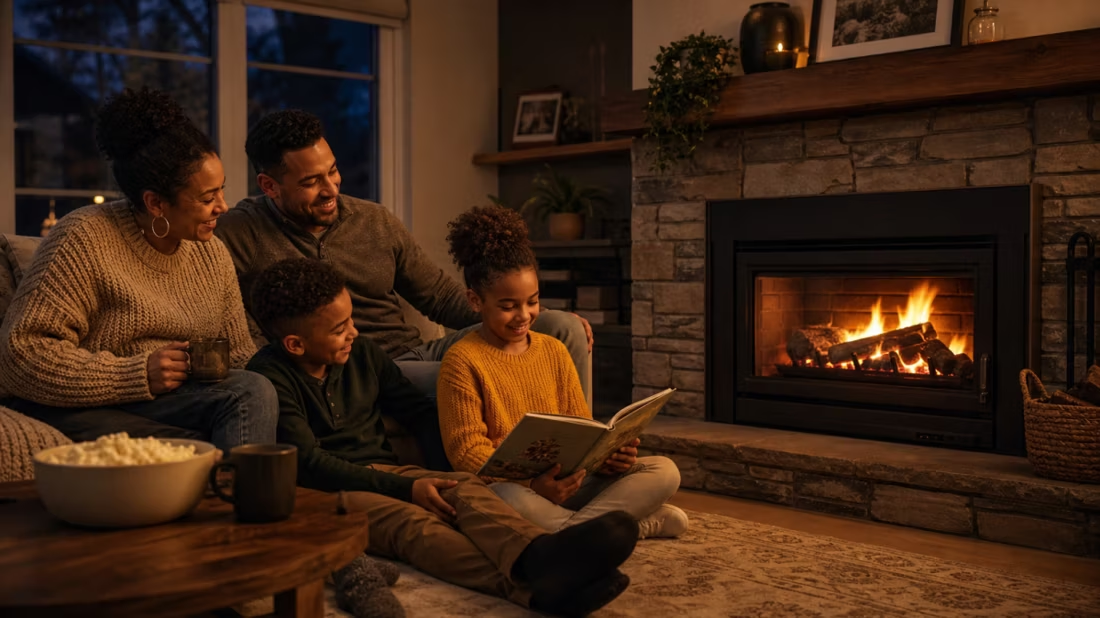
Four fuels. One honest answer for Boyd County.
Three steps. No salesperson until you're ready.
Tell us about your project
Your zip code, your situation, and the fuel you're leaning toward—or let the answers point you to one.
See what's actually available
The brands dealers within 100 miles genuinely carry—real options, never a catalog mirage.
Get your dealer & Project Guide
A trusted local dealer, plus the free Project Guide & Parts List that names every component of the job.
Frequently Asked Questions
Which fuel works best in Boyd County?
Wood is the traditional backbone here—oak, hickory, and cottonwood from river-bottom acreages are cheap or free for a lot of farm households, and a good catalytic stove or insert will carry a house through a January cold snap without much trouble. Propane is the practical everyday choice for most homes, since Boyd County isn't served by piped natural gas—propane fireplaces and inserts give instant heat with none of the wood-hauling labor. Pellet stoves are a solid middle option; Lignetics and Indeck Energy Services pellets are both available through regional suppliers, though you'll want to plan ahead since the nearest pellet retailer may be a drive away. Electric fireplaces work well as supplemental heat for a bedroom or den, but they're not what anyone out here relies on to get through a cold front.
Do I need a permit to install a fireplace in Boyd County?
It depends on where you are. Boyd County doesn't have a dedicated building-permit department the way larger counties do—for most rural acreages and unincorporated areas, you'll want to check with the county clerk's office in Butte first. Within town limits (Butte, Spencer, Naper, Anoka, Bristow, Lynch), the town office may have its own requirements, though enforcement in towns this small is often minimal compared to a metro area. Regardless of permitting, any wood, gas, or pellet installation should still follow the manufacturer's installation manual and NFPA 211 clearances for chimney and venting—a good local installer will handle this whether or not a formal permit is pulled.
Are there air quality restrictions on wood burning in Boyd County?
No—Boyd County isn't a non-attainment area and has no winter burn bans or advisory days. With a population under 1,200 and wide-open farmland, wood smoke simply doesn't concentrate here the way it can in a river-basin city. That said, if you're installing a new stove, going with an EPA-certified unit still makes sense for efficiency and lower firewood consumption—you'll burn less oak and hickory per winter to get the same heat.
Can one local hearth retailer handle all four fuel types?
Some can. Because Boyd County's population doesn't support a hearth showroom of its own, most residents work with a multi-fuel dealer out of O'Neill, Ainsworth, or across the Missouri River in Yankton, South Dakota—several of these carry wood, gas/propane, pellet, and electric under one roof, which is useful if you're still deciding between fuels. Smaller specialty shops nearer the river may focus mainly on wood and propane. Find My Fireplace's job is matching you with whichever trusted dealer actually covers your part of the county, rather than assuming one option fits every address.
How does service work in a county this rural?
Expect your technician to be driving in from outside the county—O'Neill and Ainsworth are the closest regional hubs, and some Yankton-based crews cross the river for service calls too. Rural travel fees of roughly $50–$100 aren't unusual for a Lynch or Naper address. Because appointment slots are limited this far out, scheduling your chimney sweep or propane check in late summer or early fall—before the first hard freeze—gets you seen well ahead of the rush that hits every rural tech come November.
What's the typical cost range for fireplace installation across all fuel types in Boyd County?
Wood stove or insert: roughly $4,000–$8,500 installed, more if new chimney chase work is needed on an older farmhouse. Propane fireplace, insert, or stove: about $4,000–$9,500, with cost driven mainly by whether a new propane line or tank hookup is required. Pellet stove or insert: typically $4,000–$7,000, plus factoring in delivery distance for Lignetics or Indeck pellets if you're not buying in bulk. Electric fireplace: $200–$2,500 for the unit itself, with installation often as simple as plugging it in—built-ins with new wiring run higher. Rural travel and delivery add-ons can push any of these ranges up compared to a town-based install.
Wood, gas, pellet, or electric—how do I choose?
Match the fuel to your life, not the other way around. Wood: lowest fuel cost and total power-outage independence, but you're hauling and stacking. Gas: press a button, set a thermostat, no maintenance to speak of. Pellet: wood economics with automatic feeding, in exchange for weekly cleaning and a need for electricity. Electric: plugs in anywhere with honest supplemental heat. Nobody regrets the fuel that fits how they actually live.
What is an in-home preview and do I need one?
It's a visit where a hearth professional measures your space, confirms the model you picked actually works in your home, and walks the specs—framing, gas line, venting, finish work—before anything is ordered. Some details you just can't know until you see the house. Never make a down payment without one; it's the single most-skipped step that burns buyers.
Should the dealer who sells my fireplace also install it?
Ideally, yes. A fireplace project involves vent pipe, gas line, electrical, and often tile or stone. Hire three or four separate trades and you own the liability and the game of telephone between them. One company selling and installing means one accountable party, start to finish—ask about factory training, on-time completion records, and what happens if an inspection fails.
Can I install a fireplace myself?
If you're putting a fire in your house on purpose, it's best to work with an expert. Unless you're genuinely experienced in framing, gas line, vent pipe, and the national code on clearances to combustibles, have a professional do it—and ideally the same company that sells you the fireplace, so warranty, service, and liability all live under one roof.
Stove and Fireplace Dealers in Boyd County
Listings include WhyFire partner dealers, dealers we have verified as authorized for the brands we recommend, and established local businesses that carry hearth products. Every listing shows which one it is. The ones marked Preferred run on WhyFire's software, so they can show you real pricing and book your appointment right here. No manufacturer pays for placement. How we verify dealers →
Kaiser Heating & Cooling
Larry's Heating & Cooling
Find your fireplace project in Boyd County.
Tell us your fuel and your town—Butte, Spencer, Naper, wherever—and we'll match you with a trusted local dealer and send you a free Project Guide & Parts List: the exact parts, including the vent kit, for your project and who to call to get it installed.
Find Your Fireplace →