
Every fuel type, every corner of Blaine County.
Wood, gas, pellet, and electric fireplace resources for a county with more cattle than people—from Brewster out to the ranches along the Middle Loup. Pick a fuel and we'll match you with a dealer who actually makes the drive.
Every Project Starts From One of These Five Situations
Zone 5A winters, 101 residents, and a county built on self-sufficient ranch heat.
Blaine County is Sandhills country—grass-stabilized dunes cut by the Middle Loup River, with a year-round population of just 101 people spread across ranches rather than gathered into any real town. The county seat, Brewster, is one of the smallest county seats in the United States, and the only other communities are Dunning and Purdum, both unincorporated. Climate zone 5A puts Blaine County's winters in the same general cold-load territory as Fargo, North Dakota—long, wind-exposed heating seasons where the nearest neighbor might be miles away and a heat source needs to work reliably without a same-day service call. Oak, hickory, and cottonwood grow along the river bottoms and in the shelterbelts ranch families planted decades ago, and most wood-burning households here are cutting and splitting their own rather than buying from a dealer.
There's no air quality restriction on burning here—no non-attainment designation, no curtailment days—so the fuel decision comes down to what actually holds up on a remote Sandhills ranch rather than what's allowed to run on a given afternoon. Natural gas mains don't reach into Blaine County, so any gas fireplace or stove runs on propane, stored and delivered on-site the same way ranchers manage fuel for their other equipment. Pellet stoves are a legitimate option too—Lignetics and Indeck Energy Services both distribute into the region, though deliveries here get planned around road conditions the same way any winter supply run does. Electric fireplaces work well as supplemental heat, but a unit should be sized with the county's rural electric cooperative service in mind, since a ranch panel out here isn't built for a large draw. Because there's no hearth retailer physically located inside the county, this hub rolls up the dealers and technicians who travel in from Broken Bow, Ainsworth, and other regional towns to serve Brewster, Dunning, Purdum, and the ranches between them.
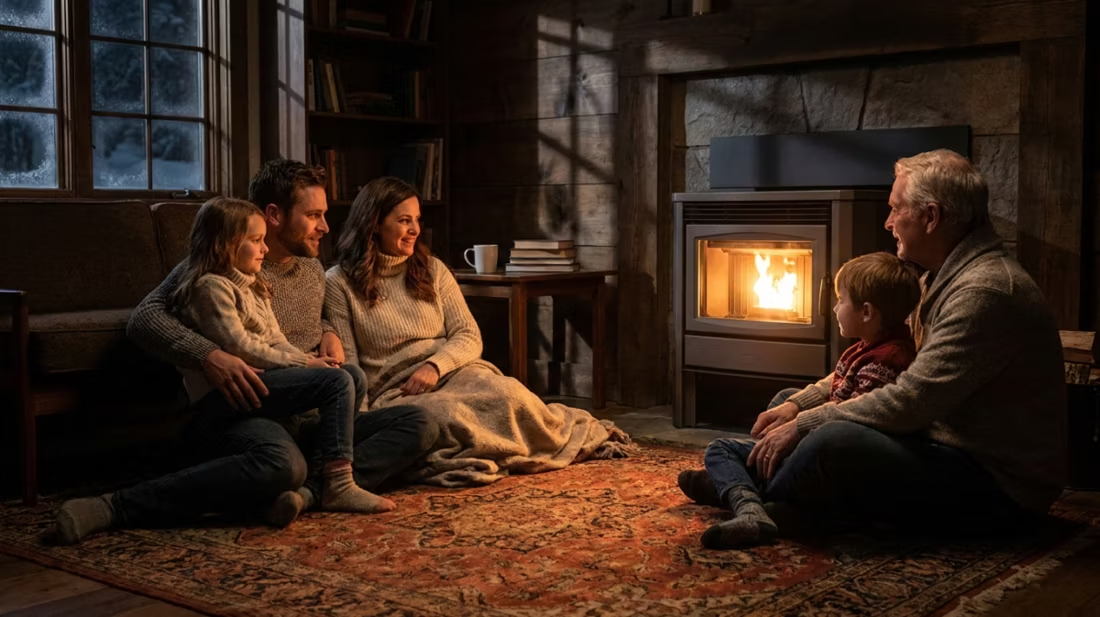
Four fuels. One honest answer for Blaine County.
Three steps. No salesperson until you're ready.
Tell us about your project
Your zip code, your situation, and the fuel you're leaning toward—or let the answers point you to one.
See what's actually available
The brands dealers within 100 miles genuinely carry—real options, never a catalog mirage.
Get your dealer & Project Guide
A trusted local dealer, plus the free Project Guide & Parts List that names every component of the job.
Frequently Asked Questions
Which fireplace fuel makes the most sense on a Blaine County ranch?
Wood is the backbone fuel for a lot of Blaine County households, and for good reason—oak, hickory, and cottonwood grow along the Middle Loup and in the shelterbelts ranch families planted generations ago, so the fuel is often free beyond the labor of cutting and hauling it. A certified catalytic stove holds a longer, more efficient burn than an older uncertified unit, which matters when a cord has to travel from the river bottom to the house. Propane is the practical choice for gas convenience, since no natural gas line reaches this county; it's stored on-site like fuel for any other ranch equipment. Pellet stoves are workable too, through Lignetics or Indeck Energy Services product distributed regionally, as long as you're comfortable planning deliveries around Sandhills road conditions in winter. Electric fireplaces are supplemental almost everywhere out here—useful for a bedroom or a den already heated by wood or propane, but not something to lean on as a primary heat source given both the cold load and the limits of rural cooperative service to a ranch panel.
Do I need a building permit to install a wood stove or propane fireplace in Blaine County?
Blaine County doesn't run a dedicated building department the way a larger county does, so permitting for a hearth install typically routes through the county clerk's office in Brewster rather than a standalone permit office. It's a lighter-weight process than you'd find in a metro county, but it's still worth confirming before work starts, especially for a propane install where the tank and line need a licensed installer regardless of the paperwork. Any dealer we match you with who regularly works this county is already familiar with how Brewster handles it, so it's rarely something you're sorting out on your own.
Does the Sandhills environment change how wood heat works here?
There's no air quality restriction on wood burning in Blaine County—no non-attainment designation and no curtailment days like you'd find in a smoke-trapping basin—so the real constraint isn't regulatory, it's logistical. Wood comes from river-bottom groves and shelterbelts rather than a firewood dealer's yard, and a lot of ranch families cut and season it cooperatively across several households. Given how far a cord often has to travel from the cutting site to the house, a certified stove that burns efficiently and holds a long overnight fire is worth the difference in cost over an older, less efficient unit—you're getting more heat out of wood you spent real time and diesel hauling.
How do I even find an installer when there's no hearth store in the county?
Most of the dealers and technicians who work in Blaine County are actually based in Broken Bow, Ainsworth, or other regional towns and run scheduled trips out to Brewster, Dunning, and Purdum rather than keeping a storefront here. Expect a trip fee built into quotes for the distance, and expect scheduling to get tight once the first hard freeze hits and every ranch route fills up—booking a chimney sweep or propane inspection in late summer, well before cold weather, gets you ahead of that. We match you with a dealer whose travel route genuinely covers this part of the Sandhills rather than one that's simply closest on a map but doesn't actually service it.
How does propane delivery and storage work for a fireplace out here?
Propane for a fireplace or stove is typically stored in the same on-site tank system a ranch already uses for its other propane appliances, sized up if needed to cover the new load. Winter road conditions across the Sandhills can delay a delivery truck by a day or two during a bad snow event, so most ranchers here keep a buffer in the tank rather than running it close to empty going into a storm. Your installer will size the line and regulator for the new fireplace alongside whatever else on the property already runs on propane, so it's worth having your propane supplier and your hearth installer talk to each other before the unit goes in.
What does a fireplace installation typically cost in Blaine County?
Base unit and labor costs run in line with what you'd see across rural Nebraska: wood stove or insert installs typically land between $4,000 and $8,500, propane fireplaces or stoves run roughly $4,500 to $10,000 depending on line work, pellet stove installs generally fall between $4,000 and $7,000, and electric fireplaces range from $200 to $2,500 for the unit plus $400 to $1,000 in labor for anything beyond a simple plug-in placement. Because Blaine County has no hearth retailer physically inside it, factor in a trip fee for the installer's drive from Broken Bow, Ainsworth, or wherever the crew is based—it's usually a modest add rather than a dealbreaker, and we'll flag it up front in your Project Guide.
Does a fireplace add value to my home?
On average, a fireplace adds back to the home about the same amount you spent installing it. Add the monthly savings from heating the rooms you actually use instead of the whole house—often hundreds of dollars a year—and the value case is strong before you even count what a fire does for how your family uses the room.
How much should I budget for a fireplace?
For an average home—covering the fireplace, the vent pipe, and basic installation—a budget between $3,900 and $5,500 gives you a lot of options across wood, gas, and pellet. By the time you add finish work, gas line, and electrical, the average complete installation lands between $5,000 and $12,000 all-in. In a remodel or new build, a good rule is to put about 2.5% of the total project cost toward the fireplace.
Can a fireplace actually lower my heating bill?
Yes—by creating a comfort zone. A furnace heats every square foot of the house just to warm the one room you're in; a gas fireplace on low burns roughly a sixth of the gas a typical furnace does. Set the furnace around 55–60 degrees as a baseline, then heat the rooms your family actually uses. Families who heat this way commonly save $20–$60 a month.
Can I install a fireplace myself?
If you're putting a fire in your house on purpose, it's best to work with an expert. Unless you're genuinely experienced in framing, gas line, vent pipe, and the national code on clearances to combustibles, have a professional do it—and ideally the same company that sells you the fireplace, so warranty, service, and liability all live under one roof.
Get matched with a dealer who'll actually make the drive to Blaine County.
Tell us about your home or ranch and we'll put together a free Project Guide & Parts List—the right unit, the vent kit it needs, and the local dealer we recommend who genuinely covers Brewster, Dunning, and Purdum.
Find Your Fireplace →