
Heat that holds up against an 8,500-degree-day winter.
Wood, gas, pellet, and electric fireplace resources for every city and rural community in Glacier County—from Cut Bank to East Glacier Park. Find the right unit and connect with a trusted local hearth retailer who can actually install it.
Every Project Starts From One of These Five Situations
Front-range cold in a county that borders Alberta.
Glacier County sits along Montana's Rocky Mountain Front, bordering Alberta to the north and the eastern edge of Glacier National Park to the west. Winter lows average 11°F, and the county logs roughly 8,579 heating degree days a year—a heating load in the same range as Fargo, ND or International Falls, MN. Chinook winds can swing temperatures fast, but the underlying season is long, and wind-driven cold off the Blackfeet Nation's open prairie makes wind chill a bigger factor here than the thermometer alone suggests. Lodgepole pine, ponderosa pine, Douglas fir, and aspen are the wood species most homeowners burn, and wildfire smoke in late summer is the main air-quality concern most years—not winter inversions.
This hub covers hearth retailers, service technicians, and fuel suppliers across every community in the county—Cut Bank, Browning, Shelby's shared service radius, East Glacier Park near the park's east entrance, and the smaller rural communities in between. Pick your fuel below to see local dealers, typical installation costs, and the units that actually get installed in homes at this HDD level. Whether you're heating a ranch house on the Hi-Line or a cabin near the park boundary, this is the place to start.
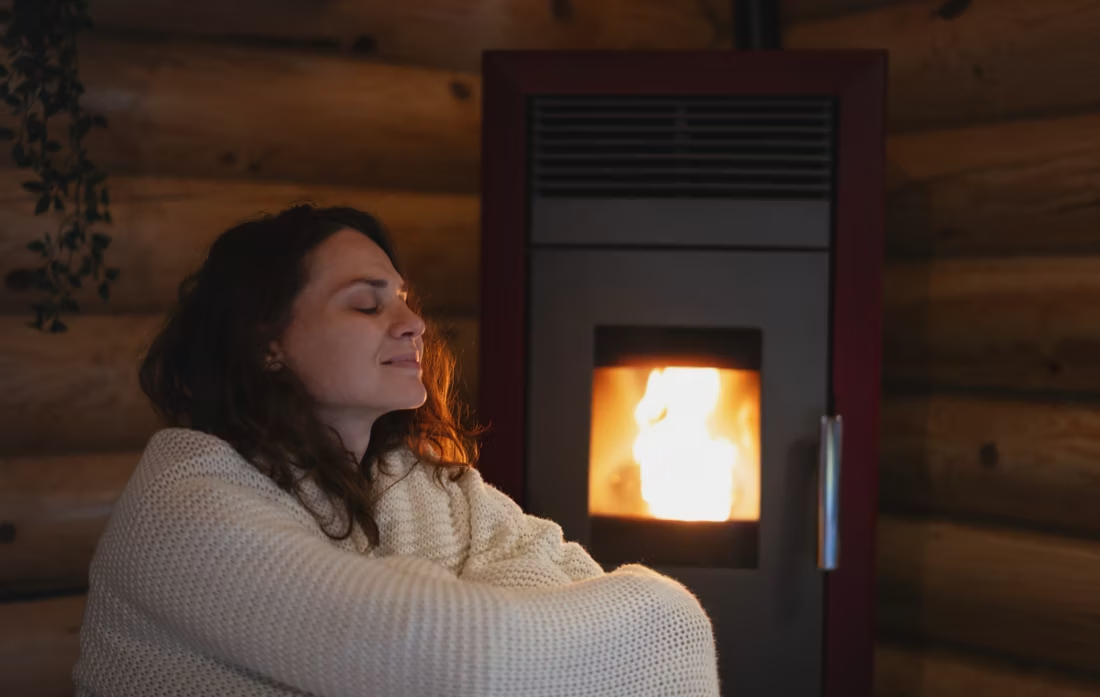
Four fuels. One honest answer for Glacier County.
Three steps. No salesperson until you're ready.
Tell us about your project
Your zip code, your situation, and the fuel you're leaning toward—or let the answers point you to one.
See what's actually available
The brands dealers within 100 miles genuinely carry—real options, never a catalog mirage.
Get your dealer & Project Guide
A trusted local dealer, plus the free Project Guide & Parts List that names every component of the job.
Frequently Asked Questions
Which fuel works best in Glacier County?
It depends on the home and how it's used, but the cold matters more here than in most Montana counties. Wood is a strong choice—lodgepole pine and Douglas fir are locally abundant and a catalytic or non-cat stove rated for extended burns can carry a home through a stretch of single-digit nights, plus it keeps working if a Chinook-driven windstorm knocks out power on the prairie. Gas is the convenience play in Cut Bank and Shelby, where propane delivery is standard for rural properties without natural gas mains—instant heat with no wood-splitting labor. Pellet stoves are a solid middle ground; Bear Mountain and Lignetics pellets are both regionally available, though rural homeowners should stock up before winter storms make roads to suppliers unreliable. Electric fireplaces work fine as supplemental heat in a bedroom or den but shouldn't be your only source of heat at this HDD level—they won't carry a home through an 8,500-degree-day winter on their own.
Do I need a permit to install a fireplace in Glacier County?
In most cases, yes. New wood stoves, wood inserts, gas fireplaces, gas inserts, gas stoves, and pellet stoves typically require a building permit through the local jurisdiction—the city of Cut Bank or Glacier County's permitting office for unincorporated areas and towns like Browning and East Glacier Park. Gas installations also need a separate gas line permit and licensed installer for the connection work. Electric fireplaces generally skip the permit process unless the install involves hardwiring or a new circuit. Most local hearth retailers here handle the permitting paperwork as part of the installation, which is worth asking about upfront given how far some homes are from the permit office.
Does wildfire smoke affect wood burning in Glacier County?
Indirectly, yes—but it's a late-summer issue, not a winter one. Glacier County sits close to Glacier National Park and surrounding forest land, and regional wildfire smoke can settle into the valleys during July and August in dry years. This doesn't restrict winter wood burning the way inversion-driven air quality advisories do in some Western counties, but it's worth being aware of if you're comparing this county to places with winter burn bans—Glacier County doesn't typically have them. The bigger practical consideration for wood heat here is simply the length and severity of the heating season, not air quality curtailment.
Can one local hearth retailer handle all four fuel types?
Coverage varies by dealer, and in a county this sparsely populated (just over 10,000 people spread across a large area), most retailers specialize rather than stock everything. Some Cut Bank and Shelby-area dealers carry wood, gas, and pellet units and can special-order electric fireplaces on request; others lean primarily wood and pellet given how central wood heat is to this region. If you're cross-shopping fuels, ask a retailer directly which lines they carry and whether they can show you a working display—given the driving distances involved here, it's worth confirming before you make the trip.
How does service work in rural parts of Glacier County?
Most technicians covering Glacier County are based in Cut Bank and travel to Browning, East Glacier Park, and the ranch and reservation communities in between. Expect a modest travel fee for calls outside the immediate town limits, and expect scheduling to tighten up fast once the weather turns—with an 8,500 HDD heating season, most homeowners here book chimney sweeps and gas inspections in September or early October rather than waiting for the first cold snap. If you're heating with wood as a primary source, an annual sweep isn't optional at this burn volume—creosote builds up fast over a season this long and cold.
What's the typical cost range for fireplace installation across all fuel types in Glacier County?
Costs run in a similar range to other high-HDD Rocky Mountain Front counties, with some upward pressure from travel distances for installers. Wood stove or insert: roughly $4,500–$9,500 for a typical install, more if new chimney chase work is needed for a home without existing masonry. Gas fireplace, insert, or stove: $4,500–$11,500, with propane tank and line work adding to the cost for rural properties not already set up for gas. Pellet stove or insert: $4,500–$8,000 depending on venting. Electric fireplace: $200–$3,000 for the unit itself, plus $400–$1,200 in labor unless it's a straightforward plug-and-play unit. See the county + fuel pages above for retailer-specific pricing detail.
Can I install a fireplace myself?
If you're putting a fire in your house on purpose, it's best to work with an expert. Unless you're genuinely experienced in framing, gas line, vent pipe, and the national code on clearances to combustibles, have a professional do it—and ideally the same company that sells you the fireplace, so warranty, service, and liability all live under one roof.
Does a fireplace add value to my home?
On average, a fireplace adds back to the home about the same amount you spent installing it. Add the monthly savings from heating the rooms you actually use instead of the whole house—often hundreds of dollars a year—and the value case is strong before you even count what a fire does for how your family uses the room.
Can a fireplace actually lower my heating bill?
Yes—by creating a comfort zone. A furnace heats every square foot of the house just to warm the one room you're in; a gas fireplace on low burns roughly a sixth of the gas a typical furnace does. Set the furnace around 55–60 degrees as a baseline, then heat the rooms your family actually uses. Families who heat this way commonly save $20–$60 a month.
How much should I budget for a fireplace?
For an average home—covering the fireplace, the vent pipe, and basic installation—a budget between $3,900 and $5,500 gives you a lot of options across wood, gas, and pellet. By the time you add finish work, gas line, and electrical, the average complete installation lands between $5,000 and $12,000 all-in. In a remodel or new build, a good rule is to put about 2.5% of the total project cost toward the fireplace.
Stove and Fireplace Dealers in Glacier County
Listings include WhyFire partner dealers, dealers we have verified as authorized for the brands we recommend, and established local businesses that carry hearth products. Every listing shows which one it is. The ones marked Preferred run on WhyFire's software, so they can show you real pricing and book your appointment right here. No manufacturer pays for placement. How we verify dealers →
Nevin's Tire Center
Aire Serv/kalispell
Get matched with a local dealer in Glacier County.
Tell us your fuel and your project, and we'll send you a free Project Guide & Parts List—the exact parts, including the vent kit, and our recommended local dealer for your Glacier County home.
Find Your Fireplace →