
Heat That Holds Up on Montana's Big Open.
Wood, gas, pellet, and electric fireplace resources for ranch homes and rural communities across Garfield County—from Jordan out to Cohagen and Sand Springs. Find the right unit for a long, isolated winter and connect with a trusted regional hearth retailer.
Every Project Starts From One of These Five Situations
Frontier heat for one of America's most remote counties.
Garfield County spreads across roughly 4,600 square miles of the Missouri River Breaks and CMR National Wildlife Refuge country, with a population of just 327—one of the lowest population densities of any county in the lower 48. Winters here sit in climate zone 6B, with the kind of sustained cold and wind more familiar to Bismarck, North Dakota than to the Rockies further west. Ranch houses and homes around Jordan lean on wood heat cut from ponderosa pine, lodgepole pine, Douglas fir, and aspen stands along the Breaks, supplemented by propane (there's no natural gas main service out here) and, on a growing number of properties, pellet stoves stocked from regional brands like Bear Mountain and Lignetics.
What you'll find on this hub: hearth retailers, service technicians, and fuel suppliers who cover Garfield County, even though most are based an hour or more away in Miles City or Glendive. Pick your fuel below for local dealer options, installation costs, and unit recommendations built around what actually works for a ranch house with a long driveway and no natural gas line—not a big-box catalog page. Whether you're heating a house in Jordan proper or a place 40 miles out toward Sand Springs, this is the starting point.
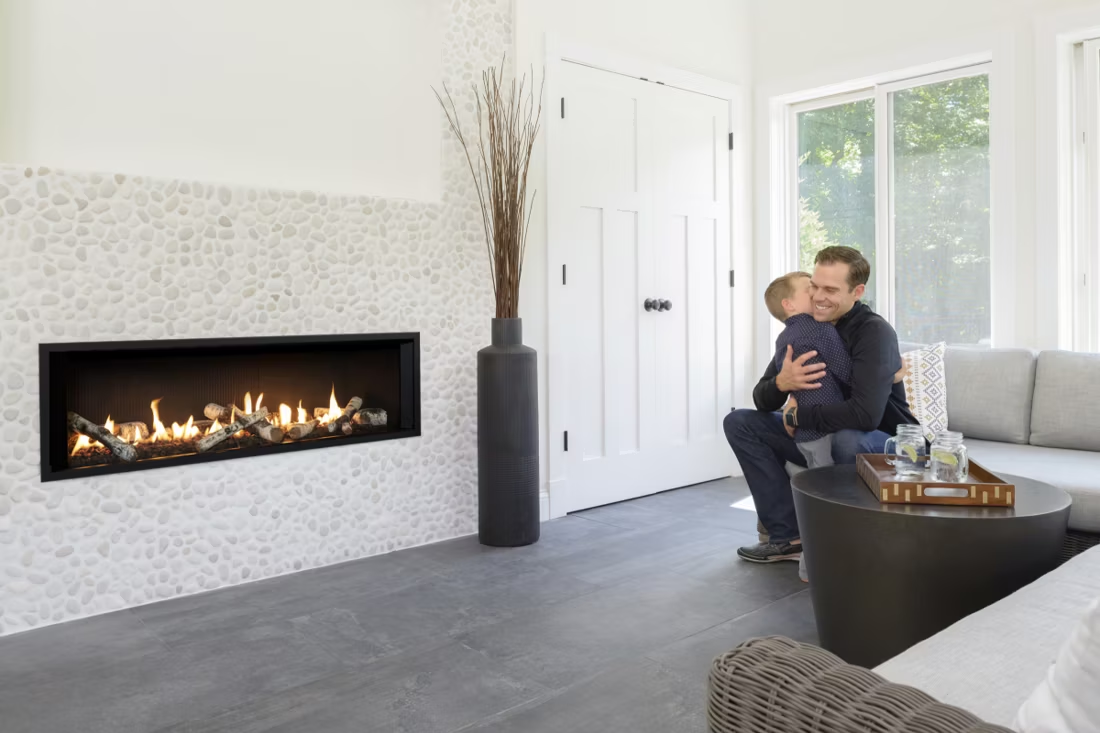
Four fuels. One honest answer for Garfield County.
Three steps. No salesperson until you're ready.
Tell us about your project
Your zip code, your situation, and the fuel you're leaning toward—or let the answers point you to one.
See what's actually available
The brands dealers within 100 miles genuinely carry—real options, never a catalog mirage.
Get your dealer & Project Guide
A trusted local dealer, plus the free Project Guide & Parts List that names every component of the job.
Frequently Asked Questions
Which fuel works best in Garfield County?
Wood is the heritage fuel and still the most practical primary heat source for a lot of Garfield County homes—ponderosa pine, lodgepole pine, and Douglas fir from the Breaks keep fuel costs low, and a wood stove keeps working when a winter storm takes down power lines, which happens out here. Because there's no natural gas main service anywhere in the county, "gas" almost always means propane—bulk-tank delivery is already part of ranch life for most households, so a propane fireplace or insert is a straightforward add. Pellet stoves are a real option too; Bear Mountain and Lignetics both distribute into this part of Montana, though you'll want to plan deliveries around road conditions rather than running down to a local stock. Electric fireplaces work fine for supplemental heat in a den or bedroom but shouldn't be your only heat source at 6B winter lows. Most homes here run wood or propane as primary heat with something supplemental in a second room.
Do I need a permit to install a fireplace in Garfield County?
It depends where you are. Like many sparsely populated eastern Montana counties, Garfield County doesn't enforce a general building code for most rural construction outside town limits, so a wood stove or insert install on an outlying ranch property may not require a formal county permit—though propane line work should still involve a licensed installer regardless of paperwork. Within Jordan's town limits, check with the town clerk's office before starting any gas line or structural work. If you're near the CMR National Wildlife Refuge boundary or on federal land, different rules can apply. When in doubt, ask your installer—most retailers who serve this county have already sorted out what's required where.
Is wildfire smoke a concern for wood burning in Garfield County?
It's more of a summer issue than a winter one here. Garfield County sits in the Missouri River Breaks, and wildfire smoke from regional fires—sometimes hundreds of miles away—can settle into the river valleys during fire season and affect air quality for days at a time. That's a different concern than winter wood-smoke inversions you'd see in a mountain basin town; it doesn't typically restrict wood stove burning in cold months. If you're stocking firewood off Breaks land, keep an eye on Montana DNRC fire restrictions during summer cutting season, since access to timber stands can be limited during red flag conditions.
Can one local retailer handle all four fuel types out here?
Given a county population of 327, there isn't a full-line hearth showroom inside Garfield County itself—most residents work with retailers based in Miles City or Glendive who travel out for installs and carry wood, propane, pellet, and electric lines. That's actually an advantage if you're not sure which fuel fits your place: a multi-fuel dealer can walk you through the trade-offs for a specific ranch house rather than pushing whatever's on their lot. Expect a longer lead time for scheduling than you'd get in a bigger town, simply because of the drive.
How does service and installation work for homes way out from Jordan?
Plan ahead. Technicians serving Garfield County are generally coming from Miles City or Glendive, and a service call to a place 30-40 miles out from Jordan means a real travel charge and a scheduling window, not a same-day fix. Preseason service—ideally August or September—is much easier to book than a January emergency call when a storm has everyone's phone ringing at once. If you're relying on wood as primary heat, keep a second heat source on hand (propane or electric) for stretches when a tech simply can't get to you due to road conditions on the Breaks.
What's the typical cost range for fireplace installation across fuel types in Garfield County?
Costs run a bit higher here than in denser parts of Montana because of travel and freight. Wood stove or insert installation: roughly $4,800–$9,500 for a typical setup, more if new chimney chase work is involved. Propane fireplace, insert, or stove: roughly $4,500–$11,000 depending on whether you're tying into an existing bulk tank or running new line. Pellet stove or insert: roughly $4,800–$8,000, with delivery logistics for pellets factored into ongoing costs rather than the install itself. Electric fireplace: $200–$3,000 for the unit, plus $400–$1,200 in labor for anything beyond a plug-and-play unit. Ask your dealer to break out travel charges separately so you know what's freight versus install.
Wood, gas, pellet, or electric—how do I choose?
Match the fuel to your life, not the other way around. Wood: lowest fuel cost and total power-outage independence, but you're hauling and stacking. Gas: press a button, set a thermostat, no maintenance to speak of. Pellet: wood economics with automatic feeding, in exchange for weekly cleaning and a need for electricity. Electric: plugs in anywhere with honest supplemental heat. Nobody regrets the fuel that fits how they actually live.
Can a fireplace actually lower my heating bill?
Yes—by creating a comfort zone. A furnace heats every square foot of the house just to warm the one room you're in; a gas fireplace on low burns roughly a sixth of the gas a typical furnace does. Set the furnace around 55–60 degrees as a baseline, then heat the rooms your family actually uses. Families who heat this way commonly save $20–$60 a month.
What is an in-home preview and do I need one?
It's a visit where a hearth professional measures your space, confirms the model you picked actually works in your home, and walks the specs—framing, gas line, venting, finish work—before anything is ordered. Some details you just can't know until you see the house. Never make a down payment without one; it's the single most-skipped step that burns buyers.
Does a fireplace add value to my home?
On average, a fireplace adds back to the home about the same amount you spent installing it. Add the monthly savings from heating the rooms you actually use instead of the whole house—often hundreds of dollars a year—and the value case is strong before you even count what a fire does for how your family uses the room.
Stove and Fireplace Dealers in Garfield County
Listings include WhyFire partner dealers, dealers we have verified as authorized for the brands we recommend, and established local businesses that carry hearth products. Every listing shows which one it is. The ones marked Preferred run on WhyFire's software, so they can show you real pricing and book your appointment right here. No manufacturer pays for placement. How we verify dealers →
Valley Builders Supply
Find your fireplace project in Garfield County.
Tell us about your home and we'll match you with a trusted regional dealer and send a free Project Guide & Parts List—the right unit, the vent kit, and what it takes to get it installed on ranch country distances.
Find Your Fireplace →