
Find the right heat source for a Broadwater County winter.
Wood, gas, pellet, and electric fireplace resources for Townsend, Winston, Toston, Radersburg, and every community around Canyon Ferry Lake. With average lows near 14°F and a long, cold winter season, this is a county that heats hard for six months a year—find the right unit and a trusted local dealer to install it.
Every Project Starts From One of These Five Situations
Cold nights along the upper Missouri, from Canyon Ferry to the Big Belt Mountains.
Broadwater County sits in the upper Missouri River valley between the Big Belt Mountains and the Elkhorn Range, with Canyon Ferry Reservoir running through the heart of it. It's a small county—just over 4,500 people spread across ranches, lake communities, and the county seat of Townsend—but the winters are serious. Average lows sit around 14°F and the county sees a long, cold heating season on par with Duluth, Minnesota. Lodgepole pine, ponderosa pine, Douglas fir, and aspen are the wood species that heat most homes here, much of it self-cut under permits from the Helena-Lewis and Clark and Custer Gallatin National Forests. Wood heat isn't a lifestyle accessory in Broadwater County—for a lot of rural households, it's the primary way the house stays warm when the propane truck can't get up the road.
This hub rolls up hearth retailers, service technicians, and fuel suppliers covering the whole county—Townsend, Winston, Toston, Radersburg, and the lake places around Canyon Ferry. Because the county is small and rural, a lot of the dealers and techs who service it are based in Helena or Bozeman and drive in for installs and annual service. Piped natural gas is limited outside the bigger towns nearby, so propane and electric fill that role locally alongside wood and pellet. Pick your fuel below for local dealer listings, install costs, and unit recommendations specific to Broadwater County.
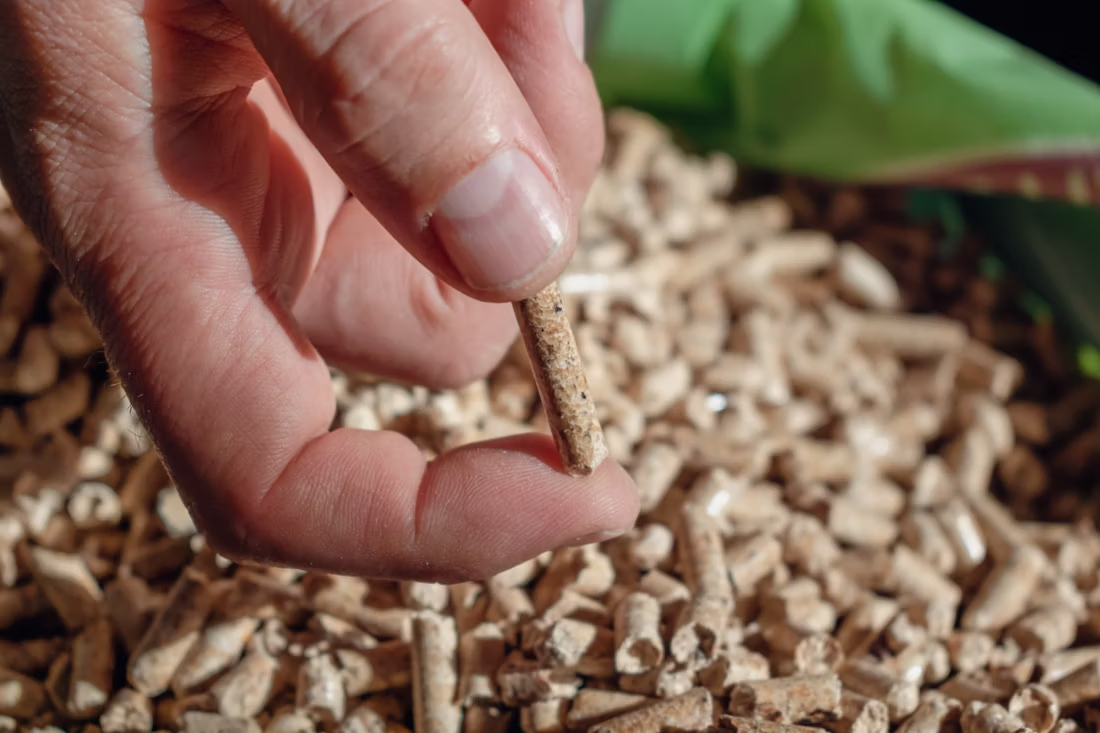
Four fuels. One honest answer for Broadwater County.
Wood
54 models available near Broadwater County.
Find your wood stove →Gas
104 models available near Broadwater County.
Find your gas fireplace →Pellet
See what's available near Broadwater County.
Find your pellet stove →Electric
See what's available near Broadwater County.
Find your electric fireplace →Three steps. No salesperson until you're ready.
Tell us about your project
Your zip code, your situation, and the fuel you're leaning toward—or let the answers point you to one.
See what's actually available
The brands dealers within 100 miles genuinely carry—real options, never a catalog mirage.
Get your dealer & Project Guide
A trusted local dealer, plus the free Project Guide & Parts List that names every component of the job.
Frequently Asked Questions
Which fuel makes the most sense for a home in Broadwater County?
It depends on what you're heating and how remote you are. Wood is still the backbone fuel for a lot of rural Broadwater County homes—lodgepole pine, ponderosa pine, Douglas fir, and aspen are all locally available, and Forest Service permits from the Helena-Lewis and Clark and Custer Gallatin National Forests let homeowners cut and season their own firewood, which matters when you're heating through a long, hard winter season here. Propane is the practical convenience fuel here since piped natural gas doesn't reach most of the county outside the bigger towns nearby—propane fireplaces and inserts give instant heat without the woodpile labor. Pellet stoves are a strong middle option, especially with Bear Mountain, Lignetics, and Forest Energy pellets distributed through the region, and they don't require the physical work of splitting and stacking wood. Electric fireplaces, run through NorthWestern Energy service, work fine as supplemental heat in a bedroom or a lake cabin, but they're not going to carry a Townsend-area home through a January cold snap on their own. A lot of households here run wood or pellet as primary heat with propane or electric backup.
Do I need a permit to install a wood stove or fireplace in Broadwater County?
Generally yes. New wood stoves and inserts sold anywhere in the U.S. have to meet EPA 2020 NSPS emissions standards, and Broadwater County's building permit process applies to wood, gas, and pellet installations the same way it would for any structural or venting change to a home. Propane installations typically need a separate line-and-tank permit handled by a licensed installer, since most of the county isn't on piped natural gas. Electric fireplaces are usually permit-free unless you're doing a built-in unit that requires new wiring or a dedicated circuit. Because the county is small, most local hearth dealers who serve Townsend, Winston, and the Canyon Ferry area are used to handling the permitting themselves as part of an install quote—it's worth asking upfront whether that's included.
Does wildfire smoke affect wood burning in Broadwater County?
It affects the county differently than winter smoke restrictions do in some other Montana towns. Broadwater County's main air quality concern is wildfire smoke in the late summer and early fall, not winter temperature inversions, so there's no routine mandatory wood-burning curtailment during the heating season itself. Where it does affect wood heat: fire danger closures on the Helena-Lewis and Clark and Custer Gallatin National Forests can temporarily suspend firewood cutting permits during high fire risk periods, which is worth planning around if you're stocking a woodpile for the coming winter—most locals do their cutting in spring and early summer before restrictions kick in.
Can one local dealer handle wood, gas, pellet, and electric?
It's less common to find a single dealer stocking all four fuels in a county this size, since Broadwater County's population is under 5,000 and doesn't support a large showroom on its own. Most homeowners here end up working with a multi-fuel hearth retailer based in Helena or Bozeman—both close enough for regular service routes into Townsend and the lake area—and those larger dealers typically do carry wood, gas/propane, pellet, and electric under one roof. If you're near Townsend and want to compare fuel types side by side, it's worth asking a Helena-based retailer what their travel radius covers before you commit to a specific unit.
How does hearth service work if I live out toward Winston, Toston, or Canyon Ferry?
Most chimney sweeps and gas or pellet techs serving Broadwater County are based out of Helena, about 25-35 minutes from Townsend depending on where you are, and they run scheduled routes out to Winston, Toston, Radersburg, and the lake communities rather than doing one-off same-day trips. Expect a modest travel charge for service calls outside the Townsend area, and expect scheduling to tighten up fast once the weather turns—booking your annual chimney sweep or gas inspection in September or early October, before the first hard freeze, gets you ahead of the rush that always follows the season's first cold snap.
What does fireplace installation typically cost across the different fuel types in Broadwater County?
Costs vary by fuel and by how much venting or line work is involved. Wood stove or insert: roughly $4,000-$8,500 for a typical install, more if you're running new chimney or hearth pad work for new construction. Propane fireplace, insert, or stove: roughly $4,000-$10,000, with the wide range mostly driven by whether a tank and line are already in place or need to be added. Pellet stove or insert: roughly $4,000-$7,000 for most installs. Electric fireplace: $200-$2,500 for the unit itself, plus $300-$1,000 in labor unless it's a simple plug-and-play unit. Because dealers serving Broadwater County are mostly based in Helena or Bozeman, ask whether travel is built into the install quote or billed separately—it sometimes is for rural addresses out past Winston or Toston.
How much should I budget for a fireplace?
For an average home—covering the fireplace, the vent pipe, and basic installation—a budget between $3,900 and $5,500 gives you a lot of options across wood, gas, and pellet. By the time you add finish work, gas line, and electrical, the average complete installation lands between $5,000 and $12,000 all-in. In a remodel or new build, a good rule is to put about 2.5% of the total project cost toward the fireplace.
Wood, gas, pellet, or electric—how do I choose?
Match the fuel to your life, not the other way around. Wood: lowest fuel cost and total power-outage independence, but you're hauling and stacking. Gas: press a button, set a thermostat, no maintenance to speak of. Pellet: wood economics with automatic feeding, in exchange for weekly cleaning and a need for electricity. Electric: plugs in anywhere with honest supplemental heat. Nobody regrets the fuel that fits how they actually live.
I know I want a fireplace—where do I actually start?
Do two things today: snap a photo of the wall or fireplace you want to transform, and take a tape measure to the space—width, height, depth. Those two artifacts answer most of a hearth professional's first questions. Then settle fuel (wood, gas, pellet, or electric) and set a realistic budget: $3,900–$5,500 covers fireplace, vent, and basic install for most homes.
Can a fireplace actually lower my heating bill?
Yes—by creating a comfort zone. A furnace heats every square foot of the house just to warm the one room you're in; a gas fireplace on low burns roughly a sixth of the gas a typical furnace does. Set the furnace around 55–60 degrees as a baseline, then heat the rooms your family actually uses. Families who heat this way commonly save $20–$60 a month.
Stove and Fireplace Dealers in Broadwater County
Listings include WhyFire partner dealers, dealers we have verified as authorized for the brands we recommend, and established local businesses that carry hearth products. Every listing shows which one it is. The ones marked Preferred run on WhyFire's software, so they can show you real pricing and book your appointment right here. No manufacturer pays for placement. How we verify dealers →
The Stove Man
Get matched with a hearth dealer in Broadwater County.
Tell us about your fuel type and your home, and we'll match you with a trusted local dealer and send a free Project Guide & Parts List—the exact parts, including the vent kit, and a dealer recommendation for your project in Townsend or wherever you are in the county.
Find Your Fireplace →