
Wood, Gas, Pellet, or Electric—Find What Fits Your St. Clair County Home.
From lake cabins on the Harry S. Truman Reservoir to farmhouses outside Appleton City and Roscoe, St. Clair County homeowners heat with oak, hickory, walnut, and maple firewood, propane, pellets, and inserts. We match you with a trusted local dealer and hand you a free planning packet for your project.
Every Project Starts From One of These Five Situations
Ozark Hardwood Country Meets Truman Lake in St. Clair County, Missouri.
St. Clair County sits along the western edge of the Ozark border region, anchored by the county seat of Osceola on the Harry S. Truman Reservoir. With just over 3,300 residents spread across mostly rural, wooded, and pastureland, the county has roughly half the winter heating load of Bismarck, ND—but enough, with winter lows averaging 21°F, to make a working heat source matter from November through March. The oak-hickory forest that covers much of the county also supplies the fuel: oak, hickory, walnut, and maple are all common locally, and they're the same dense hardwoods that give a long, hot, low-maintenance burn in a modern EPA-certified stove.
There's no county-wide air quality nonattainment designation here, so wood burning isn't restricted the way it is in some Western basins—it's simply part of how rural Missouri households have heated for generations. This hub rounds up hearth retailers, service technicians, and fuel suppliers covering the whole county, from Osceola out to Appleton City, Roscoe, Lowry City, Collins, Vista, and the seasonal cabins ringing Truman Lake. Because the county's population is small, some of the dealers and techs listed also cover nearby Clinton, Butler, or Sedalia—pick your fuel below to see exactly who's closest to your address.
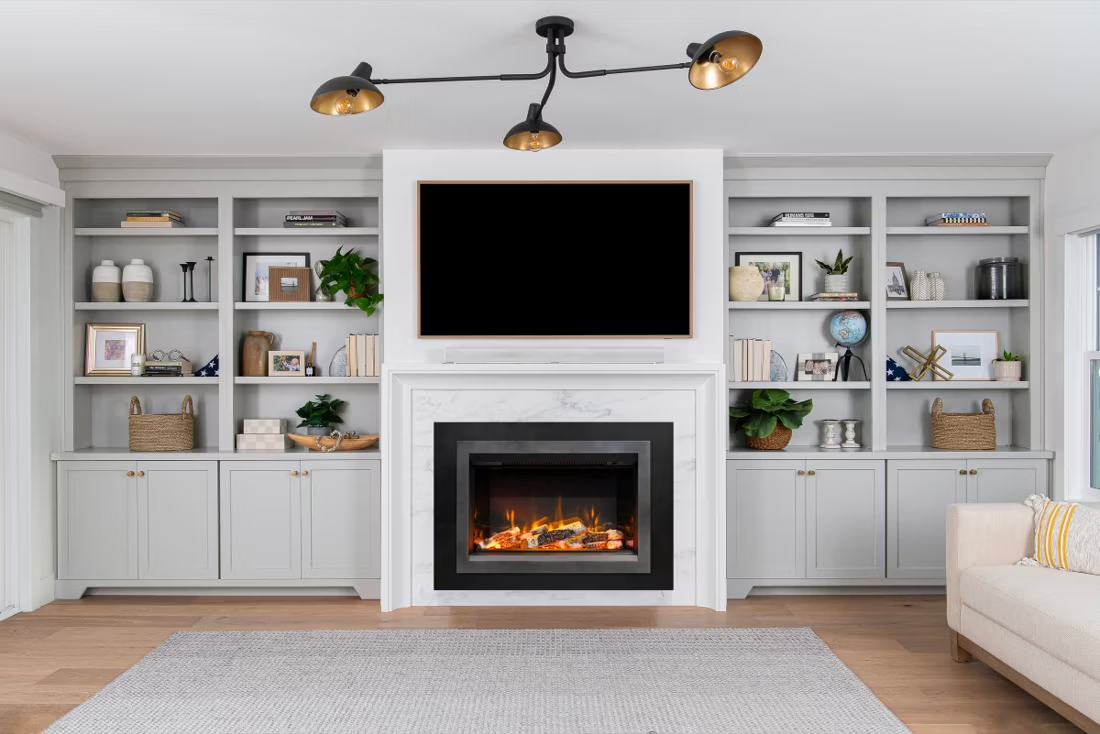
Four fuels. One honest answer for St. Clair County.
Three steps. No salesperson until you're ready.
Tell us about your project
Your zip code, your situation, and the fuel you're leaning toward—or let the answers point you to one.
See what's actually available
The brands dealers within 100 miles genuinely carry—real options, never a catalog mirage.
Get your dealer & Project Guide
A trusted local dealer, plus the free Project Guide & Parts List that names every component of the job.
Frequently Asked Questions
Which fuel works best in St. Clair County?
Wood is the natural default for a lot of St. Clair County homes—the county sits in oak-hickory forest, walnut and maple are common on the same properties, and a lot of households already have access to a woodlot or a neighbor with a chainsaw. A modern EPA-certified stove burning seasoned oak or hickory will hold a fire far longer than softer woods, which matters when winter lows average 21°F. Propane is the practical choice for instant, hands-off heat, especially since natural gas lines don't reach most of this rural county. Pellet stoves are a solid middle ground—Lignetics and Indeck-supplied pellets are available regionally, and there's no woodpile to manage. Electric fireplaces show up mostly in seasonal cabins around Truman Lake and as supplemental heat in bedrooms or dens—not as a primary source through a full Missouri winter. Plenty of households here run two fuels: wood or propane as the workhorse, electric or a small pellet unit for a room that doesn't need full-house heat.
Do I need a permit to install a fireplace in St. Clair County?
It depends on where you live. Outside the incorporated towns—Osceola, Appleton City, Roscoe, Lowry City, and Collins—St. Clair County does not enforce a countywide building code, so a wood stove or insert installed on unincorporated rural land often isn't subject to a formal permit process. Inside town limits, local ordinances may require a permit for gas line work, electrical hookups, or new chimney penetrations, so it's worth a call to the city clerk before you start. Regardless of permit requirements, manufacturer installation specs and NFPA 211 clearances still apply, and most homeowners insurance carriers ask for proof of a certified installation before they'll cover a wood-burning appliance. A local dealer who's installed dozens of units in this county will know exactly which towns require paperwork and which don't.
Are there air quality restrictions on wood burning in St. Clair County?
No—St. Clair County has no air quality nonattainment designation and no history of mandatory burn bans. Wood smoke isn't a community concern here the way it can be in basin or valley regions prone to winter inversions. That said, burning well-seasoned oak, hickory, walnut, or maple (moisture content under 20%) still matters for a cleaner, more efficient fire and less creosote buildup in the chimney—it's a maintenance and safety issue here more than a regulatory one.
Can one local hearth retailer handle all four fuel types?
Some can, but in a county this size, it's less common than in a bigger market. A handful of dealers serving St. Clair County—including some based in Clinton or Butler that regularly work Osceola and the Truman Lake shoreline—carry wood, gas, and pellet under one roof. Electric fireplace inventory is thinner locally, since most electric units go into lake cabins or secondary rooms rather than primary heating systems. If you want to compare across all four fuels side by side, plan on a drive to a larger dealer in Clinton, Butler, or Springfield—we'll point you toward whichever local option actually fits what you're trying to do.
How does service work in remote parts of St. Clair County?
Most technicians covering St. Clair County are based outside it—in Clinton, Butler, or Osceola itself—and drive out to cabins around Truman Lake, farms outside Appleton City and Roscoe, and the rural stretches near Collins and Lowry City. Expect a modest trip charge for calls well off the main highways, and know that fall (September–October) is the easiest window to book before the first cold snap fills up every sweep's calendar. If you've got a seasonal cabin on the lake, scheduling your chimney sweep or gas inspection before you close it up for winter—rather than waiting until you reopen it in spring—tends to get you a faster appointment.
What's the typical cost range for fireplace installation across all fuel types in St. Clair County?
Wood stove or insert: roughly $3,500–$8,000 for a typical install, more if new chimney work is needed for a home without an existing flue. Gas fireplace, insert, or stove: about $4,000–$9,000, with propane tank setup or line runs adding to the cost on rural properties without existing service. Pellet stove or insert: generally $3,500–$6,500. Electric fireplace: $200–$2,500 for the unit itself, plus $300–$1,000 in labor for anything beyond a simple plug-in install, which covers most units going into a lake cabin or secondary room. Actual pricing depends on the dealer and the specifics of your home—a local retailer can give you a firm number once they've seen the space.
Can I install a fireplace myself?
If you're putting a fire in your house on purpose, it's best to work with an expert. Unless you're genuinely experienced in framing, gas line, vent pipe, and the national code on clearances to combustibles, have a professional do it—and ideally the same company that sells you the fireplace, so warranty, service, and liability all live under one roof.
How much should I budget for a fireplace?
For an average home—covering the fireplace, the vent pipe, and basic installation—a budget between $3,900 and $5,500 gives you a lot of options across wood, gas, and pellet. By the time you add finish work, gas line, and electrical, the average complete installation lands between $5,000 and $12,000 all-in. In a remodel or new build, a good rule is to put about 2.5% of the total project cost toward the fireplace.
What are the biggest mistakes people make buying a fireplace?
Five come up constantly: budgeting for the unit but not the full job (vent, gas line, electrical, finish work); drowning in options instead of starting from style and fuel; buying without an in-home preview; handing installation to a handyman instead of a pro; and giving up out of sheer indecision. Every one is avoidable with a clear plan—step one, step two, step three.
What is an in-home preview and do I need one?
It's a visit where a hearth professional measures your space, confirms the model you picked actually works in your home, and walks the specs—framing, gas line, venting, finish work—before anything is ordered. Some details you just can't know until you see the house. Never make a down payment without one; it's the single most-skipped step that burns buyers.
Stove and Fireplace Dealers in St. Clair County
Listings include WhyFire partner dealers, dealers we have verified as authorized for the brands we recommend, and established local businesses that carry hearth products. Every listing shows which one it is. The ones marked Preferred run on WhyFire's software, so they can show you real pricing and book your appointment right here. No manufacturer pays for placement. How we verify dealers →
Get matched with a St. Clair County hearth dealer.
Tell us your fuel and your town—Osceola, Appleton City, Roscoe, or anywhere in between—and we'll match you with a trusted local dealer and send a free Project Guide & Parts List: the exact parts, vent kit, and recommended installer for your project.
Find Your Fireplace →